Yearly Archives: 2016

Photographing an Immature Red Bellied Woodpecker- LCD Screen Glare

Photographing a Young Woodpecker

The perching bird looked like a newly fledged Red Bellied Woodpecker….innocent, very shaky, possibly on her maiden voyage out into the wild. No trace yet of the red tinted feathers that will soon appear on her head and belly. (For a moment I wondered if this bird was another species of woodpecker but the black and white streak patterns on her wings were very distinctive.) She used her oversized clutching zygodactyl feet to latch onto a cracked and decayed tree bough that had been pock-marked with dozens of woodpecker holes. It was an ideal perch for bird photography- one that we had erected between two trees in front of a lush green background and away from distracting branches.

The fledgling looked around for a moment, spotted her parent, then began her harsh rattling call to be fed.
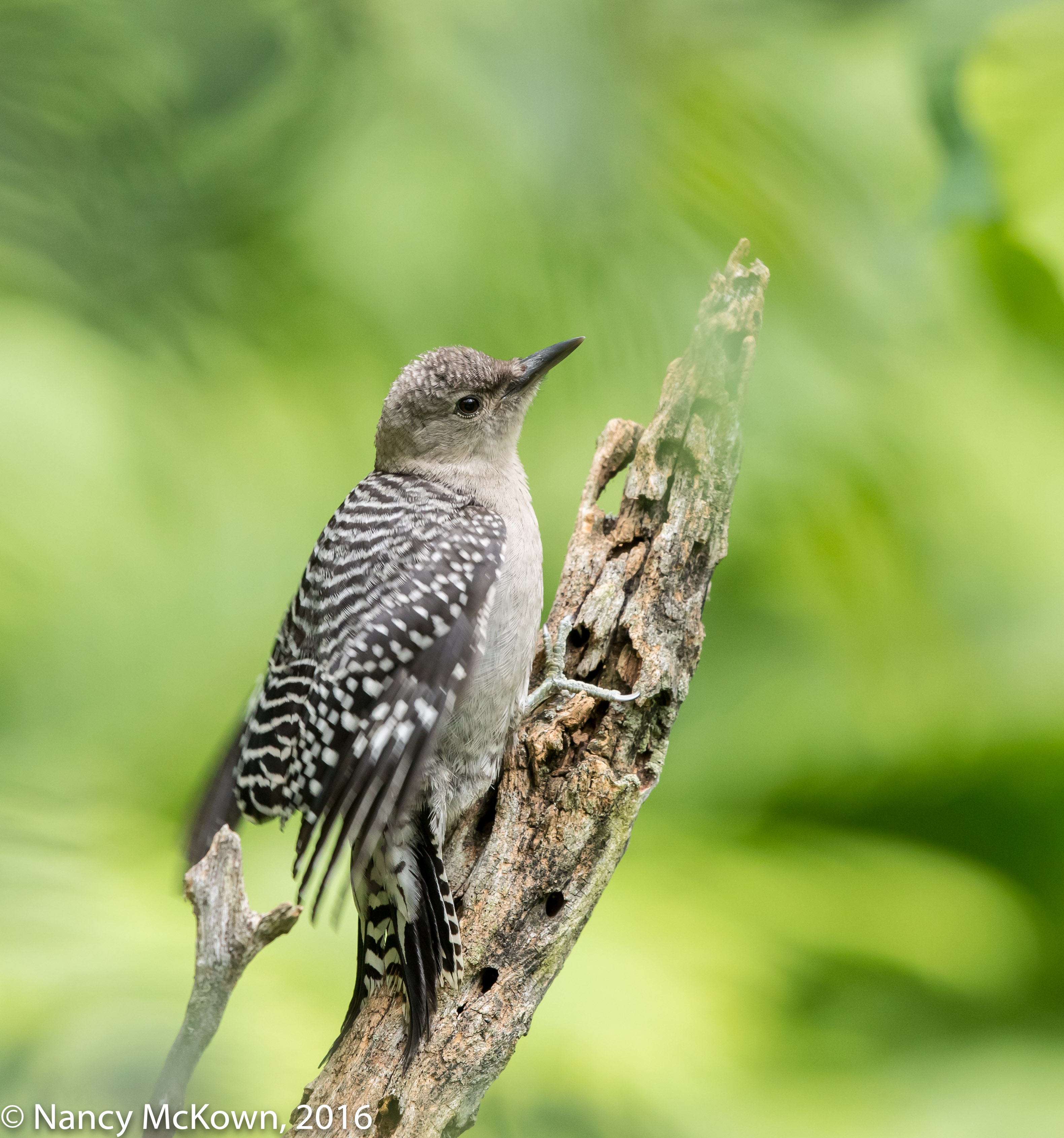
Photo of Juvenile Red Bellied Woodpecker
Fledgling Red Bellied Woodpecker.
Notice the Motion Blur– This Young Bird is
Fluttering her Wings To Signal Her Parents.
ISO1250; f/7.1; 1/500 Second

LCD Screen Glare

My camera was setup on a tripod with the low morning sun behind me. I positioned the lens to capture (as the bird’s background) a multilayered forest of feathery ferns huddling at far end of the driveway. I adjusted the aperture a little wider than usual to transform those individual fronds into lush, polished buttery green swirls-  picture perfect bokeh.

At first when I magnified the camera’s LCD screen to take a look at the images, I saw only a harsh glare. I could not review the quality of the background or see any detail on the woodpecker’s feathers. Hoping for more bird action, I stayed in that location until the light was no longer appealing and then went into the house to review my images.

Photo of Juvenile Red Bellied Woodpecker
Juvenile Red Bellied Woodpecker Calling for Food.
ISO1250; f/7.1; 1/500 Second

Anti-Glare LCD Viewfinders

It’s not uncommon to have the DSLR camera’s LCD viewing monitor compromised by reflection and glare. LCD protectors (for phones, computers, cameras) are available to help alleviate this problem. They purportedly let you closely inspect your images outdoors without the distractions of reflections or shadows. An added benefit is the claim that these anti glare covers help prevent scratches on the camera’s LCD screen.

My experience has been that these covers do work to reduce glare, but the additional layer of plastic or glass on the LCD screen make the images less sharp and colors less vibrant -especially when I attempt to closely inspect with magnification. I don’t apply them to my DSLR cameras, phone or computer.

These days, DSLR camera LCD screens are engineered to be resilient. They can still be scratched if the camera is crammed into a bag along with piercing keys, zippers or anything sharp. The scarred LCD screen will most likely still display your images – but who wants to look at surface scratch marks every time you review your images?  Professional level DSLR cameras are constructed to be ruggedly handled, but it’s best to treat them with deliberate care.

See more photos of summertime fledglings in this post.

Photographing An Orchard Oriole – Dealing with Impatience and Glare Control

Photographing An Orchard Oriole

It was only 8:30 a.m., a couple days before summer solstice, when I spotted my first adult male Orchard Oriole. The male Orchard Oriole looks very different from the female with his velvety black head and glossy russet colored breast and lower back. True to their name, this species are found in semi-open spaces like orchards (and rarely at feeders like Baltimore Orioles). Most E-bird maps classify Orchard Orioles as uncommon breeders in Michigan.

(Note: I saw and photographed a female or fledgling Orchard Oriole last year.)

Photo of Orchard Oriole
Male Orchard Oriole
ISO1600; f/9; 1/1000 Second

Glare Control

On this morning, sunrise was 6:10 am, at which time we were at another location. That sublime early morning light that adorns birds with a soft golden glow had long past.

Even though the sun was not that high in the sky, I had a terrible time (while in the car) dealing with distracting glare coming from the many reflective maple leaves. (NOTE: Sadly, I can not coax a bird to move into a shaded environment. I can better control these uneven bits of radiance when photographing people. The glare caused by bald heads and eye-glasses are a piece of cake to remedy because you can tell people how to pose, where to stand and, if necessary, move the camera.)

Polarizers

For this shoot, it would have helped if I had taken off my polarized sunglasses. If I had, I would have been able to see the brassiness of the maple leaves …so blatant that it competed with my subject for viewer attention.

Harsh light creates strong contrasts. To cut the glare, photographers in more manageable outdoor environments use a circular polarizing filter on their lenses. To use circular polarizing filters optimally, you must position your camera correctly… (preferably 90 degrees to the bird) and rotate the filter until you block certain wavelengths of light. (NOTE: Filters cut down available light considerably – from 1-2 stops.)

Circular Polarizers aren’t practical for long telephoto lens wildlife photography – and especially for birds as restless and unpredictable as this Orchard Oriole. Consequently, no filter threads are provided on the ends of most monster 500mm lenses. Instead a drop-in gel filter holder is provided near the base of the lens .

Photo of Orchard Oriole
Male Orchard Oriole
Much less Leaf Glare; but Branches are Distracting.
ISO1250; f/9; 1/1250 Second

Impatience Takes Over

Tracking a bird with your eyes is easy…..even within the limitations of a car.  Not so easy is tracking a lively bird with a cumbersome camera and 500mm lens while in a car.

This male Orchard Oriole was flying low, bopping between the glare filled Maple leaves on the north side of the road and a Cyprus tree on the south. The camera was resting on the door window pointing toward the Maple tree. I was hoping that the bird would cross the road and perch in front of the camera. He eventually did, but not right away. Impatience got the best of me.

For some reason, I decided that to successfully photograph this bird, I needed to reposition the camera to face the opposite direction. My husband was in the driver’s seat, making it impossible to secure the lens on that door window. With the oriole watching me, I opened my car door, threw a towel on the roof of the car, lugged my camera out and rested it on the towel, and then re-situated the unwieldy lens to point in the direction of the bird. (Whew!)

Before I could get off a shot, the Orchard Oriole dashed across the road again —to the very perch on which the lens was trained before I hauled it out of the car. He didn’t stay there long. With a big sigh, I got back in the car.

Actions that rise from frustration and exasperation are neither practical nor productive in bird photography. For unexpected bird sightings, patience is key.

I stayed in the car, rested the camera on the car door window ledge, watched, waited, and tried to calm down. Eventually the Oriole did return to the maple tree allowing me to successfully burst away.

Birds Don’t Wait for the Photographer

Turning the car around to face the opposite direction would have created too much of a disturbance. Getting out of the car to set up the tripod would also have chased the bird off. I’ve tried both of these strategies often enough- and no bird has ever waited for me to get situated. I can be quick and efficient.. but all that movement is neither quiet nor covert, especially when it happens at the spur of the moment. It is simply too much human activity for a bird to endure.

Patience

Patience is the mother of all virtue in bird photography. It is the key to help you let go of your expectations and drop those feelings of frustration. Most important of all, patience helps you rise above the feelings of urgency and optimally use your experience, enthusiasm and talent. Chances are you won’t miss out on anything.

Photographing Grasshopper Sparrows Singing their Hearts Out

Just Birdsong

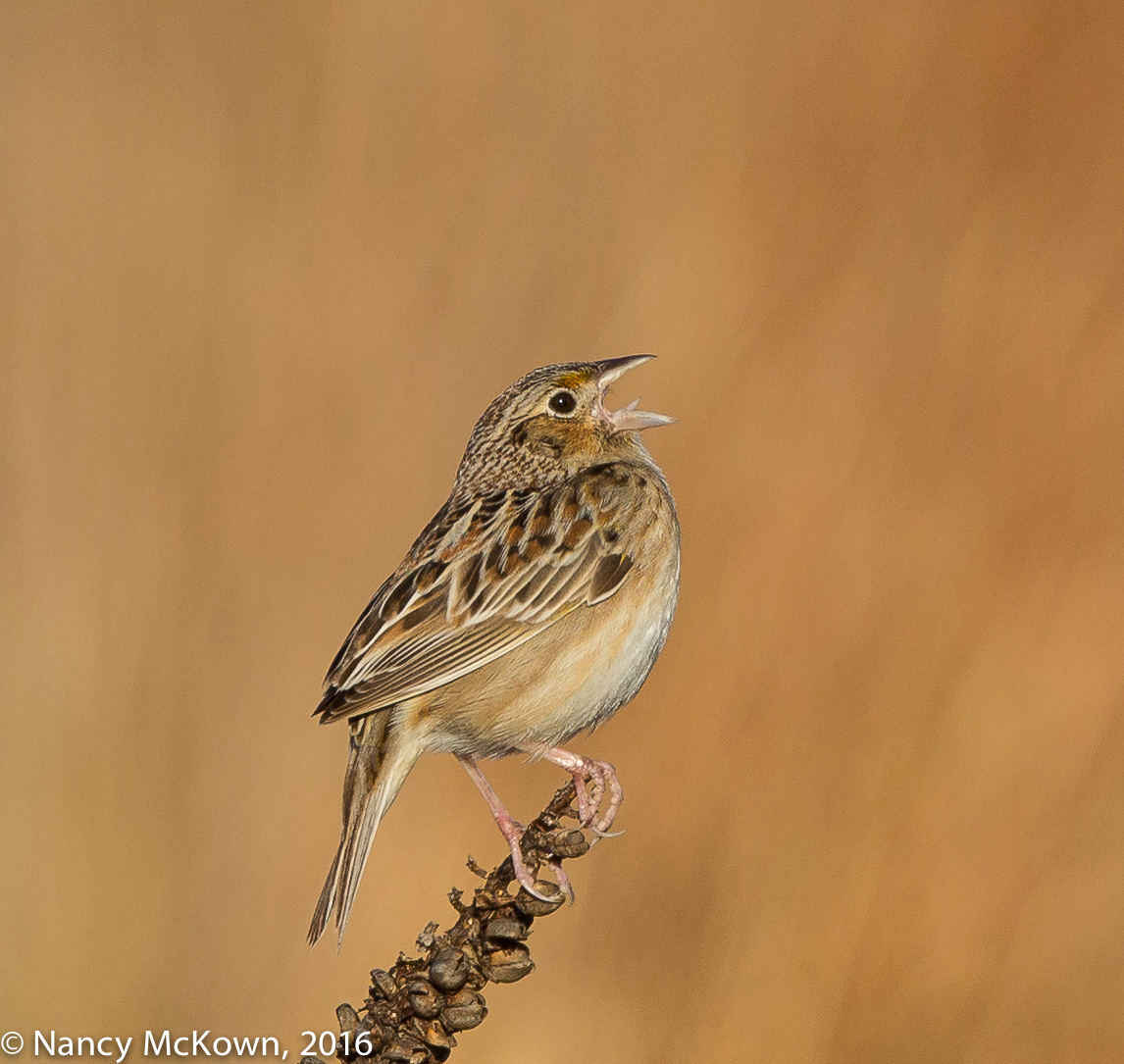
On my way to the Allegan State Game Area, I always stop to admire a little patch of coreopsis established in a grassy field. These vigorous yellow flowers, all dewy and intermixed with a few showy purple pea flowers, are luxuriously tucked in with the tall looping grasses. Their gleaming and peaceful countenance always gives me pause. On this particular morning, the sky is cloudless, and looking west above the coreopsis, a partial moon sits illuminated in the daylight sky. Every time I go, I hope that I will see some bird, any bird, bobbing in and around this lovely scenario. Just birdsong so far.  Perhaps I’ll have better luck when the flowers go to seed.

Photo of Grasshopper Sparrow
Grasshopper Sparrow in Full View,
ISO320; f/9; 1/800 Second

Photographing Grasshopper Sparrows

Other more productive bird photography locations awaited. When I took these photos in late May, 2016, Grasshopper Sparrows were singing their little hearts out in the tall gold prairie grasses. The males were tirelessly on task and not about to be diverted from their mating rituals.

And thank goodness for that! Despite the easy photographic pickings right in front of my eyes, I was momentarily captivated. The birdsong, the caressing breezes, the rhythmic motion of the golden grasses, and the sublime morning light came together to form a breathtaking convergence of shape, sound, color, and form. So soothing….easy to drift away and get lost in the moment.

The Grasshopper Sparrows no doubt would have continued their songs, but the soft early morning light would not stay for long. I captured a dozen or so images and then sat back to enjoy.

Territorial Songbirds

Spring brings many rewards for bird photographers. Once these Grasshopper Sparrows reach their nesting destinations, the males sing with great enthusiasm, in full view, especially in the early morning. They defend their nesting territories robustly with song, threats, dive-bombing – whatever it takes. If a weaker/younger male bird is forced out by a more powerful bird of the same species, he will try again in another territory or simply wait until the following year when he is stronger and more vigorously appealing.

Bonding with Song

By mid-June, fewer birds are out in the open. The nestlings and even the fledglings are tucked away, listening and learning. Survival depends on the young being able to bond with parents.  At some time, very early in their lives, these young birds learn to recognize, imitate and then replicate their species’ song.

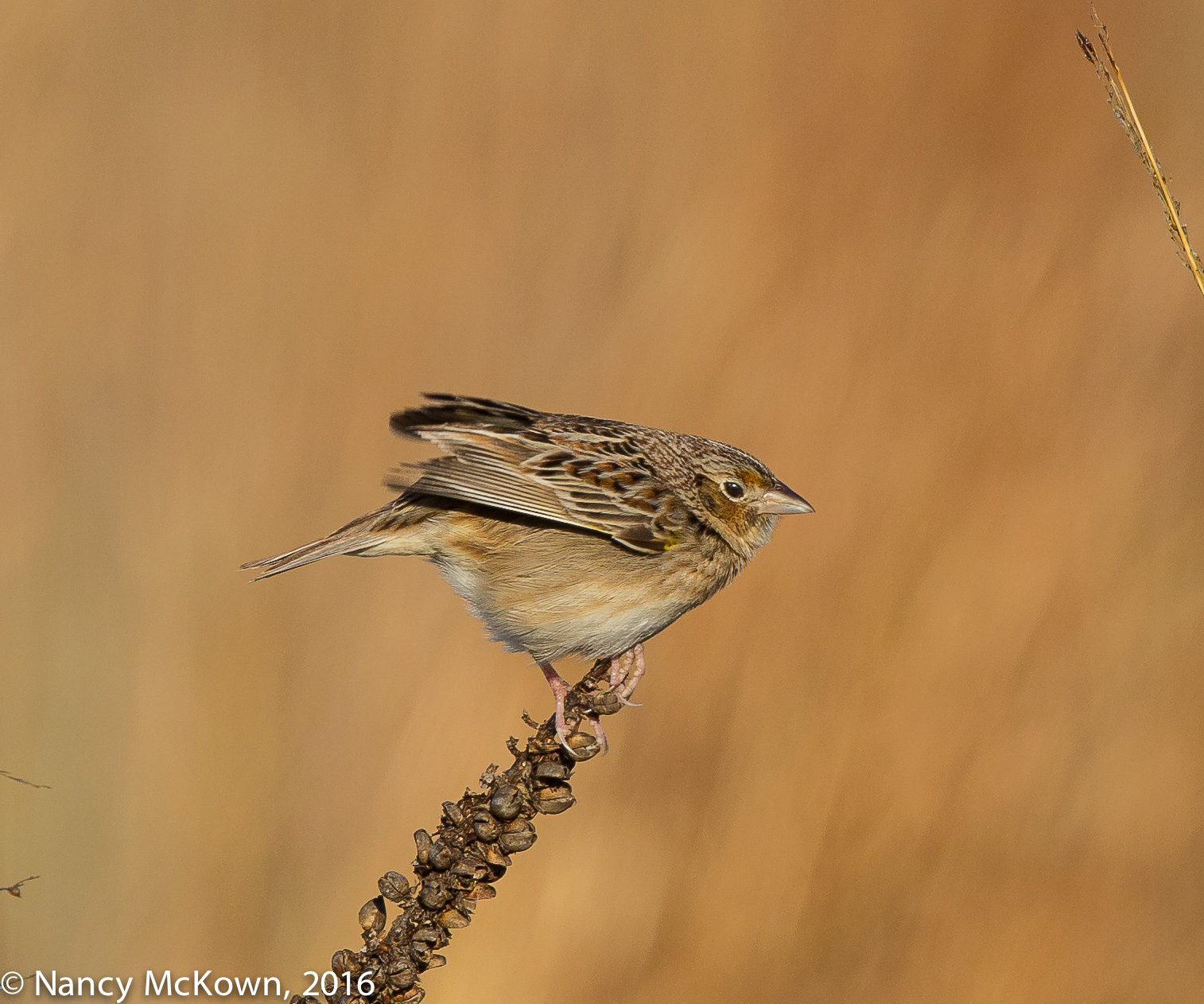
Grasshopper Sparrow
Grasshopper Sparrow Quivering his Feathers between Songs.
ISO320; f/9; 1/800 Second.

Learning v Genetic Predisposition

Research out of Australia – and associated with the Cornell Lab of Ornithology- suggests that some song birds are capable of learning their mother’s special calls during the embryonic stage of development and then reproducing those calls as nestlings begging for food. Included in this fascinating research is how ornithologists were able to discover and analyze these embryonic voiceprints using spectrographs and computer analysis. Visit this link to learn more.

Vocal Gymnasts

Every morning whether I’m out in the field or in our yard, I hear breathtakingly sonorous bursts of bird song carried in the wind. The musical vocalizations of song birds are much more complex than any other species can produce. Two sets of vocal organs (called the syrinx) have evolved to allow birds to sing multi-layered, acoustically diverse songs (with region specific dialects). In addition to bird song, many species of birds use non acoustical sounds (like hums made with beating wings or tails, or drumming made with chiseling beaks-or enticing dancing and quivering.) to increase their chances of being noticed and successfully reproducing.

Life Affirming Repertoire

It’s an enduring and life affirming repertoire that I love to listen to. Makes bird photography a most enticing and calming endeavor.


Photographing Sedge Wrens Hiding in the Grasses

Photographing the Sedge Wrens

We first saw these Sedge Wrens foraging in a grassy field on one of those secluded service roads where parking is not permitted by the DNR. All visitors must park in a designated and wildly overgrown lot that is neither convenient nor close. This is because some of the public land in the Allegan State Game Area is leased out and cultivated by farmers who do not want to be bothered by photographers in the road while driving their wide monster combines. Once the planting is done, you don’t see the farmers again until harvest time, but you do see the DNR officers making their rounds and enforcing the parking rules.

Despite the “no stopping to photograph birds from the car” rule, I could not help but be mutinous. I saw a curious Sedge Wren tucked in the tall grasses very close to the road and lifted my camera.

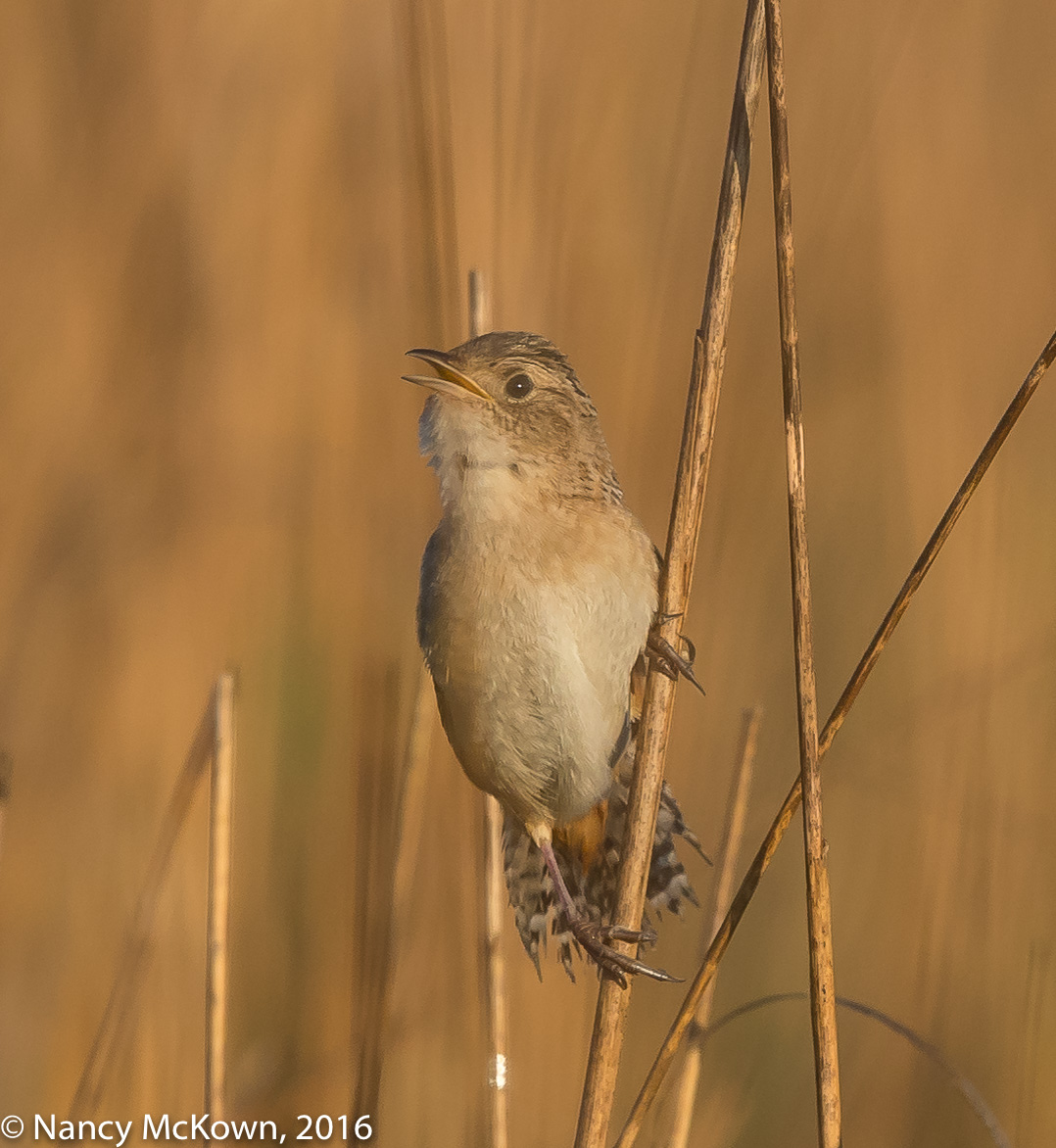
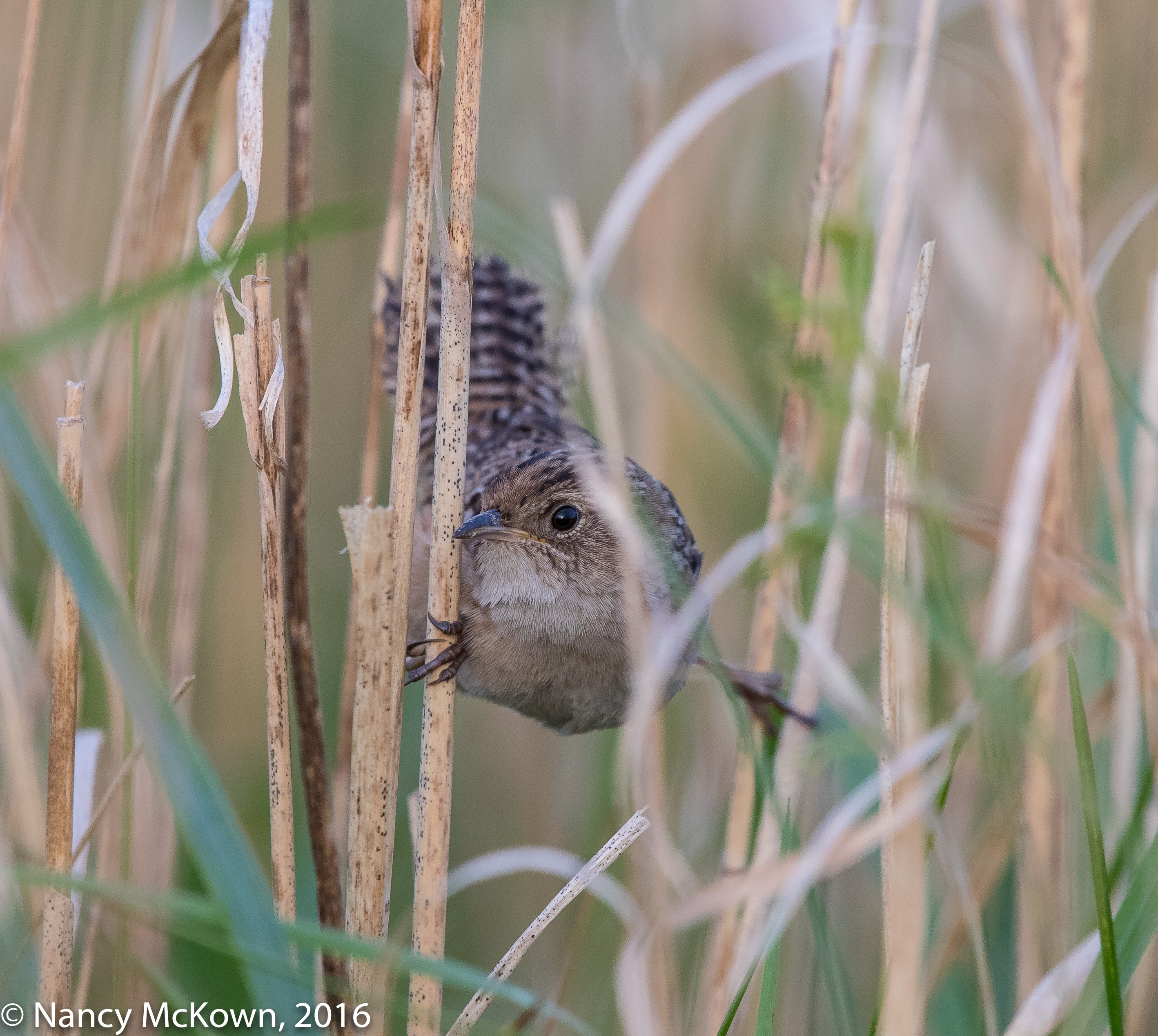
Sedge Wren
Sedge Wren in Early Morning Golden Light.
ISO800; f/8; 1/1000 Second

The first two photos included in this post came from the initial car window shoot. The Sedge Wren came in so close to the edge of the grasses that the 500mm lens was able to isolate his little body from his surroundings and lock focus almost immediately.

Camera Setup in the Sedges

We returned to this location three more times to try to photograph these little birds. Dutifully parking in the lot each time, we hauled the equipment down the road and forged a path through the grasses as close to the road as possible. The gear was stabilized on a matted-down oval shaped impression – most likely deer bedding.

These photo shoots turned out to be unproductive and exasperating. Instead of landing on the taller stalks like they did when we were photographing from the car, the wrens stayed camouflaged within the grasses. Once in a while, they peeked their little heads up or flew to a new location, but for the most part they would not rise above the dense low growth of the sedges. With any camera movement, they dove deeper into their lush domain. We could hear them calling and see the wispy grass bend as they maneuvered around us, but they rarely rose into the golden light.

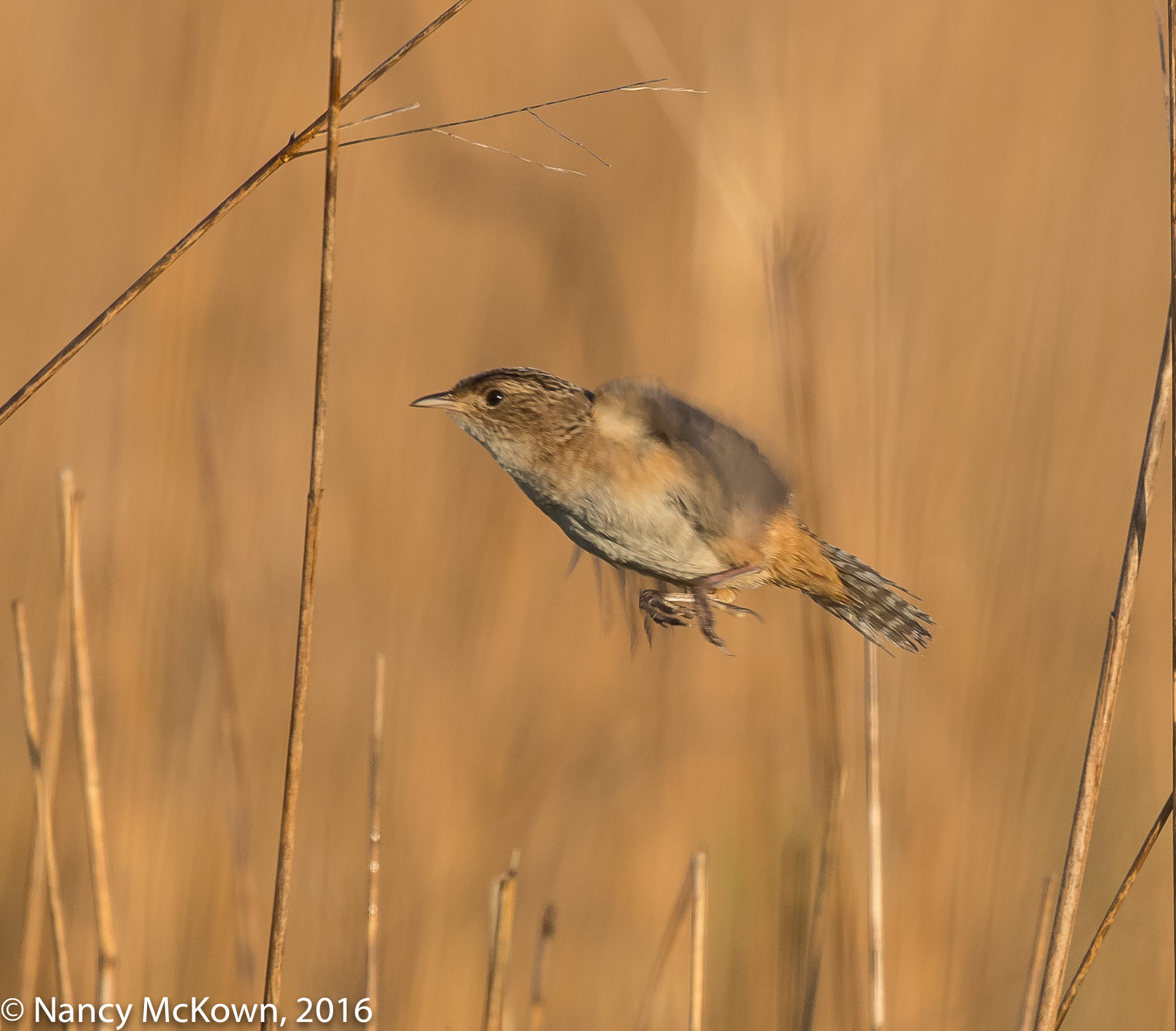
Photo of Sedge Wren
Sedge Wren in the Early Morning Light.
ISO800; f/8; 1/1000 Second

Trouble Locking Focus

My 500mm lens motor and stabilizer patiently whined softly back and forth…desperately trying to lock focus on a bird tucked in dense grass. The only clear photo I have from the later shoots (showing the Sedge Wren adeptly couched into his element) is posted below.

Photo of Sedge Wren
Sedge Wren, Hiding in the Sedge.
No Golden Light Here.
This photo was typical of the wren’s hiding
maneuvers. It was taken in the third shoot.
ISO1600; f/8; 1/640 Second

Nomadic yet Territorial

Sedge Wrens are pugnacious little birds that are known to puncture the eggs of other bird species’ who venture into their territories. Considered to have erratic and transitory breeding behaviors, it is not always predictable as to where they will nest from one year to the next. This nomadic (yet territorial) behavior makes them hard to find.

I plan to go back…. and try my luck again photographing them from the car.

Photographing Red Headed Woodpeckers and Controlling the Vivid Colors

Photographing Red Headed Woodpeckers

This spring, we spotted a pair of Red Headed Woodpeckers in our yard. (It’s hard to mis-identify this bird species.) They stayed for a couple weeks, long enough for me to wishfully assume that they had chosen a towering dead oak in our yard to set up housekeeping. But then one morning, they were just gone.

Red Headed Woodpeckers are very skittish around humans and quick to pick a fight with other species of birds, especially other woodpeckers. They consume a wide variety of seeds, fruits, nuts and any insect they come across while foraging in trees and tree bark. Unlike most of the year-round woodpecker residents in our yard, Red Headed Woodpeckers will head south in the Fall to escape the harsh Michigan winter.

This species of woodpecker is considered uncommon, and according to the “IUCN Redlist of Threatened Species” is on the decline to the point where they are listed as “near threatened”.

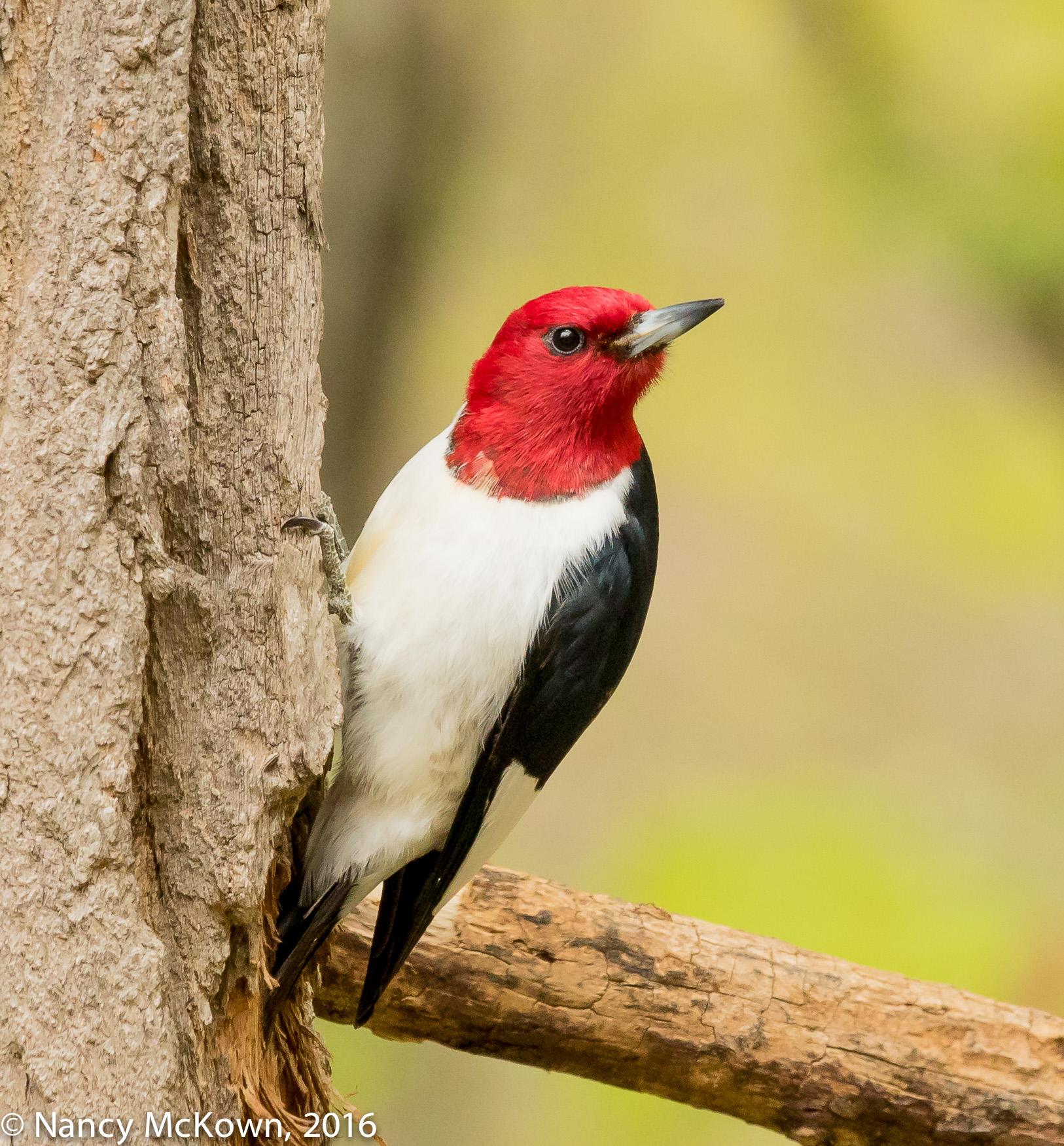
Red Headed Woodpecker
ISO800; f/7.1; 1/640 Second.

Controlling Color Intensity

The head on this Red Headed Woodpecker is vividly red. How the camera captures the color intensity of that red (and other colors) will vary from camera to camera, depending on the camera’s settings. Most DSLR and point and shoot cameras allow you to express your color preferences by configuring the “picture style” settings in the camera menu. You can choose neutral tones or vivid, knock-your-socks-off color renditions. It’s all about artistic preference.

NOTE: Other camera settings also impact color rendition. For this shoot, the camera was set to Canon’s “Evaluative Mode” which I think does a nice job of rendering colors in nature.

Photo of Red Headed Woodpecker
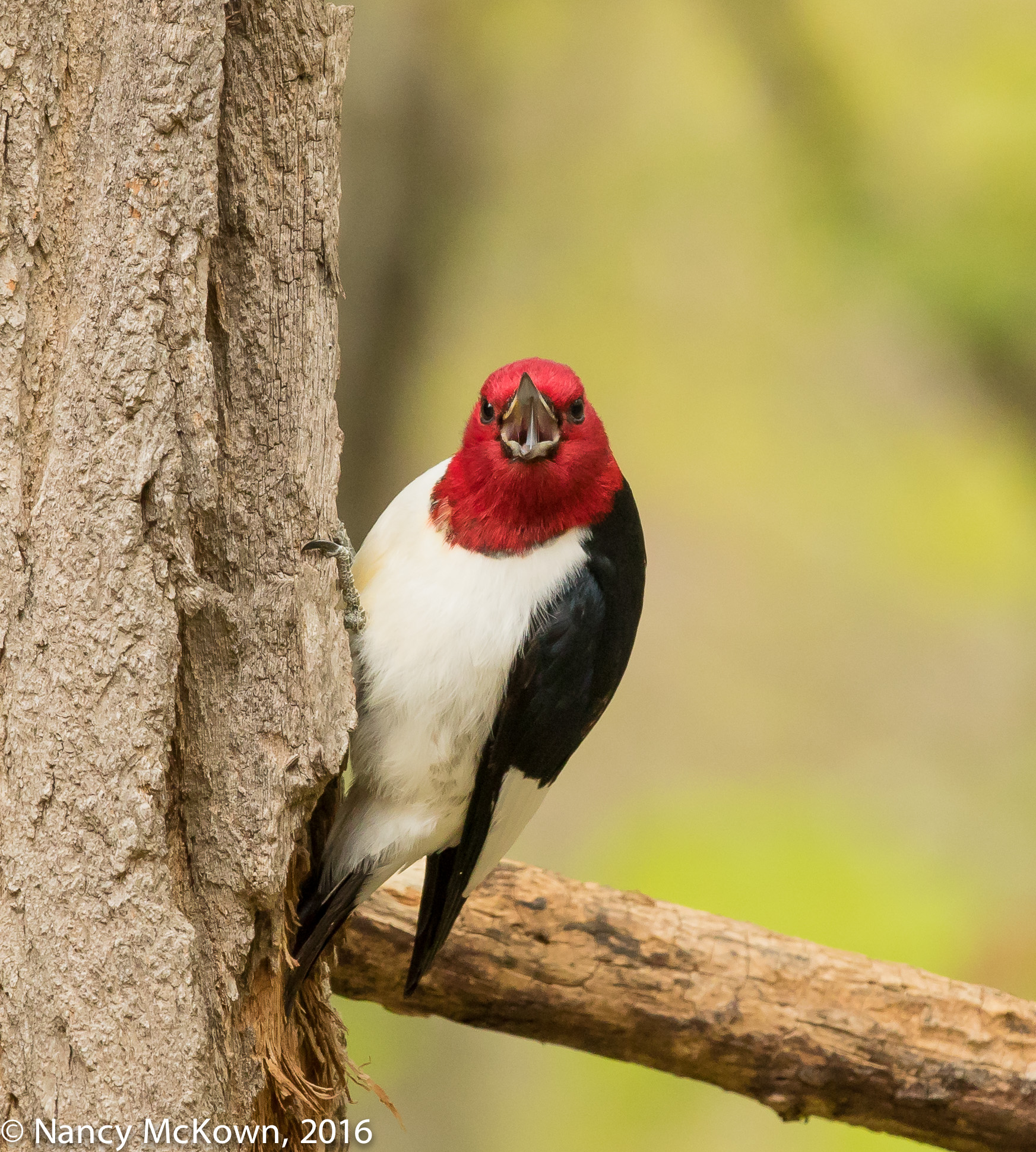
Red Headed Woodpecker
Objecting to the Camera.
ISO640; f/7.1; 1/640 Second

Managing In-Camera Color

In Canon cameras, you can manage in-camera color and contrast by adjusting “Picture Styles” settings. Your menu choices are: Standard, Portrait, Landscape, Neutral, Faithful, and Monochrome. Once the appropriate picture style has been selected, you can further customize that choice by refining attributes like sharpness, contrast, saturation and color tone.

If the presets offered by the in-camera menu are not to your liking and you wish to customize and save your own favorite interpretations of color, Canon cameras allow you to “register” three of your color preferences. For more information, press this link to review Canon’s Publication “Quick Guide to Picture Style Settings and Customizations”.

Photo of Red Headed Woodpecker
Red Headed Woodpecker.
A Very Long Tongue.
ISO1000; f/6.3; 1/640 Second

Balance

My camera (set to “standard” picture style) did a good job balancing the intense black, white and red colors. Once I loaded the images into Lightroom, almost no adjustment was needed to improve on the hue, saturation and luminosity.  I moved the “white” slider a touch to bring out more detail in the breast feathers. The histogram showed no overly exposed bright spots.

RAW format

Setting and refining Picture Styles can be a very creative undertaking, but it is important to remember that as long as your camera is set to RAW format, the camera will NOT apply the picture style settings to your images. You may see the impact of your picture style choice in the camera’s LCD screen, but only because you are seeing a JPEG rendition through that screen. I always shoot in RAW format, consequently, I make all picture style adjustments in post processing. (NOTE:  RAW format produces a huge image file that is processed minimally by the camera.  Further processing is done once the files are loaded into your post processing software.)

NOTE: Canon includes post processing software with all its DSLR cameras. If you shoot in RAW, you can easily apply the in-camera picture style settings you chose if you use this software.

Photographing Yellow Rumped Warblers on Our New Deck

Who Else is Up There?

I can identify most of the birdsongs of the regular avian visitors in our yard. Not infrequently, I hear an unfamiliar tune belonging to a bird who must be residing high in the trees or in the shadows.

New birdsong is compelling because:

  • It’s nice to know they’re up there—probably many more bird families than I think- either discretely passing through or nesting undercover;
  • I have to identify the species and figure out how to coax them to come down near the camera. NOTE: If a particular birdsong is completely mysterious, I try to isolate it and record it on my phone. I then upload it to the Whatbird.com for the bird auditory experts to ID.
  • It’s always a challenge to figure out the best placement for my camera – taking into consideration stealth, quality of light, and proximity to my subjects.
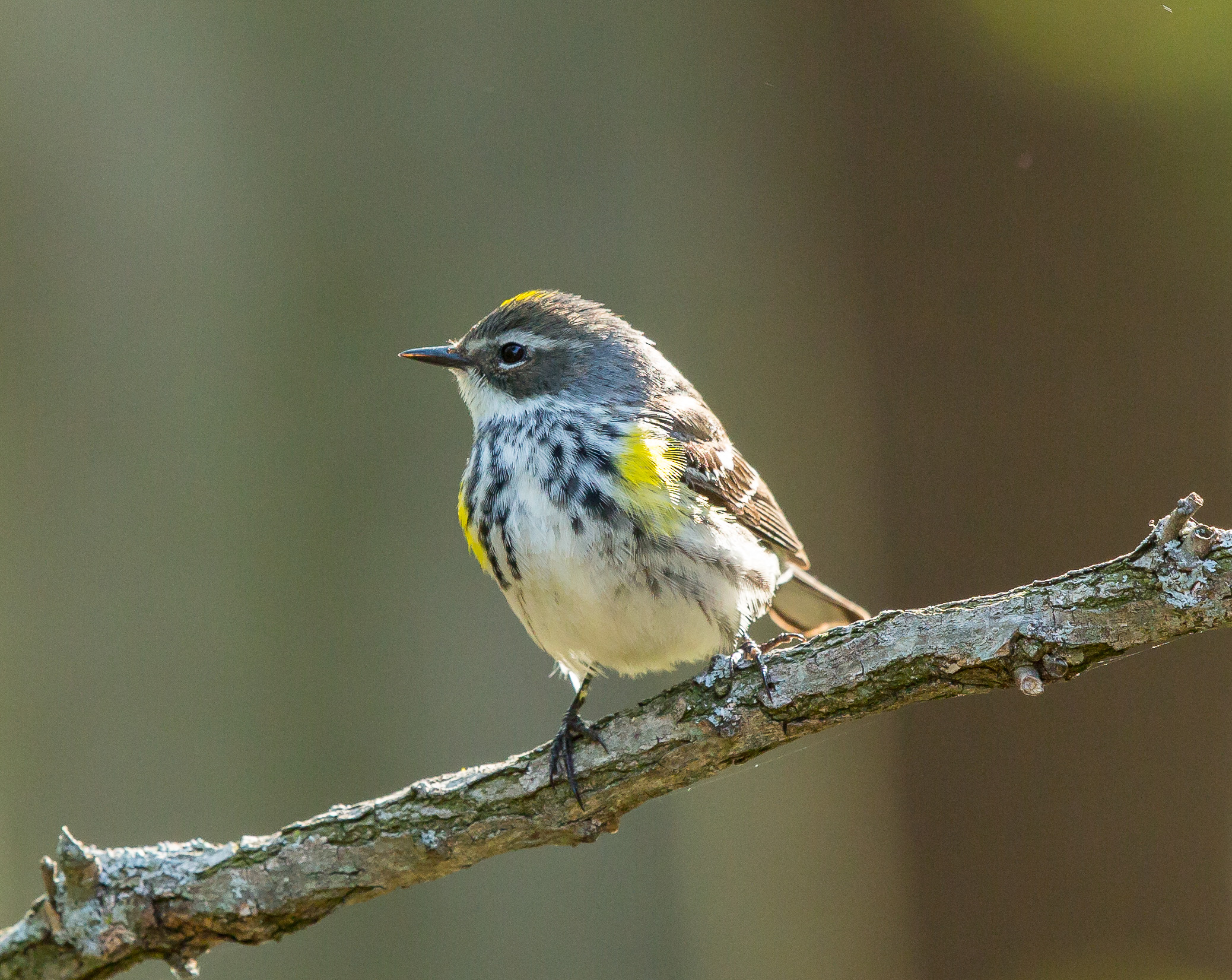
Photo of Yellow Rumped Warbler
Yellow Rumped Warbler.
Backlit from the Morning Sun.
ISO1600; f/6.3; 1/400 Second

Creating An Tempting Setting For New Birds

To attract some of the birds we know are up there but never see, we cleared a few low-lying straggly trees near the back end of the house, installed a deck and planted a variety of endemic plants to attract pollinators, beneficial insects and birds.

Off on the eastern edge of this structure, we installed a natural stone basalt recirculating fountain. It is the key to enticing the birds to venture down from on high. Burbling and in harmony with its surroundings, the three stones darken and glow as water circulates down. Little maintenance (except for a few drops of bird safe, environmentally friendly algicide) is required because the water flow design makes it basically self cleaning. The soft gurgling sound of the water attracts bathing birds… birds that we normally don’t see at the feeders.

We set up a couple perches just above and to the side of the fountains so the birds could settle and check out their surroundings before they hopped into the water streams. The  lush, green and woodsy background was situated 10-12 feet behind the perches so as to create the perfect Bokeh.

NOTE:  A pleasant Bokeh amounts to nothing if there is no enticing subject.

Photo of Yellow Rumped Warbler
Yellow Rumped Warbler.
ISO1600; f/6.3; 1/400 Second


Comfort Levels

Visually, this deck looked like the perfect place to set up the tripod and camera and make myself comfortable in a deck chair. But those rarely seen birds up high are the more cautious ones. They clearly prefer to have a wide personal space between themselves and humans, so a camera setup and photographer fairly close and in full view on the deck just may cancel out the allure of the bubbly fountain.

Proximity Problems

The birds did not come- at least not while I sat on the deck. Birds were coming when I wasn’t on the deck. I could see them indulging in the cool waters when I was inside the house. Apparently I was too close for their comfort. So, I hauled up my blind from the basement, left it assembled on the deck for a couple days so the birds could get use to it, then climbed in with my gear to wait.  Still nothing!

My proximity seemed to be the issue. We have a glass door in the bedroom which opens on to the deck. The distance between this door and the perches near the fountain is little far, but if I have my 1.4 extender attached to the 500mm lens, I can make it work.

Door open and camera setup inside the house, I pointed the long lens toward the perches and sat down to wait. Before too long, I had several species of birds coming in to bathe who clearly saw me, but were comfortable with my distance. This Yellow Rumped Warbler was one of the first of the new birds to venture close.

Other Deck Visitors

I was feeling pretty pleased with myself – checking exposure, rearranging my setup, drinking my coffee, and checking my phone while I waited. It wasn’t long before I noticed half a dozen or so confrontational looking hornets working on their nest situated right above me at the top of the door between the glass and the screen.

I was heavily distracted by those hornets, but too stubborn to relocate. I kept nervously looking up to see if the hornets were noticing me. They weren’t, but to be comfortable and on task, I’m was going to have to get rid of that hornets’ nest.

Photographing the Yellow Rumped Warbler

I sat there another hour or so, long enough to capture these shots of the Yellow Rumped Warbler. He definitely noticed my proximity, and even the hornets, but lingered long enough to get a drink and before he flew off.

Usually when I photograph warblers, they are tucked deep within the foliage. It nice once in a while to capture their beauty on an isolated branch, without the having to work around the tangled and thorny thickets that are their natural habitat.

I can’t wait to see what other newcomers come to drink at the fountain.

Photographing a Veery Thrush – Understanding Burst Modes

Photographing A Veery Thrush

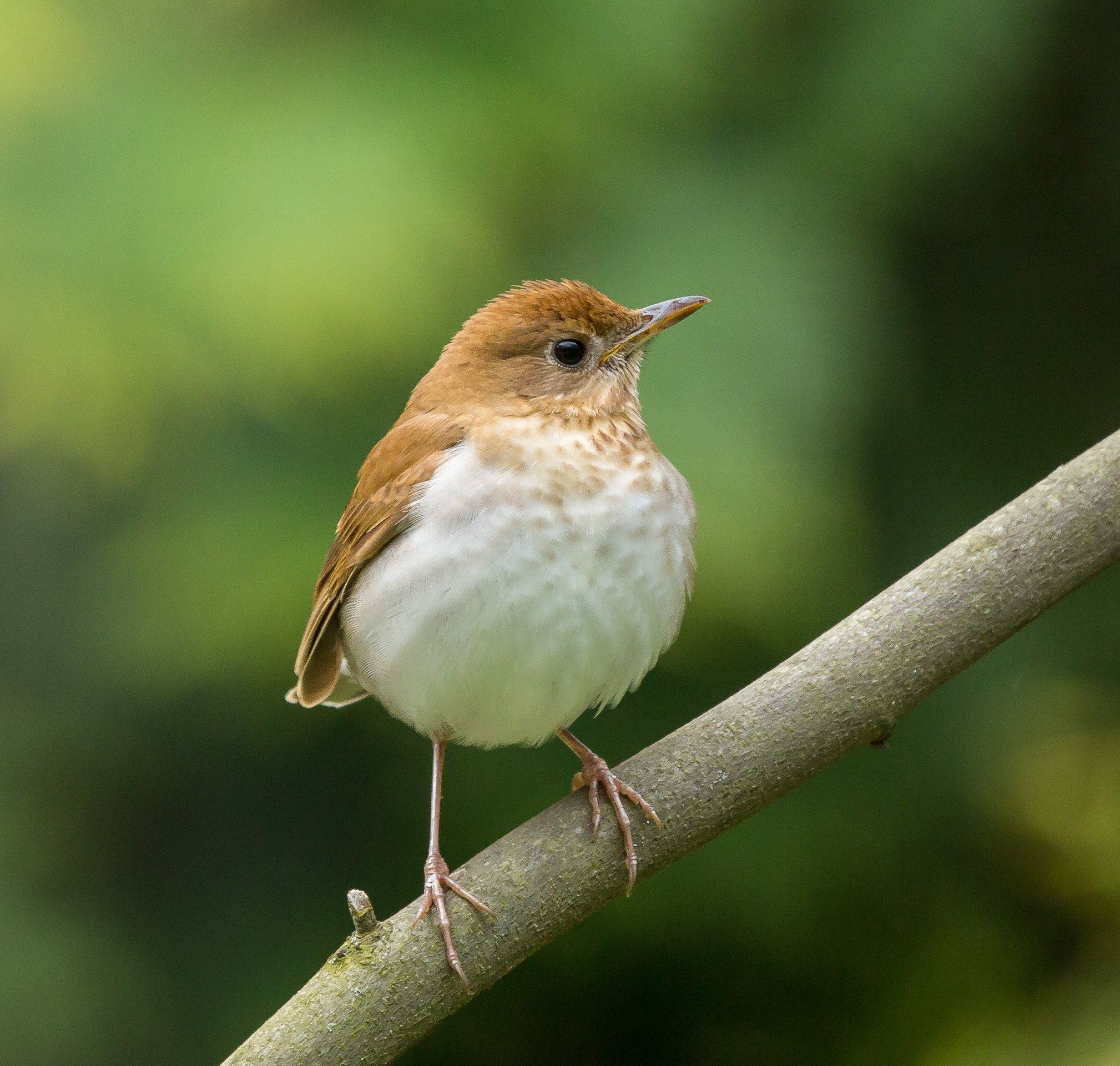
I was very pleased to spot this Veery Thrush in our yard, if only momentarily, because this species is a rather infrequent visitor here. They forage like Robins, on the ground flipping over leaf debris to uncover insects and worms underneath. According to E-bird, Veery Thrushes spend their winters only in Central and Southern Brazil and nest throughout Michigan, in the Northern US, and Southern Canada. This was my first photographic encounter, and it was made to order.

This handsome, cinnamon brown thrush first appeared on a branch near our dining room window. I hurried to the library door, then abruptly changed my pace and posture so that I was tiptoeing slowly and ducking down so as not to startle him as I made my way to the camera. (NOTE: I did this despite every instinct inside urging me to hurry before he flew off.) Once I reached the camera, all I had to do is point, lock focus and burst away.

Photo of Veery Thrush
Veery Thrush
ISO1600; f/7.1; 1/640 Second

What is Bursting?

The FPS (Frames per Second) is the speed at which the camera shutter mechanism can take uninterrupted shots. The Burst Rate specifies how many uninterrupted shots the shutter mechanism can discharge without slowing down.

FPS and Bursting are all about how fast and how many- and that means that DSLR cameras must have fast processing power and design logistics calculated to eliminate bottlenecks.

Advantages of Bursting

  • Bursting can be useful and fun..and for the most part, it’s FREE.
  • In bird photography, you just don’t know how long your subject will stay put.  Bursting allows you to capture many images in seconds.
  • Bursting is essential to record a sequence and tell a story – during a period that is most likely to be a brief and rare opportunity.
Veery Thrush
Veery Thrush
ISO800; f/7.1; 1/500 Second

Some Things to Consider when Bursting

  • Inherent mechanical limitation of camera’s shutter device. (NOTE: My cameras’  shutters are rated at 150,000 actuations.)
  • Data processing speed of camera’s processor.
  • Within one burst, no adjustments can be made to aperture and shutter settings.  (As you can see in the notes below the photos, the shutter speeds are different for the photos….. which means that these photos were taken in separate bursting sessions.)
  • Continuous bursts will capture a lot of identical photos- unless the action is really fast.
  • Max burst and FPS touted by camera manufacturer will slow if your shutter is set to a slower speed.
  • If you’ve got 2 memory cards installed and/or are writing to 2 memory cards, processing will slow down.
  • If your camera is set to RAW; processing will take longer to move through the much larger files.
  • If the camera stops, it has most likely reached a bottleneck due to an overload of files, or does not have enough battery power to proceed.
  • Slower memory cards with limited read/write speeds will create bottlenecks.
  • A half charged battery will slow down processing…. and the battery will drain quickly if bursting continues.
  • Whenever a camera has to re-meter and/or re-focus, bursting slows down. (In Canon cameras, AlServo auto focus will slow down fps- especially if it must keep trying to lock focus.)
  • The hidden cost with bursting: The photographer must devote lots of time in post processing to review all those images.
  • Bursting often places the photographer in “auto mode”, where the discipline to capture outstanding bird images may be put on hold.
  • Ultimately the burst will stop… no matter the sophistication of the camera.

Choices – How Fast?  How Quiet?

Assuming a bird photographer has a DSLR camera designed to burst and then move data through fast, there are also choices about what burst mode is best for bird photography. You can choose between High Speed Continuous and Low Speed Continuous burst mode…. or really slow down and choose Silent High Speed Continuous or Silent Low Speed Continuous burst mode.

I use to think that the louder shutter slapping sound would scare away birds, so I always set the camera to Silent Continuous burst mode. I don’t do that anymore because the silent modes are not noiseless. When set to Silent HS continuous or Silent LS continuous, the striking sound is a muffled slap..definitely more diminished, but you and the birds will most certainly hear it.

When to Use Bursting

When I first spot a bird, I always assume that the encounter will be fleeting.  My camera is usually set to Low Speed Continuous Burst Mode, just in case I need it. Once I lock focus on a bird, I press and hold the shutter down and hear that machine-gun staccato burst from my shutter mechanism. If the bird does not fly away, I am more judicious as to how much I use bursting.

Depending on the scenario, the bird photographer must decide. Will I end up with more usable bird images with or without the camera set to burst mode?

Photographing a Henslow Sparrow In His Element

Photographing a Henslow Sparrow

We arrived at 7:00 am – long past the late May sunrise. Dew drops on the long gold and green grasses sparkled in the morning sunlight. Stinking of bug repellent, we parked the cars on the side of the road, grabbed our camera gear and followed our friend down and up through the wet ditch, then trekked onward through the fields toward the grasslands where he had spotted a couple Henslow Sparrows. Careful to stay on the field path so as not to disturb the nests in the grasses, I set up my camera, 500mm lens with 1.4 extender.

Photo of Henslow Sparrow
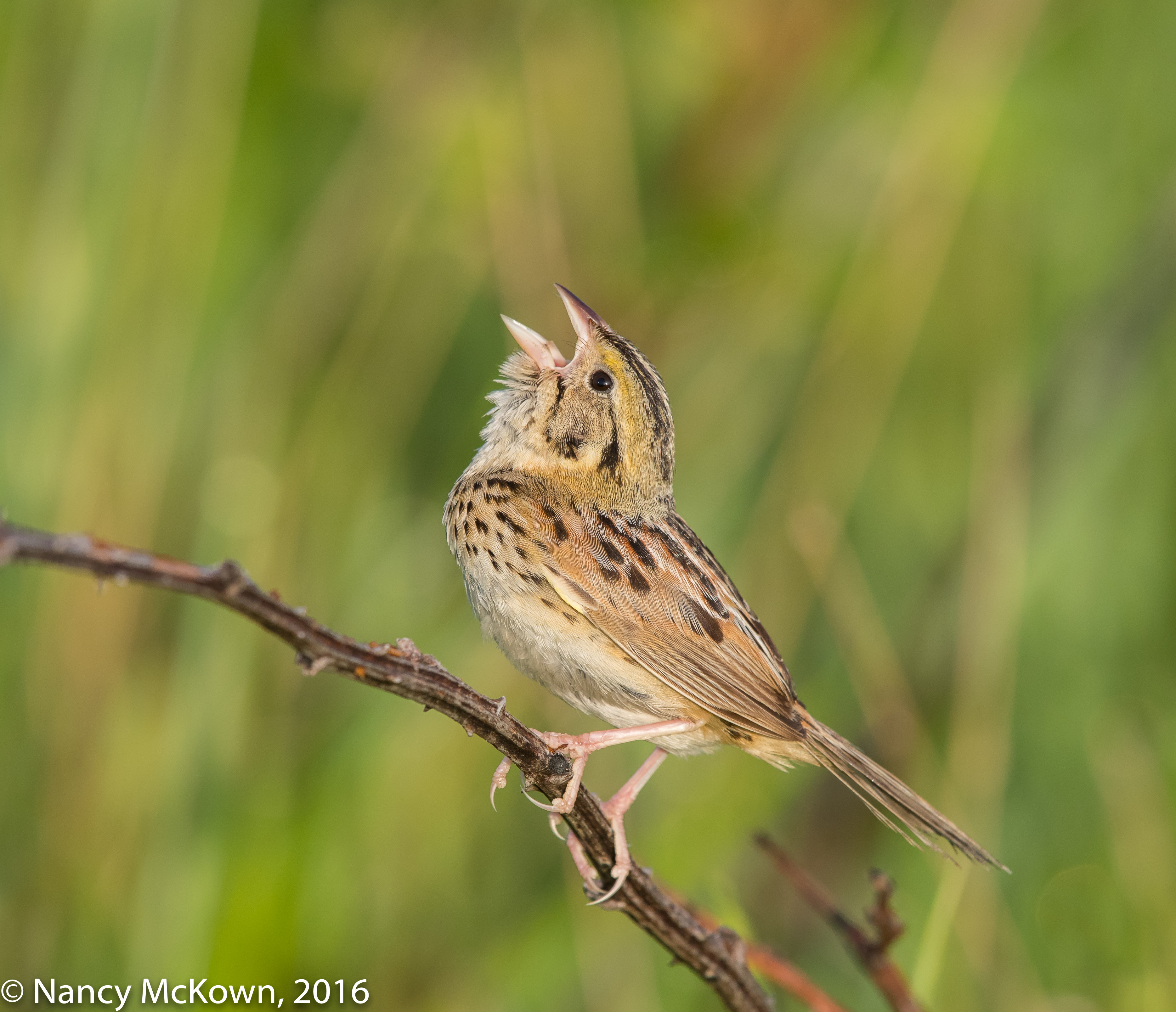
Henslow Sparrow.
ISO800; f/9; 1/1000 Second

NOTE: I had thought my Rolly cart would be useful to haul camera equipment on this trek, but after learning about the saturated fields and deep ditches, I was convinced otherwise. Note #2: Cradled in my arms, the camera gear stayed dry, but my cotton jeans were soaking wet minutes into this adventure. I really need to get those multi pocketed, bug resistant, quick drying nylon trail pants.

Photo of Henslow Sparrow
Henslow Sparrow
ISO800; f/9; 1/800 Second

Two Extroverted Henslows

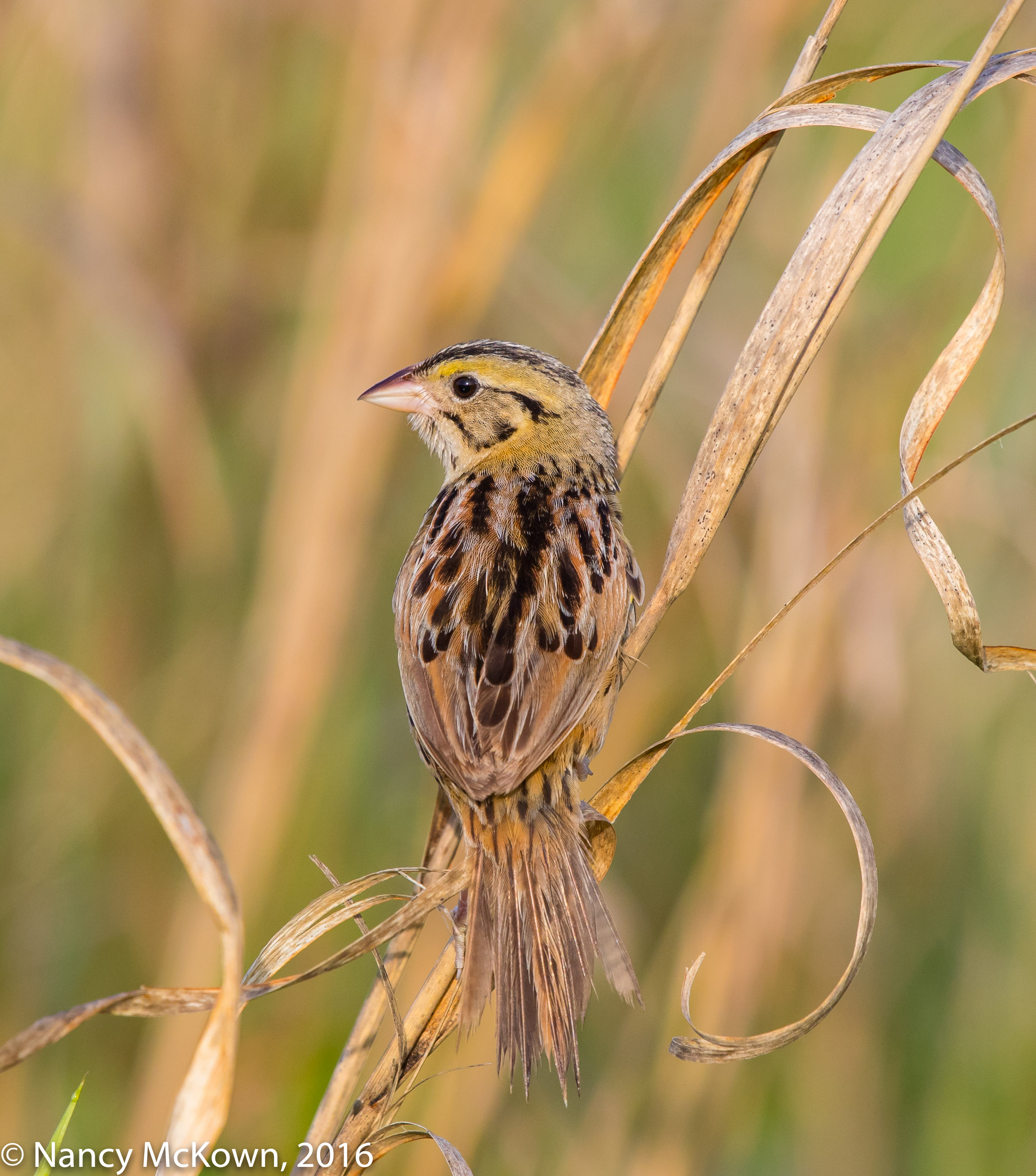
The Henslow is a strikingly handsome sparrow. His back and breast feathers sport black teardrop shaped patterns atop a background of chestnut brown. His heavy beak protrudes prominently on his large, somewhat flat head. Thick black lines accenting his dark eyes blaze across his yellow face– with one black stripe extending down the center of his face and onto his upper beak. His uneven, straggly tail feathers fanned out when he perched.

According to my birding manual, the Henslow Sparrow lurks unseen in the tangled grasses and often slips away undetected if an intruder appears. This was not our experience.  We saw at least two extroverted and spunky males in the distant grasses, each carving out a smallish territory and boldly flying from leaf to branch to defend it. We heard their lusty songs before we parked, and they sang vigorously atop grasses and raspberry stalks the whole time we photographed them.

Beauty Enhanced in Its Element

So often in bird photography, the image background, though pertinent because it is part of the bird’s natural environment, is unmanageable, distracting, overbearing or sadly detrimental to the overall artistic layout of the image. This is especially true in warbler habitats.

A Ready Made Flawless Bokeh

A grassy field in early morning is different. If the field is full of tall and wild golden grasses and the sun is low in the sky (and you make sure that the skyline is not in the viewfinder) it’s hard not to create a fabulous Bokeh infused with soft and seamless shades of glowing gold.

Light and Wind

Bright light is essential. If the morning sun is heavily filtered, you won’t see the background vibrancy in your images. A spirited wind buffeting the grasses adds more dimension because the background blur becomes more curvy. Wind swept grasses fashion their own animated, artful flow that express themselves in complex, undulating seamless patterns once the shutter is released.

A soft and gentle breeze can change instantaneously to a vigorous surge and compromise sharp focus. I had to be watchful of my exposure settings. NOTE: Instead of being displaced by the wind, little songbirds are generally agile enough to to balance their weight, go with the flow, and hold on.

Adjusting Camera Position

Framing an authentic and beautiful image background was not a problem in the wind blown grassy fields where these Henslow Sparrows nest. The whole time we were there, I could easily move the camera and tripod, enabling me to not only better track the sparrows’ movements, but also recompose the scene. I was able to change out the green and gold background colors and the lines and curves of the grasses and branches around which the sparrows perched. NOTE: Repositioning the camera also helps when the photographer wants to adjust exposure settings, avoid lens flare, or take advantage of different types of directional lighting. The freedom to frequently recompose the scene during a bird photography shoot is uncommon, but can produce a collection of vibrant image backgrounds.

Photo of Henslow Sparrow
Henslow Sparrow
ISO1000; f/9; 1/1000 Second

On the Decline

Everything came together that morning- creating perfect conditions in which to photograph this lovely Sparrow. Sadly, Federal and State agencies report that the Henslow Sparrows are hard to find and their numbers are on the decline due to the loss and/or fragmentation of their breeding habitat; open field prairie filled with dense grassland. More information on the Henslow can be found at this link.

Photographing the Black Throated Blue Warbler – Spring Migration Has Past

A Peaceful Morning on the Deck

It’s mid morning in early June; the sunlight is heavily filtered in our yard. I catch the sweet scent of Locust flowers on the breeze and hear the soft droning of honey bees as they feast on the nectar rich Locust blossoms high above. As I set up the camera I think about how the birds must be feasting up there as well.

Chipmunks are everywhere this spring, fashioning their homes within the confines of the Sassafras and Locust logs densely stacked between tree trunks. They pause every few steps to check around for predators as they forage for food dropped below the feeders. Lots of impromptu and playful chasing going on. 

On my deck, delicate single web threads join trees and furniture and sway with the soft wind. I can barely feel these silk gossamers as I move about with my camera equipment and disrupt their tenuous holds. These lines of gauze belong to the tiniest of spiders-and warblers seek them out.

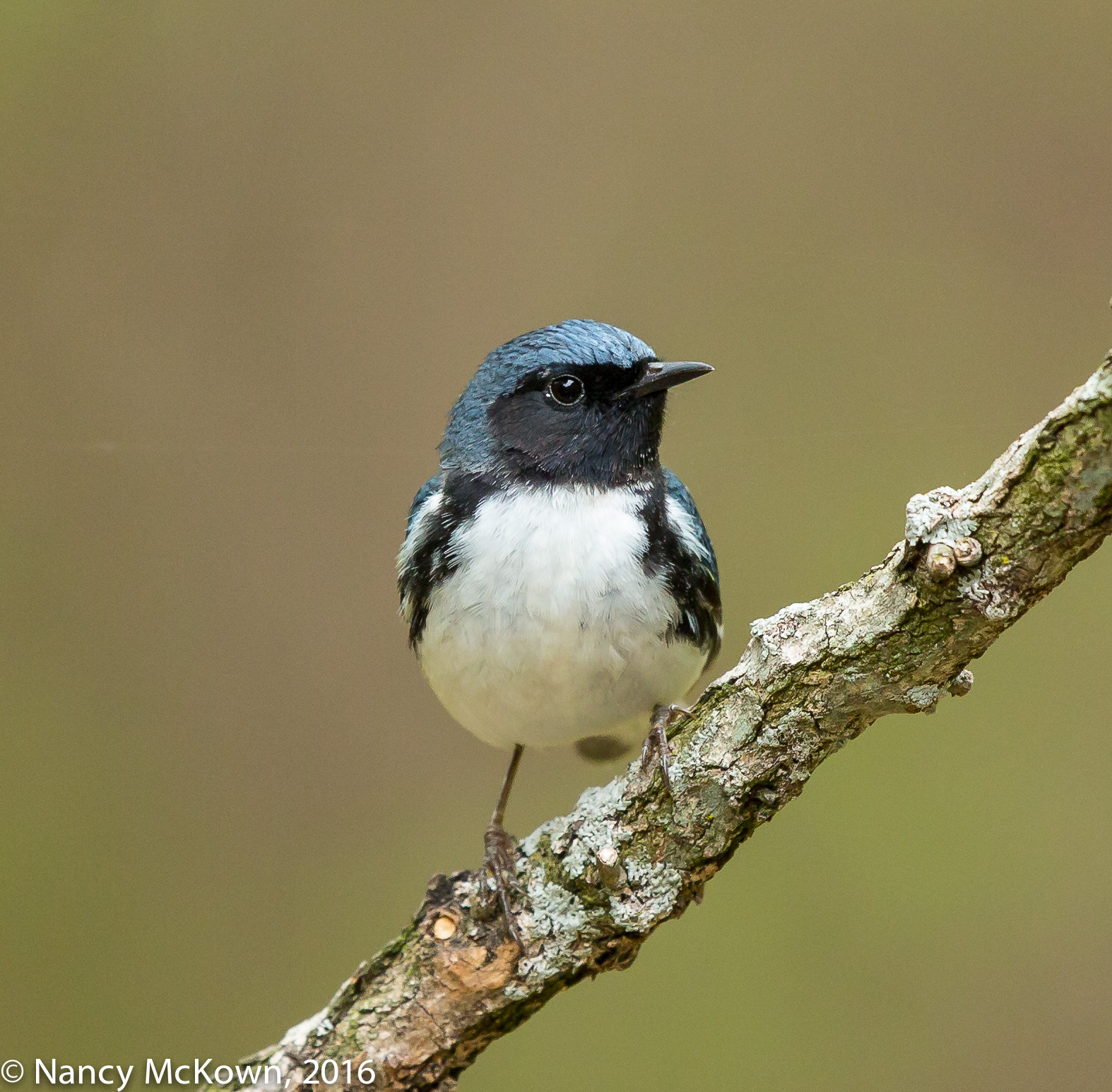
Photo of Black Throated Blue Warbler
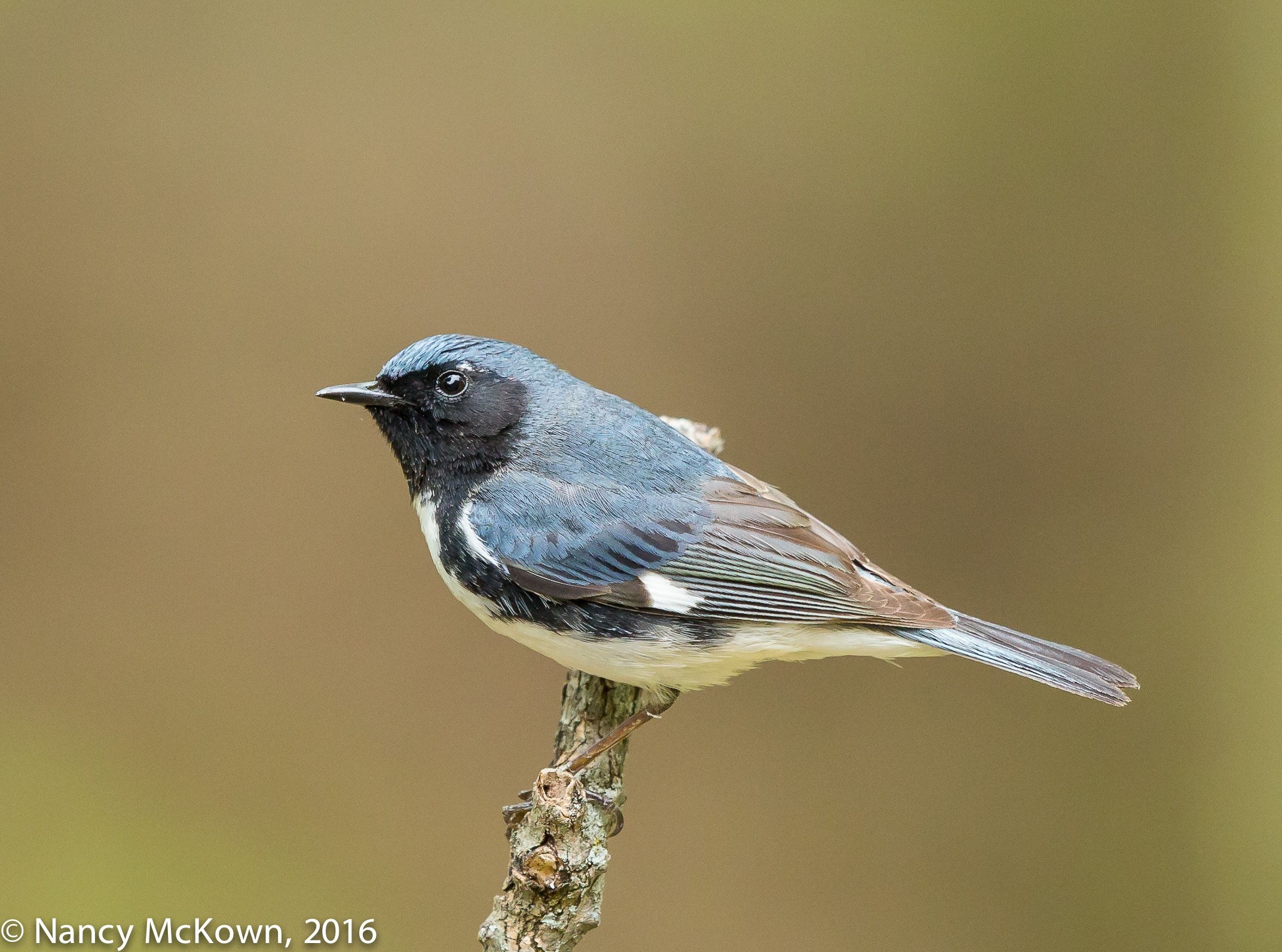
Black throated Blue Warbler
ISO1250; f/5.6; 1/400 Second

Photographing a Black Throated Blue Warbler

This Black Throated Blue Warbler did not seem especially shy- or perhaps he was just desperately thirsty from his long migration journey north. In any case, he came in close to the fountain for a drink, heedless of the camera and me.

The perch he chose was perfect….. at least 10 feet between the woodsy background and the bird. Because of the low light, I opened up the aperture and shot at a relatively slow (for birds) shutter speed. The bokeh, brown tinged with green, with no seams and no visible outlines of the tree trunks and brush in the background, complements the ragged, lichen draped perch and the bird’s plumage.

Black Throated Blue Warblers nest in the Blue Ridge Mountain range and also in Northeastern United States and Eastern Canada. They are known to seek out vast tracks of forests for their nesting grounds, so it is likely that they made their homes in SouthWest MI long ago. Come fall, they will migrate south to the Gulf States and the Caribbean.

The male Black Throated Blue Warbler keeps his distinctive blue and black plumage year round. The female mostly blends, like a lot of other female warblers. I photographed the female Black Throated Warbler last fall with her dull olive plumage and subtle white lines above the eyes.

Photo of Black Throated Blue Warbler
Black Throated Blue Warbler.
ISO1000; f/6; 1/400 Second

A Slow Migration Season

This spring, a total of six warbler species stopped to rest in our yard and within the camera’s view. None came so boldly as this Black Throated Blue Warbler.

The migration season for warblers is past. During most of April and May, my cameras and I have been at the ready. I’ve watched the leaves mature and reach out to take their share of the available light. This Spring, we’ve had very little success photographing migrators, despite our warbler friendly yard filled with thicketed and overgrown brush. I know millions of birds are coming through just as they’ve done for millennia, I’m just not seeing them. Jealously, I note that lots of luckier bird photographers are posting splendidly colorful finds. All I can do is continue my search and hope my luck gets better come Fall migration.

I’ve updated my Spring 2016 migration Flickr page. Looking over my past images, it seems I have more luck photographing warblers during Fall Migration. Another adventure to look forward to!

Photographing Cape May Warblers and Customized Shooting Modes

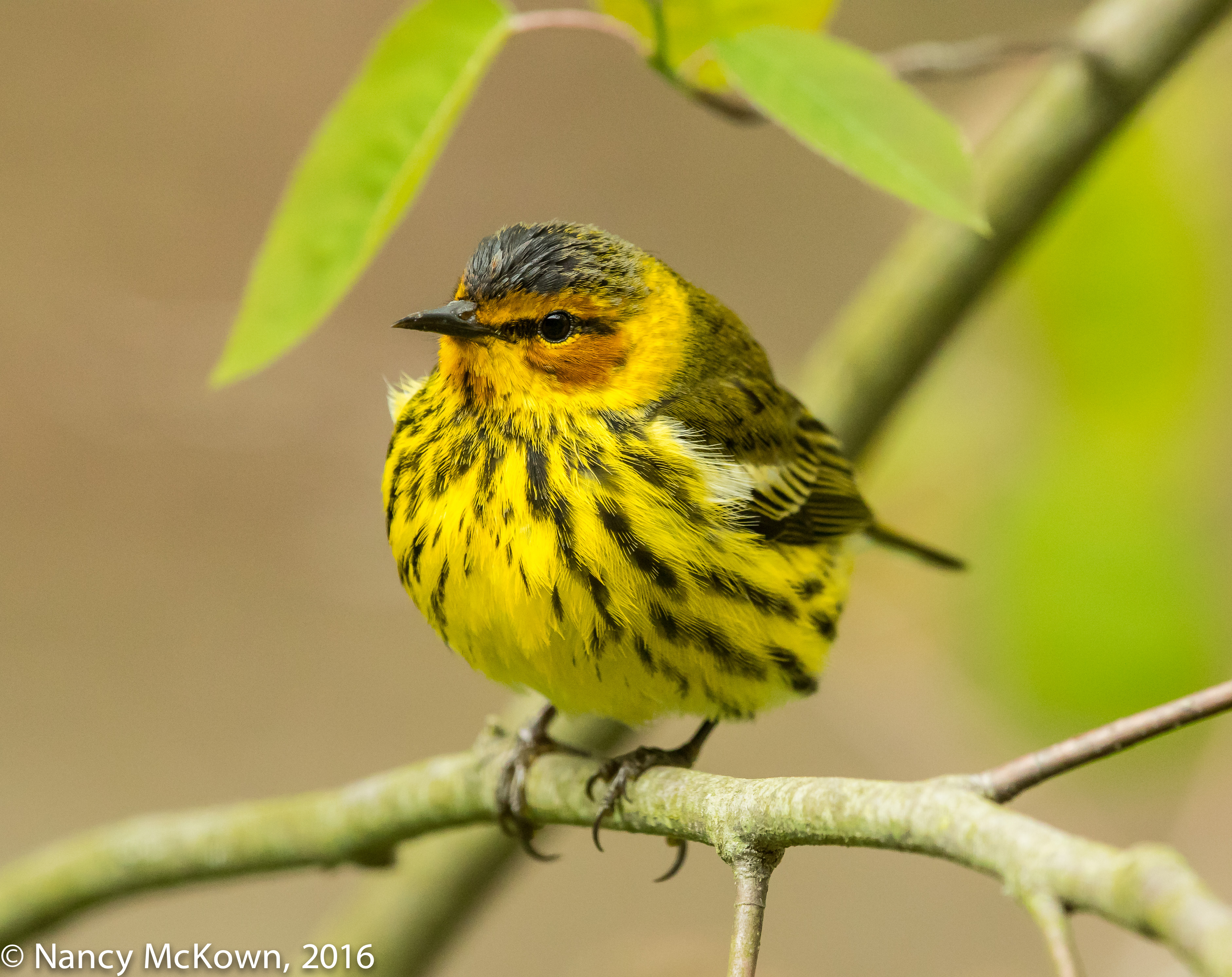
Photographing A Cape May Warbler

In Spring, migrating warblers are eye candy, most especially the males. This Cape May Warbler with his prominent chestnut cheek patches and brightly streaked head and chest perched right outside my (closed) window. He did not appear frightened by me or the camera, so much so that I considered opening the window. After a minute or so, he bolted for more satisfying territory, but not before I was able to get off a few through-the-glass-window shots.

Cape May Warblers winter in tropical climates (S. Florida, Caribbean, West Indies and Mexico) where they are known to feast on nectar collected with their curled and semi tubular tongues. They migrate long distances to breed in Northern U.S .and the Canadian woods where their preferred food is spruce budworms. In SW Michigan, we see only a few of them in the Spring and Fall.

Photo of Cape May Warbler
Cape May Warbler
ISO1600; f/6.3; 1/640 Second.
Through the Glass Window shot

User Settings

Whether I plan to drive to a birding location or am surprised by a warbler outside my window,  it’s relatively easy for me to make sure that all settings for both my cameras are properly adjusted at what I consider to be optimal for the intended shooting location. This not so short checklist of settings includes: white balance, max auto iso, one shot or continuous shooting mode, metering mode, live view, video, exposure compensation, file format, aperture, shutter speed, ISO, minimum and maximum ISO/Shutter settings, image size, picture style, autofocus modes, autofocus point selection, P, Tv, Av or M shooting mode, etc. (Whew!)

Both of my cameras see a lot of action in different locations, consequently I have to be able to make setting adjustments as quickly as possible to accommodate different environments.

Photo of Cape May Warbler
Cape May Warbler, Male.
Through the Glass Window shot.
ISO1600; f/6.3; 1/640 Second

Instant Recall

This Cape May Warbler departed as fast as he came. As is often the case, there was no time to even think about complex camera configurations. The knowledge and experience stored in my brain is not necessarily instantaneously retrievable, especially in the heat of an exciting bird sighting. I will more than likely miss some action if I take my eyes off the bird  to try to remember how to adjust something like the autofocus point selection.

Custom Shooting Modes

Modern DSLR cameras have storage and instant recall functions called “custom shooting modes” into which you can register or preset preferred settings and functions. (NOTE: The camera’s memory cards are not used for this task.) When you set up custom shooting modes, the camera saves to memory your favorite camera settings which are then retrievable with a flick of a switch. The camera’s long term memory will hold your preferences until you change them.

I use all three of the customized shooting modes that are available to me on my Canon cameras.  C1 and C2 are used for my birding adventures and C3 for family/people photography. These presets allow me to confidently operate “on-the-fly”.

Easy Setup

Custom Shooting Modes help make prepping for bird photography simplier. Canon menu systems provide a very straightforward process to activate custom shooting modes, and best of all, you don’t have to start from scratch to configure your first C mode. Just set the camera as you usually do right before you go out in the field. Then register these settings quickly in the menu by going to “custom shooting mode” and then the “tools” tab.  Assign a C1, C2 or C3 designation, then OK, the SET.  Other more in-depth options are available if you wish to customize further, like: 1) clear your settings whenever you want; 2) program new settings over the old; or 3) enable “Change Auto Update Set” to permanently retain new additions to a group.

Store What You Know

It’s fun to experiment with the range of options available in sophisticated DSLR cameras, but it’s best to set up your custom shooting modes in a thoughtful, non-rushed way.  These presets are not a place to store hardly ever needed, adventurous stuff that will not be useful in the heat of the moment and will soon be forgotten, or worse, accidentally triggered. Take the time to think about what you want and need for different bird photography scenarios and then make them available instantly by flicking on the custom shooting modes C1, C2, or C3 on the camera’s mode dial.

Presetting your custom shooting modes into the camera before going on your bird photography adventure is all about anticipating what might happen – and then being ready when it does.