Yearly Archives: 2015

Photo of Field Sparrow

Photographing Field Sparrows and Thoughts About A Backup Camera

Photographing the Grassland Field Sparrow

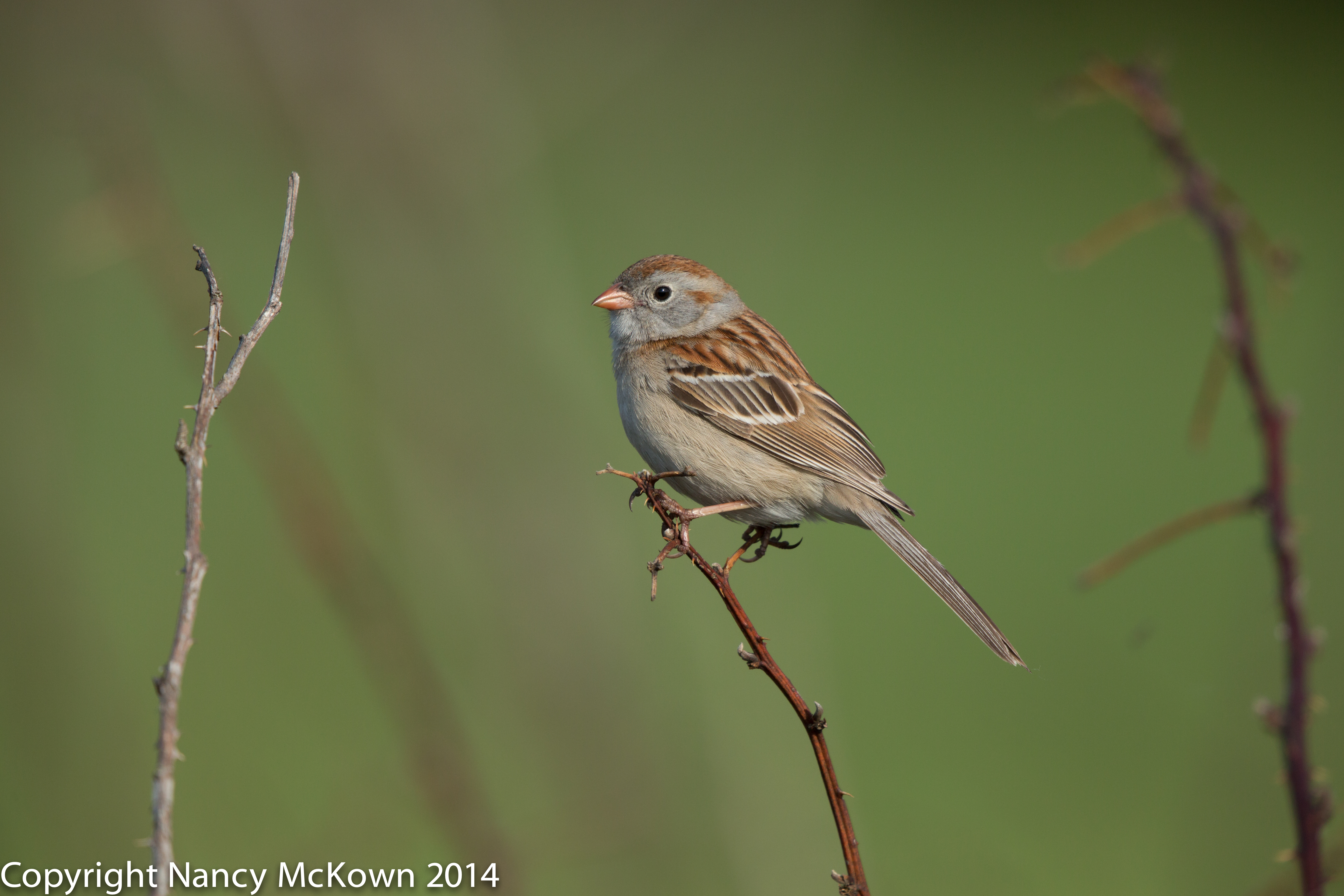
This gray faced grassland Field Sparrow, with a reddish crown, white eye ring, unstreaked buff breast and distinctive pinky/orange beak is an easy sparrow to identify. It’s one of my favorite birds to photograph because this species doesn’t always hide when spooked. Curiosity gets the better of them, so much so that they are likely to come out into the open when there’s a ruckus.
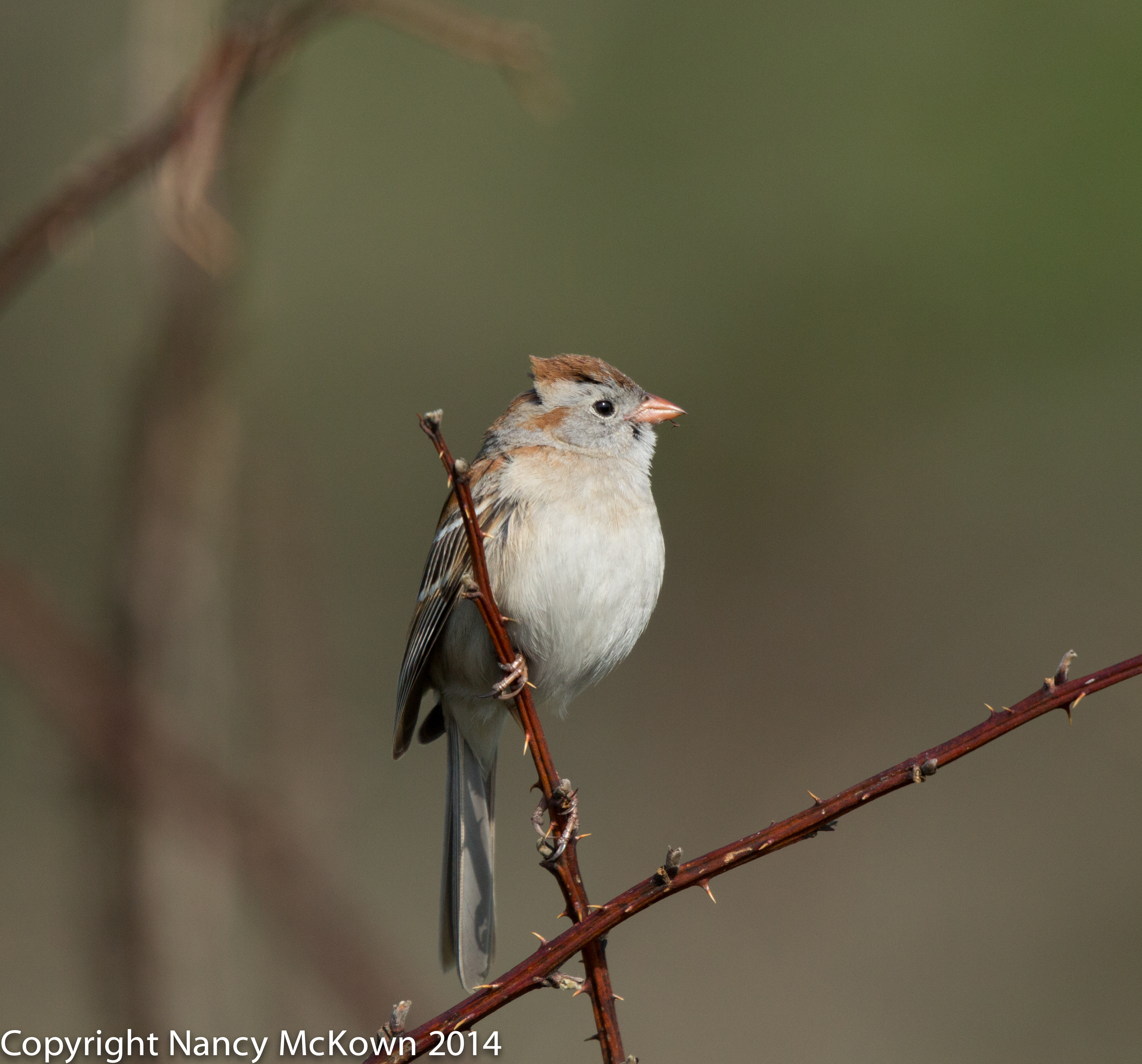
Photo of Field Sparrow
Field Sparrow; ISO 1000; f/8; 1/2500 Second

Field Sparrow Watching Me

For this shoot, I hauled my camera, bags and tripod deep into a grassy, wet field (also, bug spray, bug nets, smart phone, hat, shades, etc). My equipment setup and preparation (not to mention my soaking wet pant legs) must have been just interesting enough for this field sparrow to come in close and in front of the camera to watch me. The early morning light was good, and he chose excellent perches on which to pose. He stayed so long that I was able to move my tripod about and swap out lenses and extenders to experiment with focal length. At the end of the shoot, I thanked him for his cooperation.

This is the type of care-free photography session that gets me thinking about purchasing even more photographic stuff to haul out in the field. This time, my thoughts were on a back-up DSLR camera.

Photo of Field Sparrow
Field Sparrow – ISO 500; f/8; 1/1250 Second

A Digital Camera’s Perceived “Lifetime”

My camera is 2 years old and has 48770 shutter counts. A camera’s “lifetime” is based on its shutter count. The official life expectancy on the shutter on my Canon 5D Mark III DSLR is rated at 150,000 shutter actuations. According to Canon, after I reach 150,000 shots, I can expect shutter wear and tear, slow down and eventual breakdown. I will then have to replace the shutter mechanism, or buy a new camera.

Hypothetically, with only 48770 shutter actuations, there is plenty of life left in my camera. However the “lifetime” shutter count estimates that Canon assigns are only estimates. This camera could out-live me, or crash tomorrow.  There is no predicting when the shutter (or mirror, or sensor or other electronics) will fail on my camera.

NOTE:  Apps are widely available to determine your camera’s shutter count.  I purchased a program called “Shutter Count” for $2.99, available at this link.

Missed Photos

Currently, I have one camera and two fixed long telephoto lenses (300mm and 500mm). If the bird is perched at a distance that is too far or too close, I have to swap out lenses. That takes time and there’s a strong possibility that the bird will fly off before I am operational again. In addition, changing lenses on the fly can often lead to dust accumulation on the camera’s sensor. Having two DSLR cameras, each attached to a lens with a different focal length, would address these problems.

The wrong lens was attached to my camera when I spotted a Bald Eagle on the Lake MI dune.  See this link for more information.

Camera #2 – Canon 7D Mark II

I’ve been thinking about purchasing the Canon 7D Mark II camera with a crop 1.6 sensor (22.4 x 15.0 mm). The new technology incorporated into this camera make it a professional’s tool. The reviews on this camera have been excellent.

I have a full sized sensor (36 x 24 mm) on my Canon 5d Mark III DSLR camera. When I attach a 500 mm lens on my Canon 5d Mark III, the focal length remains 500mm. A smaller sized sensor would crop some of the image coming in from the lens. Consequently a camera with a 1.6 sensor attached to a 500mm lens will make the image appear closer, and provide a reach equivalent to 811mm. Extended telephoto reach is very advantageous for a bird photographer.
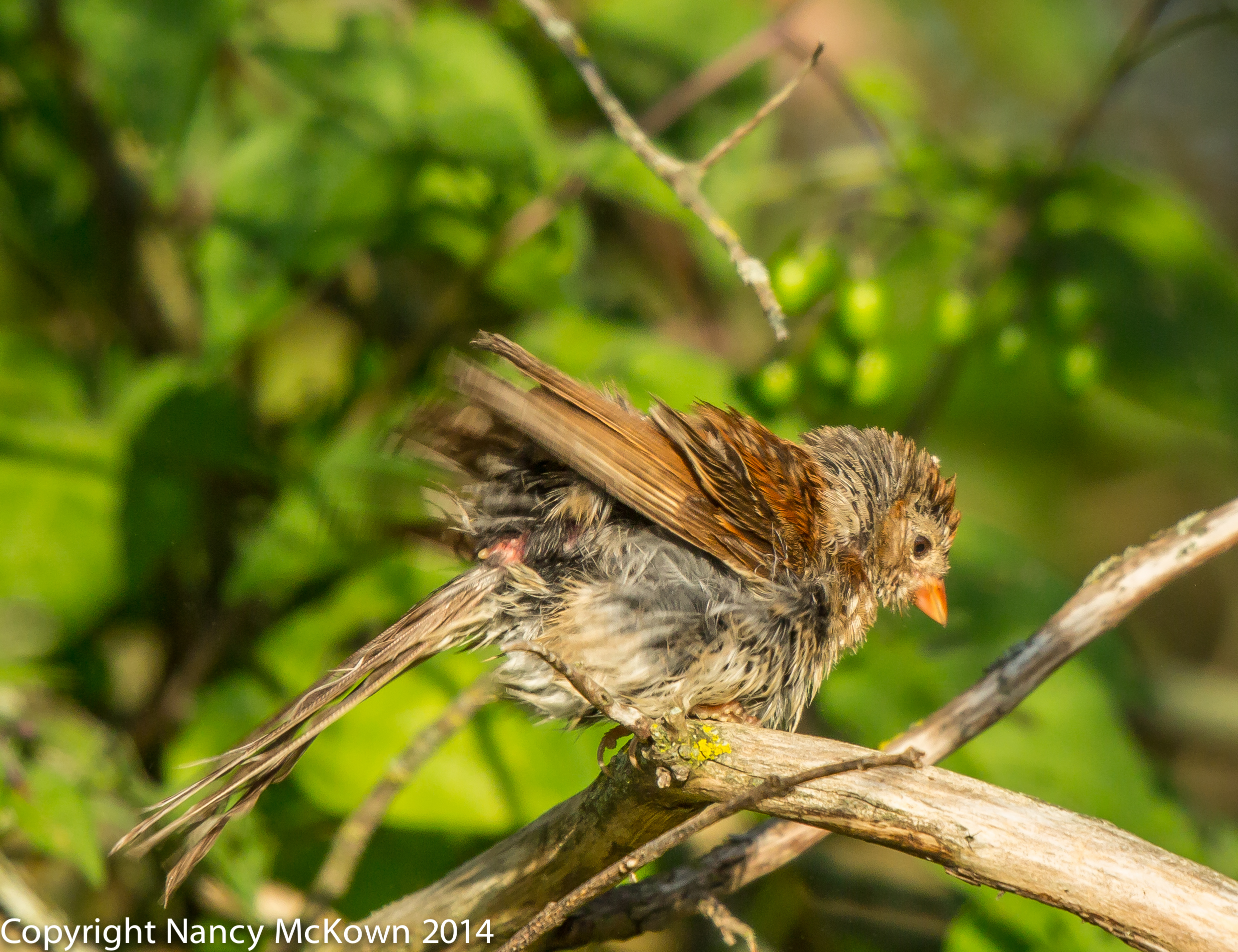
Photo of Field Sparrow
Field Sparrow, displaying its Preen gland, also called Uropygial, on its back at the base of its tail.
ISO 1000; f/8; 1/1000 Second

Better Prepared with Two DSLR Cameras

Many other breakdowns and accidents besides shutter failure can leave a photographer without a working camera; and breakdowns and accidents always seem to happen at the worst possible times. Having a second camera to use in parallel with my main camera would help me to be more prepared to go out in the field and photograph birds.

Well, not surprisingly, I’ve talked myself into another expenditure.  Fun!  😎
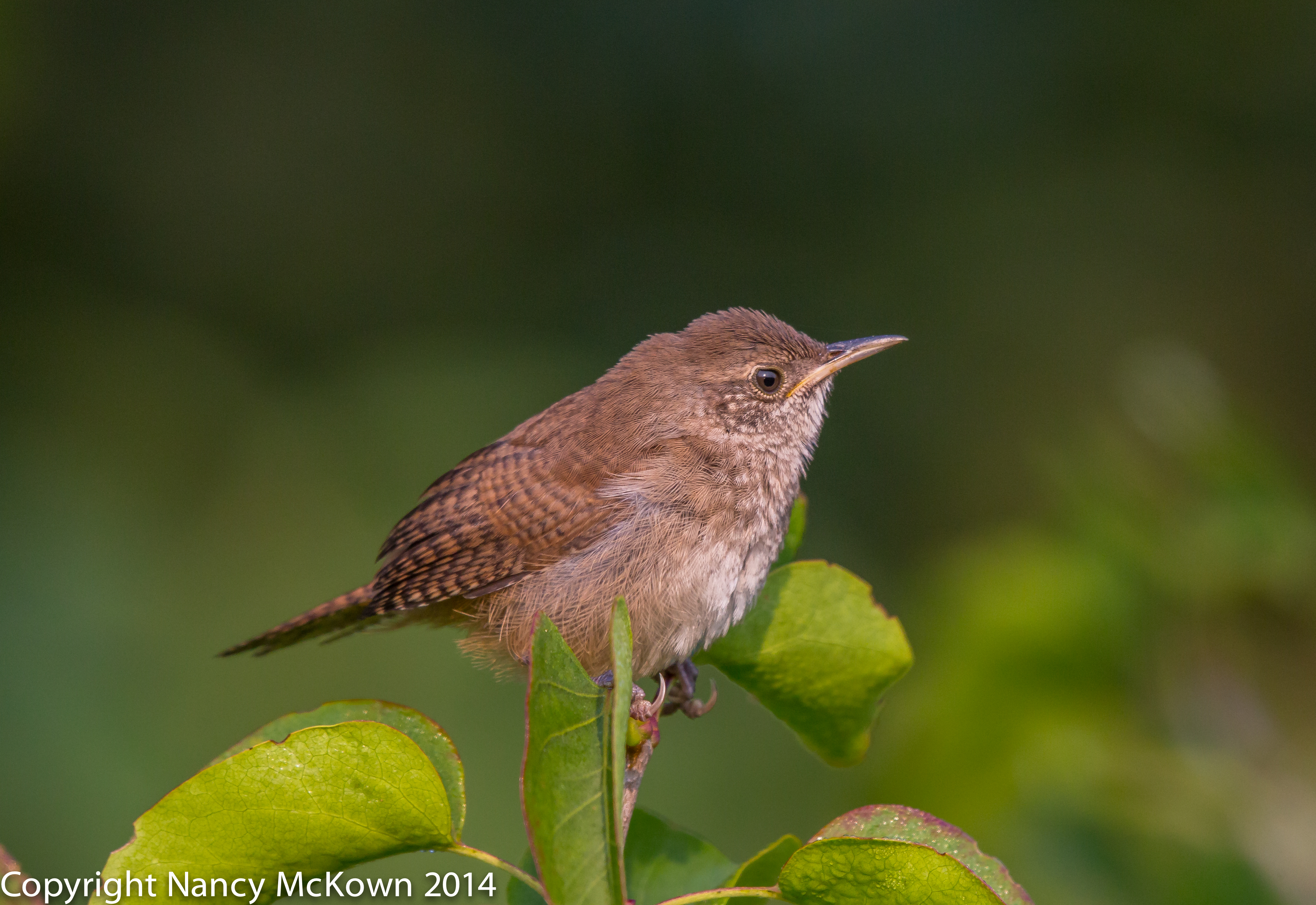
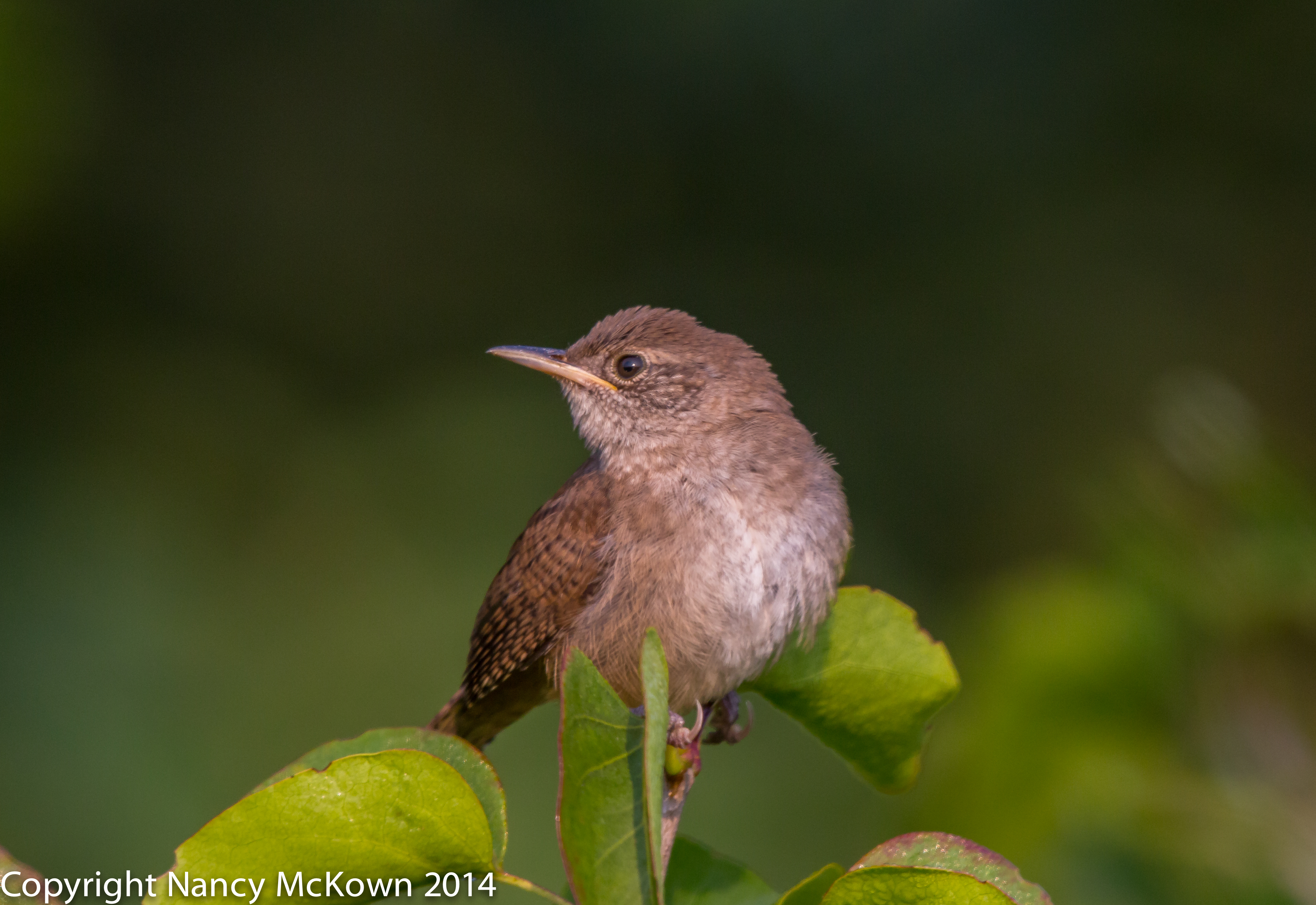
Photo of House Wren

Photographing House Wrens and Discovering Bird Personalities

Photographing House Wrens

Early Spring brings with it joyful bird song in the air. One of the first vocalizations I hear are the cheerful, jaunty tunes of the male and female House Wrens. It’s such a joy to listen to their effervescent voices.  (NOTE: To hear songs of the House Wren, press this link.)

Each April,  I observe and photograph the House Wrens busy with their spring preparations, and I try to determine if this year’s residents are the same individuals as last year. Since these birds (male and female) are so similar physically, I try to match behaviors and personalities that I remember from the previous year. It’s not as hard as you think.

Photo of House Wren
House Wren, an Aggressive and Hard Working Tiny Bird. ISO 150; f/9; 1/640 Second

Personality of Birds

Most species of birds are categorized by an assortment of characteristics. These include not only physical characteristics, but a description of the behaviors attributed to the male and/or female. House Wrens have these commonly known attributes:

  • Physical description – (small brown songbird, long curved bill, long tail often cocked skyward, male and female similar)
  • Nest Habits – (cavity nesters)
  • Migration information – (winters in southern U.S. and Mexico)
  • Species songs and calls – (130 different and complex songs and calls; notable for loud and insistent singing)
  • Behavior/personality description –  (cheerful and energetic, hard working, constantly chattering, highly competitive, angry, nervous, agitated when nest is threatened)
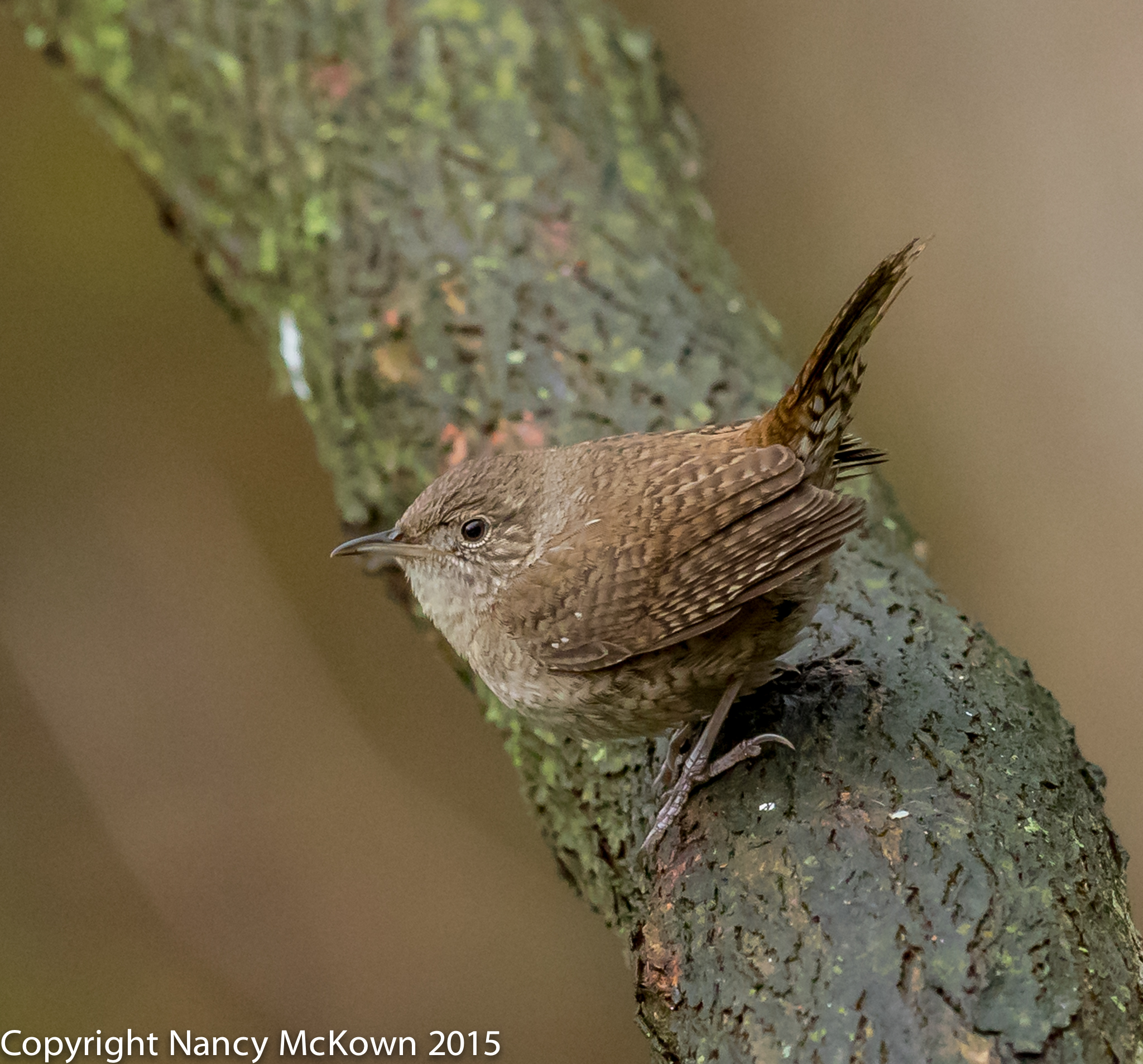
Photo of House Wren
House Wren, Momentarily Pausing for the Camera.
ISO2000; f/4.5; 1/800 Second

Distinct and Varied Personalities Within A Species

Personality norms for species of birds are highly observable. For instance, I know (from personal experience and documentation in my bird books), that when I approach the box nest of a pair of house wrens with my camera, I will be aggressively assaulted and scolded.

This particular wren behavior is highly predictable, but when I scratch the surface of the common behavioral attributes of the House Wren, can I find individual personality differences that exist within this species…individually distinct personality differences that, over time, defy prediction?

Questions Researchers Ponder

Since the word “personality” evokes all sorts of human thoughts, feelings and behaviors, Ornithologists (and other researchers) use the terms “behavior syndrome” or ” inter-individual variation” when studying and documenting bird behavior. These terms are less anthropomorphic and lend themselves to a more scientific way of observing and reporting different dispositions.

Questions to Ponder.  Are different birds within a species….

  • Distinctly intelligent, clever, mean, exploratory, assertive, adventurous, aggressive, shy, secretive, excitable, agreeable, curious, goofy?
  • Are some of these behavioral traits demonstrated consistently by a few, but not all, of the birds in a species?
  • Does natural selection play a role? Do some of these behaviors lead to more success in breeding and parenting?
  • Are these differences a consequence of nature or nurture; or both?
  • Do the songs of individual birds indicate personality?
  • Do some individual birds attempt to communicate with humans, and do those interactions indicate a distinct personality?
  • Do individual personalities cause birds to look for mates that are “compatible”?
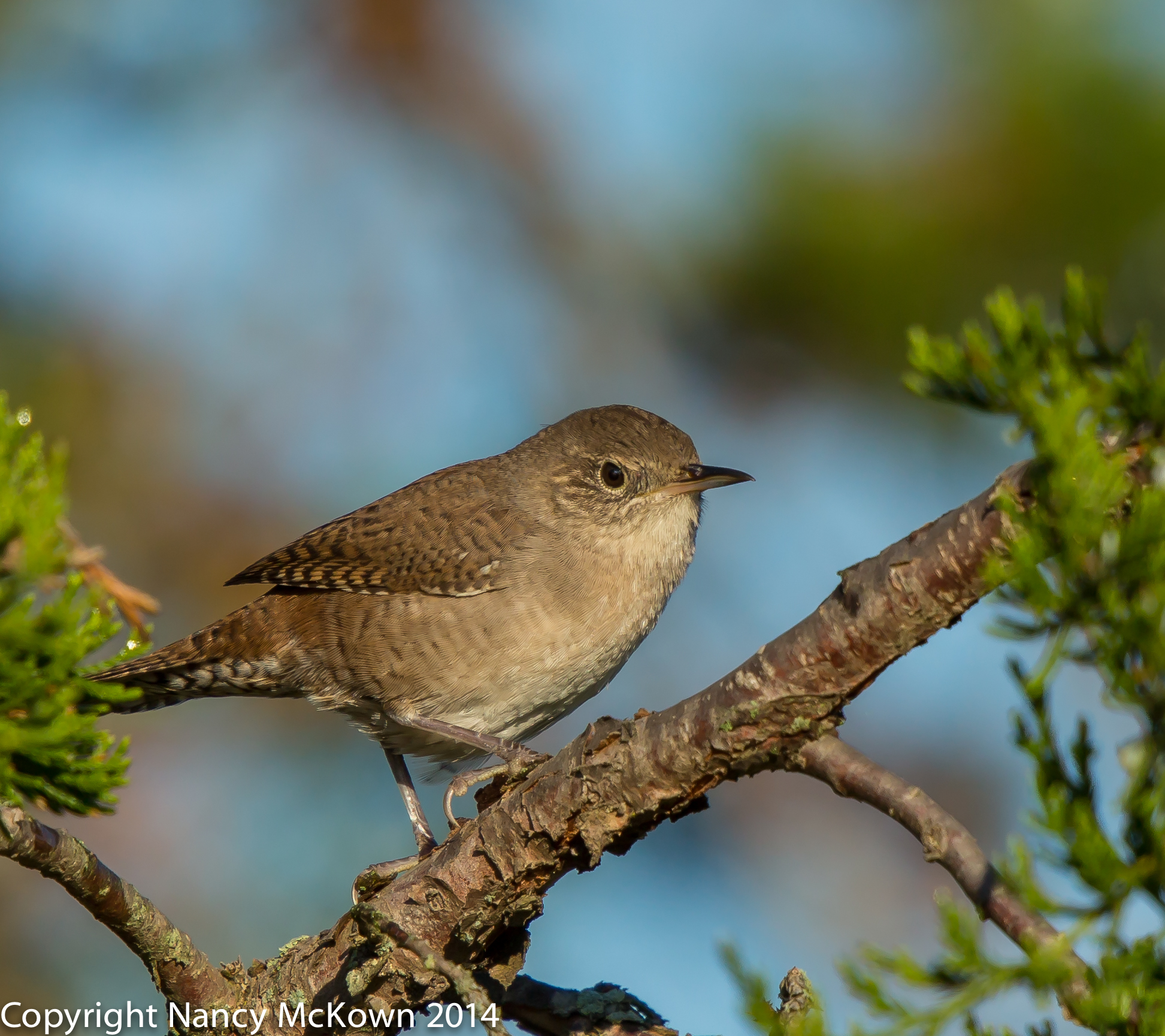
Photo of House Wren
House Wren. Rarely Do These Little Birds
Stay Put Long Enough to Photograph.
ISO 320; f/9.0; 1/800 Second

Photographing Individuality

Learning more about the study of inter-individual variation in birds is fascinating. I think the most compelling photographs of birds somehow capture the mystery of individuality. Searching out individuality helps us make connections, and that makes bird photography all the more compelling and challenging.

To read more about the research on distinct personalities within a bird species, visit this National Wildlife link.