Yearly Archives: 2015

Photo of Snowy Egret

Photographing the Snowy Egret- Getting the Light Right

Side Lighting

There’s nothing quite so gratifying as photographing a bird at eye level and being able to play with how the light strikes its feathers. I assembled my 7D Mark II with a 300mm f/2.8L lens and 1.4 x III telephoto extender and went for a walk on a Southern California beach in search of a Snowy Egret.  I spotted one almost immediately foraging in the shallow water.

I walked slowly toward him, as close as I dared. The morning sun was low in the eastern sky and to the right of the camera. The soft illumination was spreading unevenly over the Egret, and consequently, textures, shapes, patterns, and contours were more emphasized. I set my exposure manually and started shooting.

Camera Gear for Beach Walking

The advantages of taking this camera gear with me for a walk on the beach are as follows:

  • The Canon 300 mm f/2.8 L lens is an extremely sharp prime lens that focuses fast and has a wide aperture.
  • The 300mm lens is fairly light (5.17lbs), responds fast in low light and produces outstanding background blur.
  • The Canon 1.4x III telephoto extender is compatible with this lens and extends the 300mm focal reach to a 420 mm.(300 x 1.4)
  • Multiply in the extra reach afforded by the 1.6 cropped sensor in the 7D Mark II (420 x 1.6) and I have a reach of 672 mm with a f/4.0 aperture.  (Remember the technical tradeoffs that come with attaching the 1.4 telephoto extender: the max aperture is reduced by one stop, focusing speed is slower and sharpness will be slightly decreased.) 
  • No tripod is needed with the 300 mm/1.4x extender combo. (NOTE: I find that my 500mm 4.0L lens is too heavy to comfortably walk around with, especially on the beach. It is also difficult for me to prop up the 500mm and hold it steady when it is time to aim and shoot.)
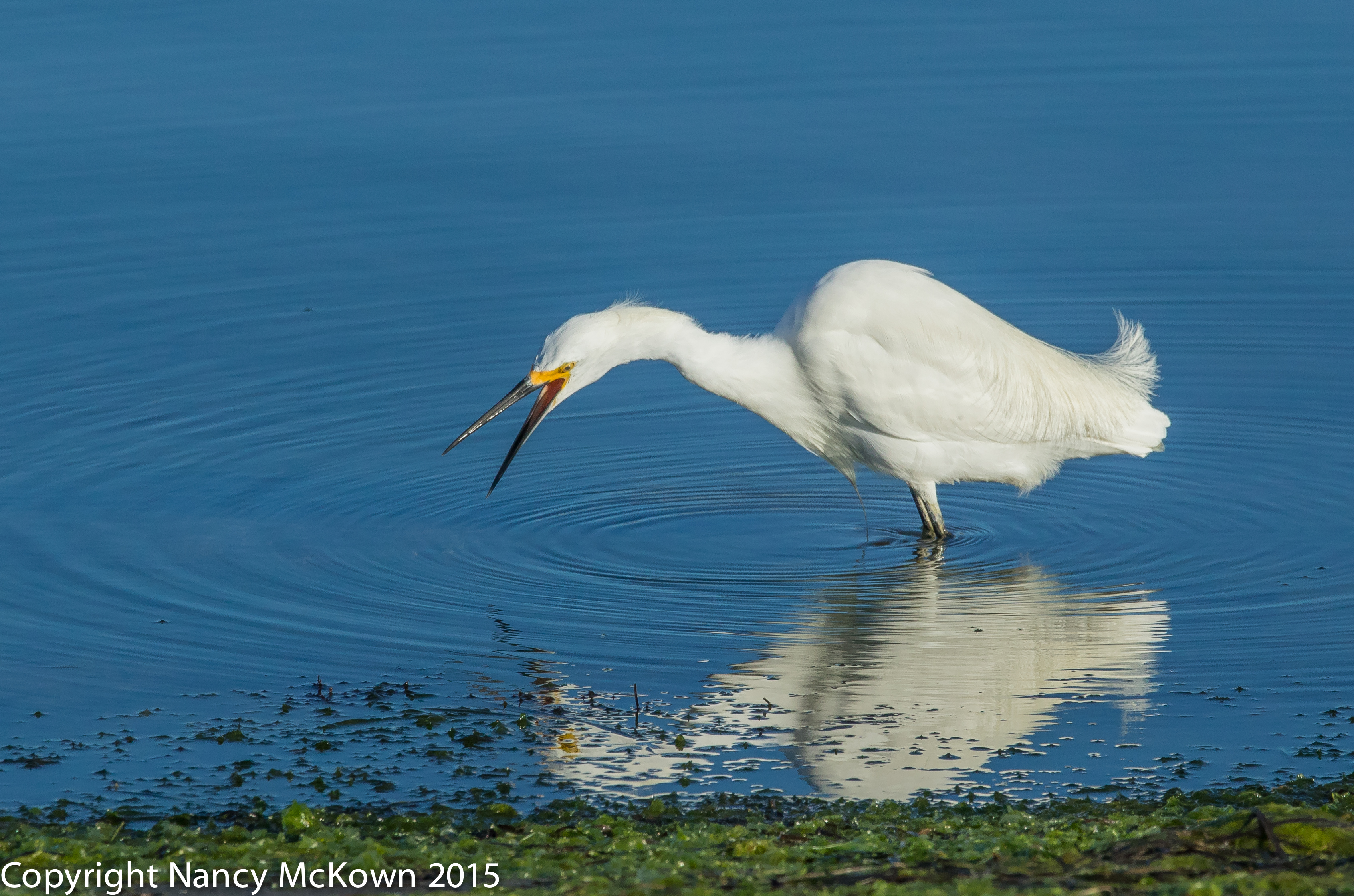
Photo of Snowy Egret
Close up of a Snowy Egret
ISO1000; f/9; 1/2000 Second

Ethereal Qualities

While on the beach, I noticed the intriguing light, but did not register its surreal qualities or how eerily it painted itself on the Egret or the water in the background. My focus was on photographing this captivating bird. The unearthliness created by the light was all around me, and I missed it, at least until I saw it that evening in Lightroom.

What I missed is illustrated in this close-up photo of the Snowy Egret. It depicts a tranquil, almost spiritual place. The dreamy quality of the flowing water in the background gives the photo an impressionist flair, the illusion that this photo is a painting. The wet feathers on his head and breast appear to have a silky, tactile quality. The soft glow illuminating the back side of the Egret’s white head and long neck contrasts nicely with the strikingly placid background. Why didn’t I notice (and enjoy) the ethereal qualities of the light at the time I was taking the photograph?

It’s pretty clear that I need to stop being all cozy and comfortable with my bird photography. My photos would be better if I am more aware and purposeful with light – think more about what it is I want to create, and try to pay attention to when and how natural light paints exquisite dreamlike qualities on its canvas.

That takes being at the right place at the right time to a whole different level.


(See this post about photographing birds on or near water).


Male Mandarin Duck

Photographing Mandarin Ducks

Nature’s Fabulous Design

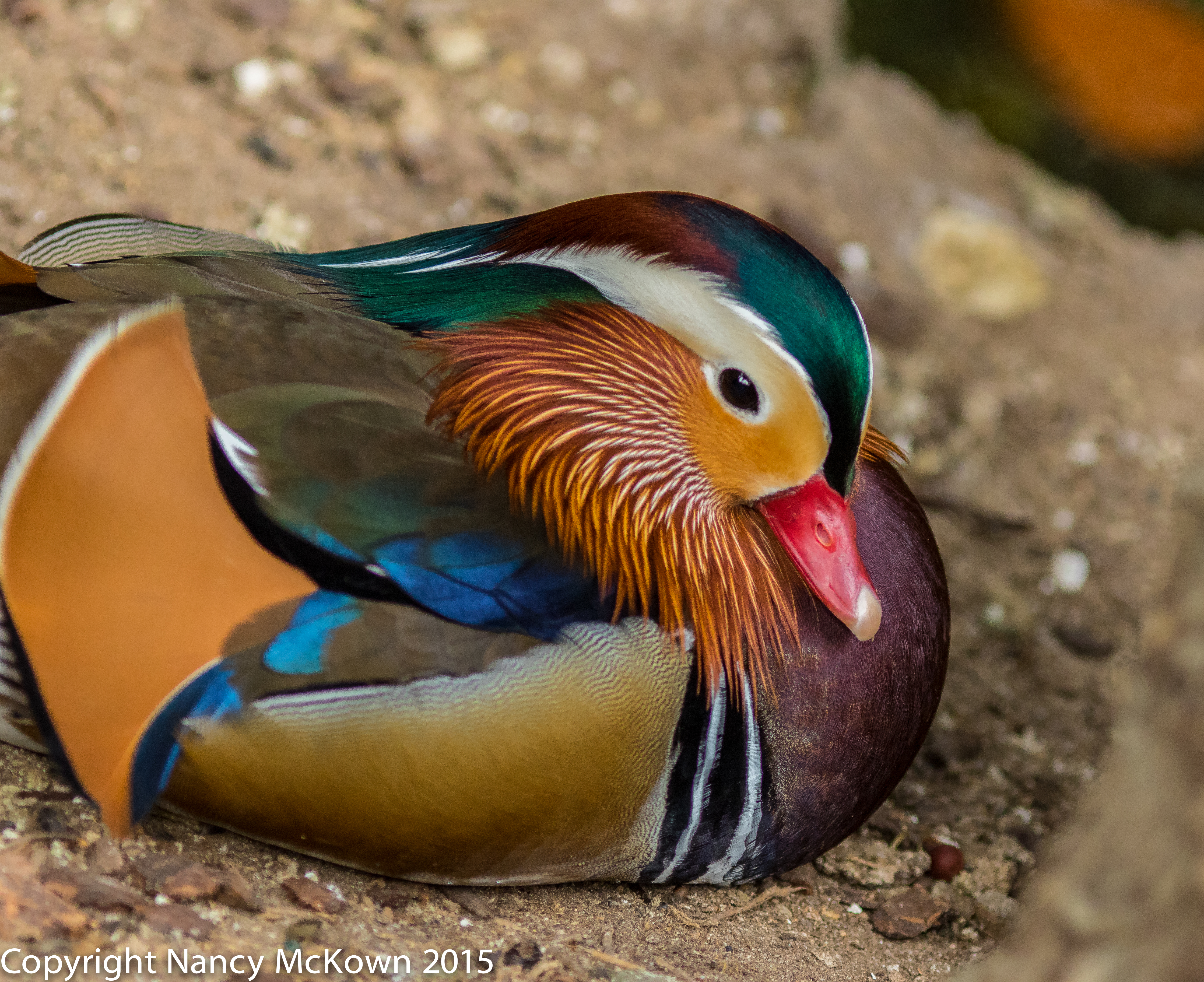
What a knockout!  The Mandarin drake’s plumage is an unrestrained assortment of different patterns, colors, arrangements, textures, shapes, and lengths. Showing off a preponderance of gold, he also sports blue, green, and copper on his crest; white, orange, and olive in his mane, white, gold and black on his underparts, a bright purple breast, yellow feet and legs and a white tipped red bill. Large, dark eyes are emphasized with sleek white feathers that extend past his mane. Lustrous, iridescent blue colors shimmer on his back. Best of all, orange and gold sail feathers protrude 2″ or so up from his back. The Mandarin is definitely the most beautiful duck I’ve ever seen.

Photo of Male Mandarin Duck
Textures and Colors Abound on This Male Mandarin Duck Posing in His Spring Plumage.
ISO3200; f/4; 1/800 Seconds

Photographing Captive Mandarin Ducks

Mandarin Ducks are native to east Asia and symbolize happiness and faithfulness. Mandarin pairs are often presented as wedding gifts in Japan and China. Brought to Europe and America as captives, many escaped into the wild and thrived. I photographed these individuals in the extensive, lush garden area of the Catamaran hotel on Mission Bay, San Diego, California. The Mandarins and three or four other species of ducks were provided with an abundance of food and water in an extensive aquatic environment set up by the hotel.

To photograph these exotic waterfowl, I walked to the Catamaran Hotel with my 7D Mark II, 135 mm lens with 2x extender. Focal length on this setup was 135 x 2 = 270. The cropped sensor gave an additional reach: 1.6 x 270 = 432 mm. A good focal length in a fairly compact camera setup made it easy to walk long distances. I did not bring my tripod.

Mature palm trees blocked a lot of the light coming into the gardens. After I manually set the exposure, the ISO was reading very high; 3200. The Mandarin Ducks at the hotel seemed accustomed to humans, but did not seek them out. I sat down on a sidewalk near the stream with my camera and waited. After 10 minutes or so, a pair of Mandarins swam by, the drake stopping to climb a rock and preen. Very easy shots and close enough to help counteract the high ISO.

Photo of Female Mandarin Duck
Subtle Colors of the Female Mandarin Duck.ISO3200; f/5.6; 1/640 Second 

Shedding His Beauty

The extraordinary adornment on the Mandarin drake indicates health and vitality and thus good breeding potential to a female Mandarin Duck. After the male flashes his extraordinary plumage for the females, completes the mating ritual and helps incubate the eggs, he leaves the family to commence extreme molting behavior. His work done, he transforms from spectacular to drab- perfect for blending and evading predators. The molting is so extreme on this species of duck that he temporarily looses his primary feathers and is unable to fly.

Read more about the defrocked Mandarin Duck in the March 2015 edition of National Geographic by pressing this link . Click to page 28. The one page article is entitled “Looking Hot, Then Not“.

Photo of Allen's Hummingbird

Photographing a Female Allen’s Hummingbird

Interdependence Between Hummers and their Flowers

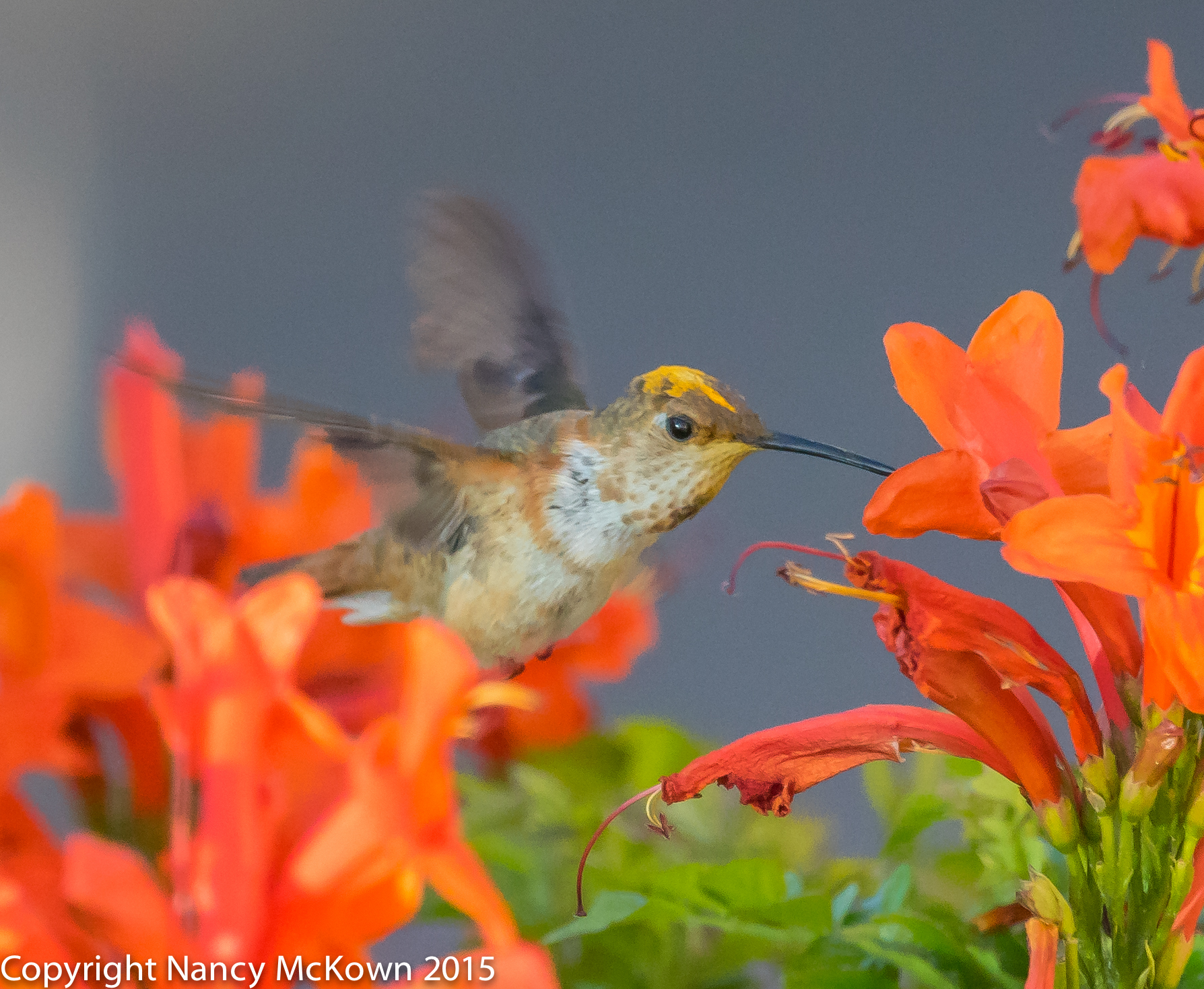
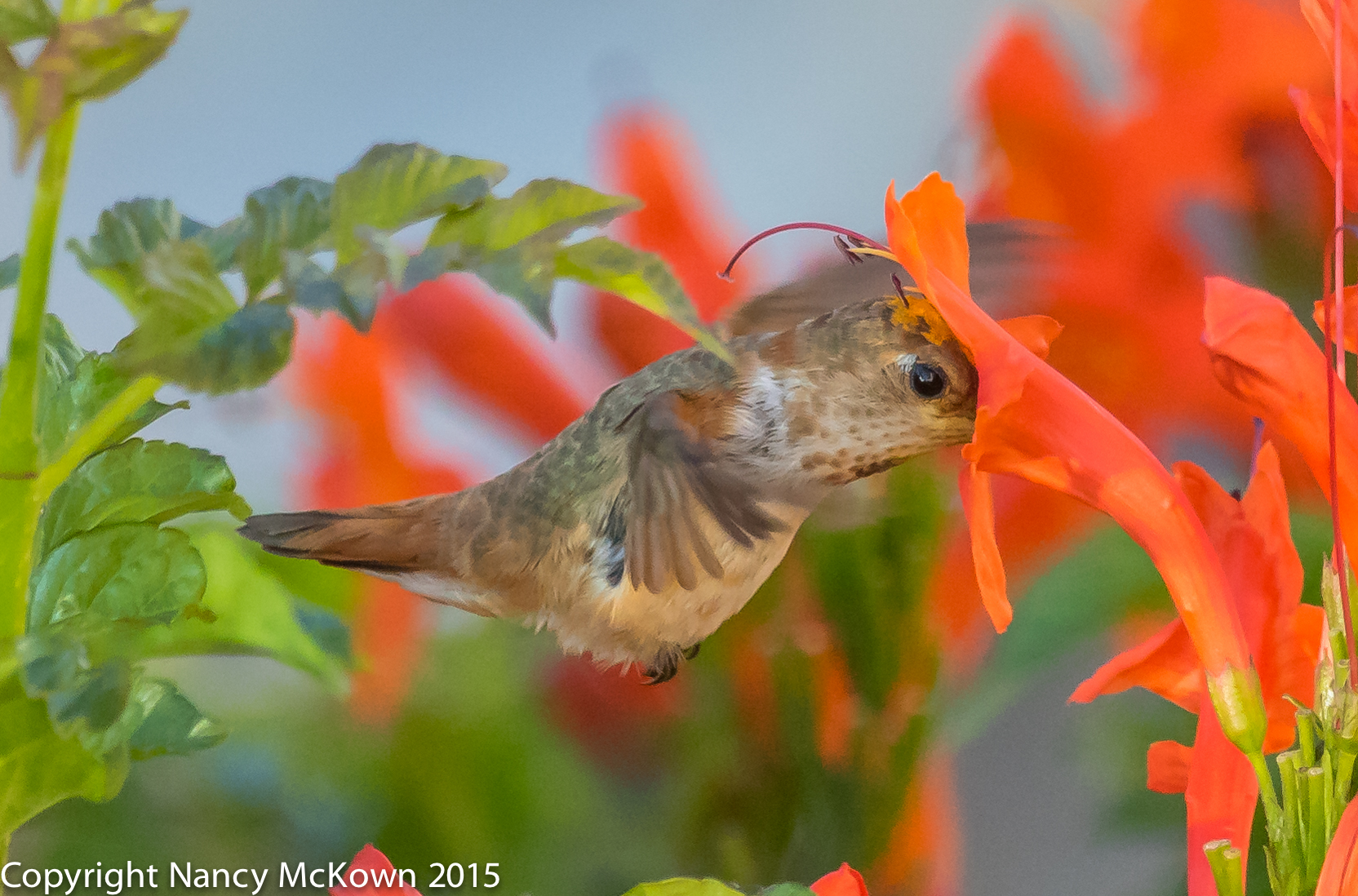
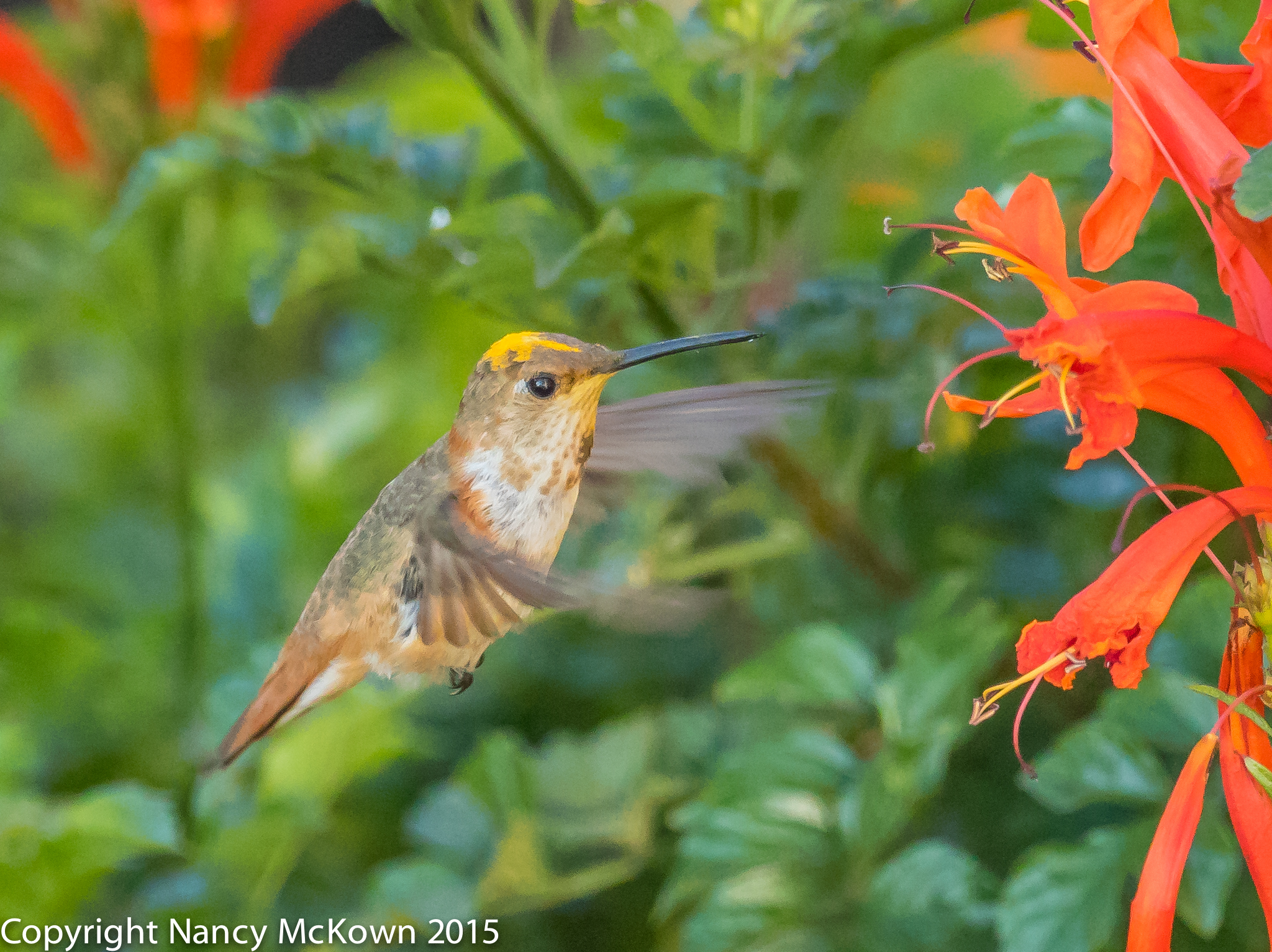
Hummers feed constantly, mostly on a diet of sugar obtained from the nectar of bright and blooming trumpet shaped flowers. This little female Allen’s Hummer pushed her long beak deeply into the tube shaped flower (honeysuckle?) to slurp the nectar at its base. In doing so, she coated her head and neck with powdery pollen from the stamen of the flower. She will take that with her to another flower of the same species where some of that pollen will rub off onto its stigma, thereby bringing those two plants together to reproduce.

Photo of Female Allen's Hummingbird
Female Allen’s Hummingbird, dipping deep for nectar.
ISO 1600; f/5.6; 1/1000 second
Photo of Allen's Hummingbird
Plenty of Pollen on the head of this Female Allen’s Hummingbird
ISO2500; f/5.6; 1/1000 Second

Clear Shots Despite the High ISO

The sun was bright (like it is every single day in San Diego), but the flowers were shaded from the morning sun by tall trees. Hoping to photograph a female Allen’s hummingbird that I had seen feeding on these flowers earlier, I set up my camera and 300 mm lens on the balcony overlooking (and fairly close) to the bright orange trumpet flowers. I set the shutter as low as I dared to go to capture the fast moving hummer, and set the aperture as wide as I dare to go with a 300mm lens. (NOTE: Longer lenses, 200mm and longer, tend to give a very shallow depth of field. To learn more about long lenses and depth of field, see this post.)

With these manual settings, the auto ISO hovered between 1600 and 2500- very high. I usually don’t allow the ISO to rise above 800 or 1000, but I hoped the close proximity between the lens and the hummingbird would help lessen the impact of noise.

Happy with the Results

I think the 2 photographs above look fairly good, despite the relatively high ISO. The indirect sunlight accentuates the beauty and luminosity of the bright orange trumpet flowers and contributes to a strong composition. The hummer’s body is in focus…all except her wings. (See this post if you would like more information on motion blur.) I see that I could have blurred the background a bit more by opening the aperture up one or two additional stops. That would have done a lot to lower the high ISO.  The hummer fed for 4-5 minutes, so there was plenty of time to experiment with different exposure settings. I wish I had.

Hummingbird Coated with Pollen

Not often do I photograph a hummingbird so coated with pollen. She was moving about from flower to flower so fast, I did not notice her condition until after I had the photo files downloaded to my computer.

Hummingbirds are one of nature’s most prodigious delivery systems. If you’re interested in learning more about the unique relationship between a hummingbird and its flowers, press this link.

Food Fight - Osprey and Cormorant

Photographing a Tussle over A Fish

Photographing Fast and Furious Action

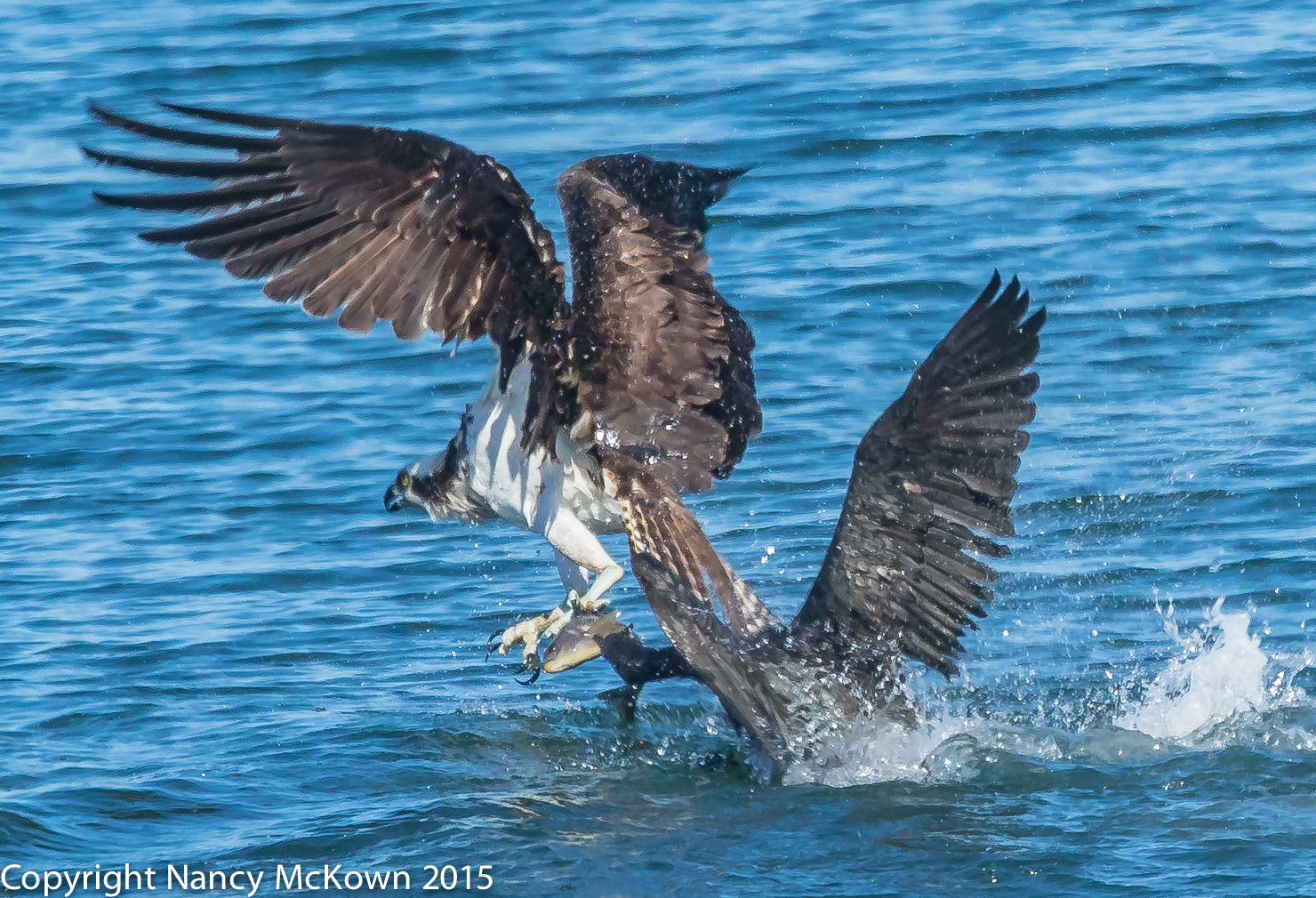
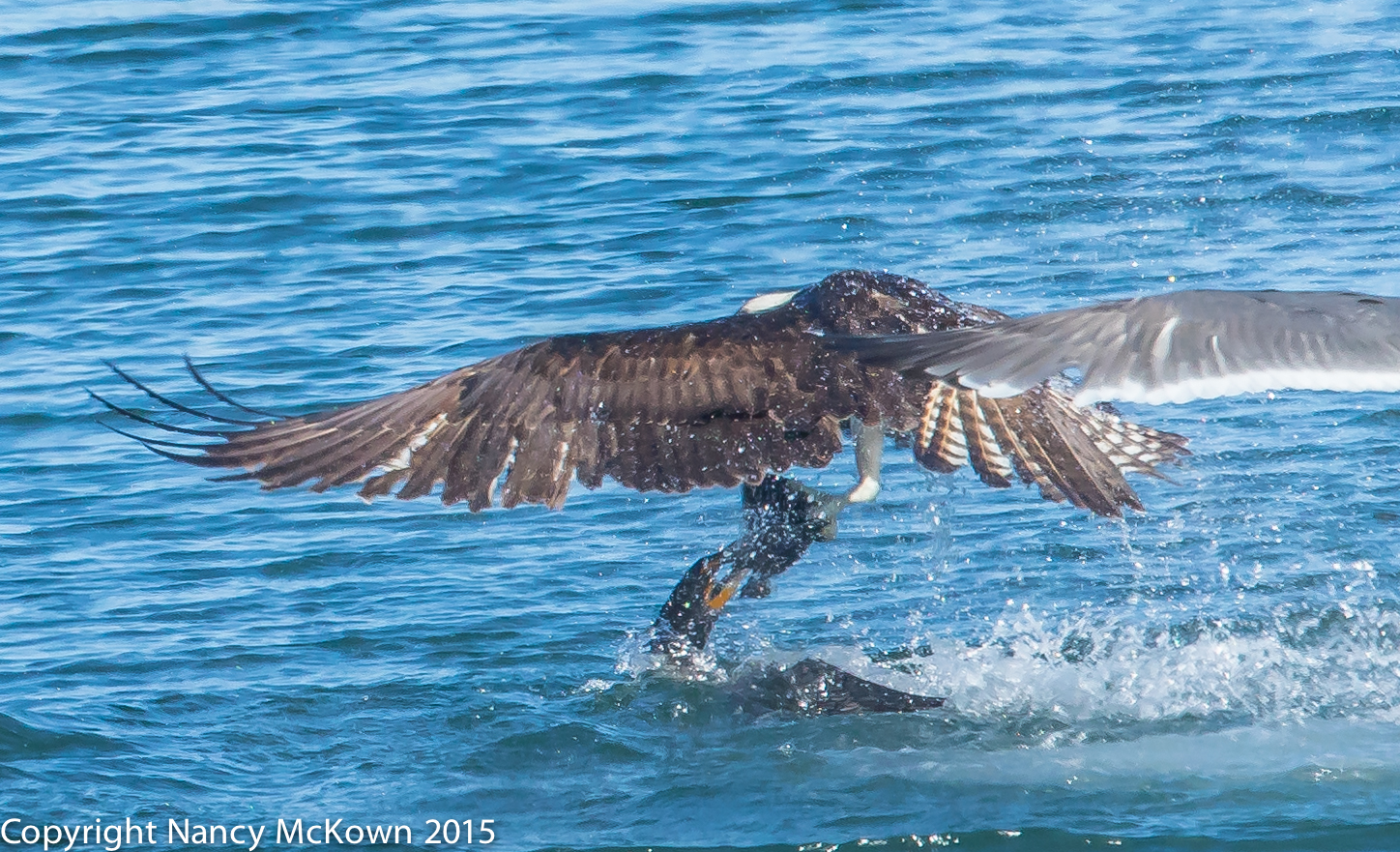
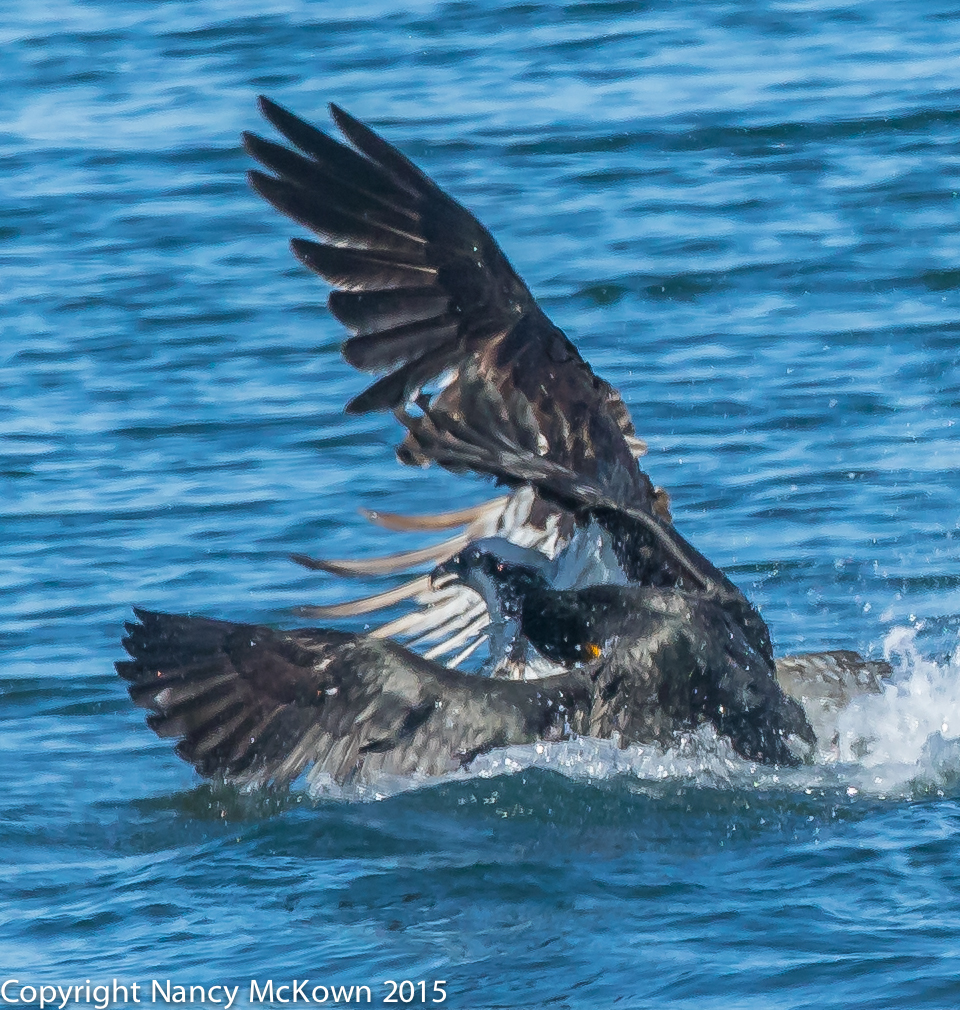
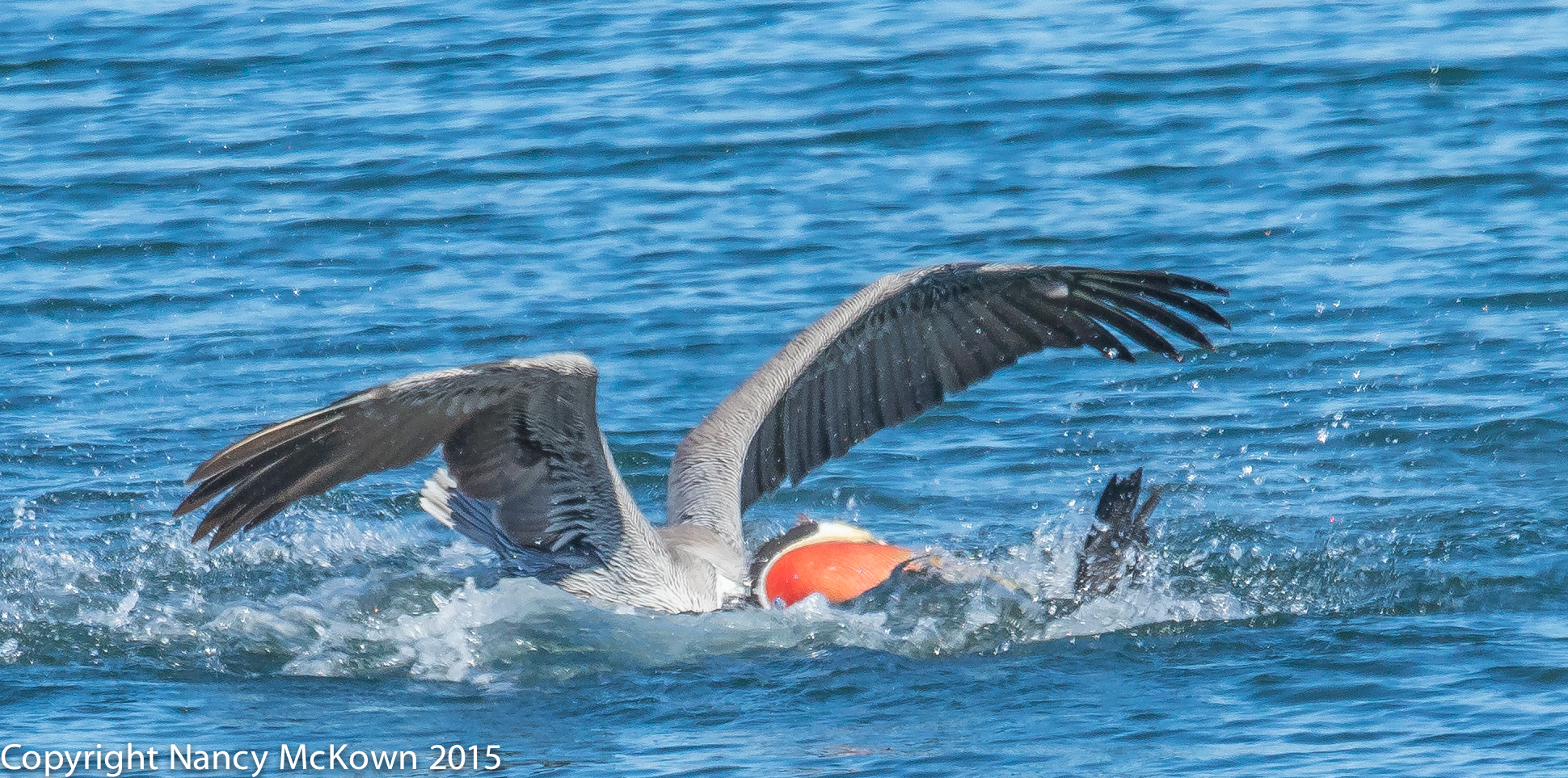
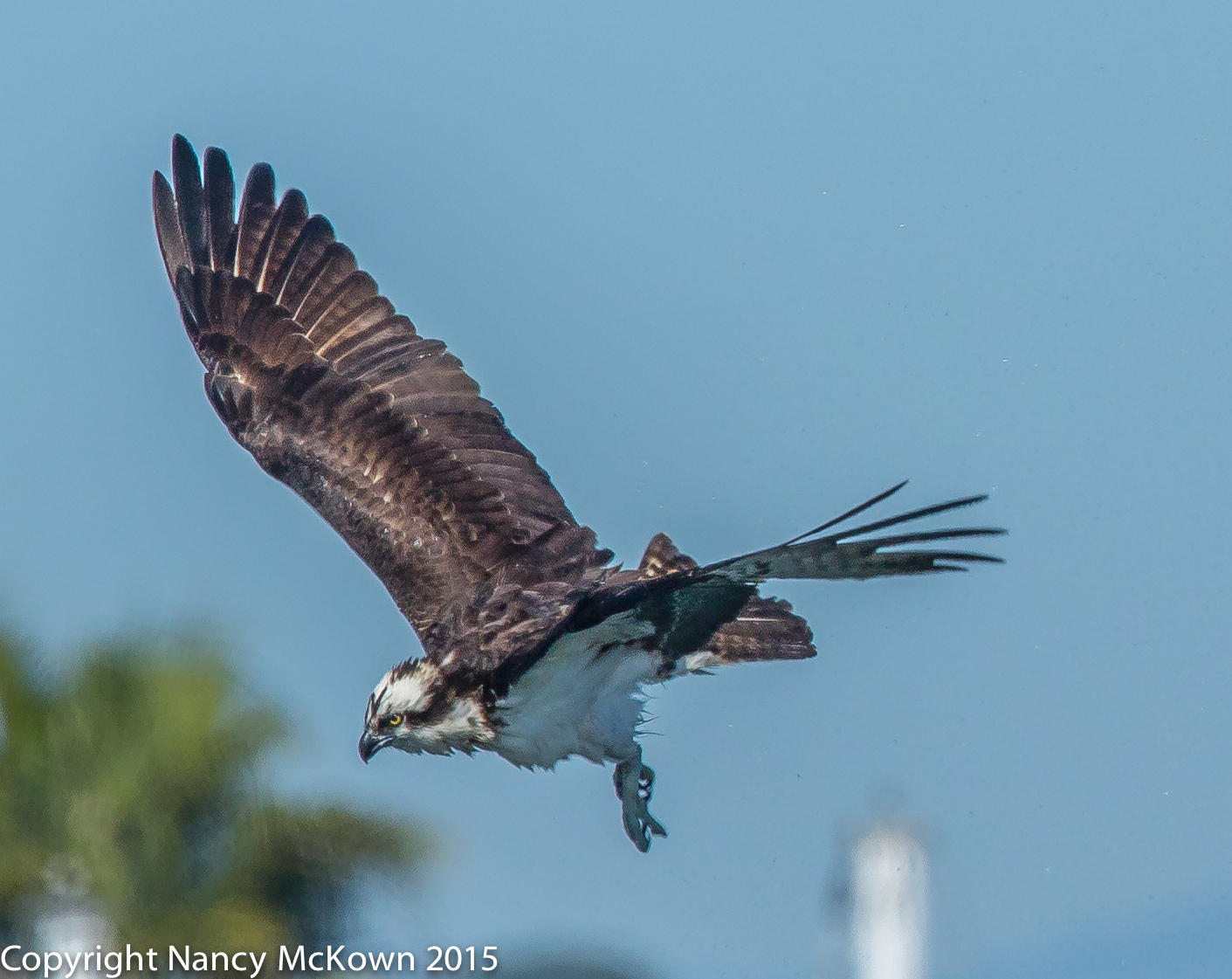
Let these photos tell a story of 4 species of birds tussling over one fish. I was able to photograph a rough and vigorous struggle between a Cormorant, an Osprey, two Pelicans, and an opportunistic Sea Gull. The Sea Gull mostly stayed on the sidelines, but was close enough and thus ready to pounce, given the opportunity. This scuffle over a fish occurred on Mission Bay, in San Diego, California.

“If Only” Moments in Photography

As with most bird photography, there are always those “if only” moments. If only I had a longer lens attached to my camera…. If only the shutter speed was set higher to sharpen the fast action….If only that Seagull didn’t block the shot. Suffice to say, though this tussle lasted only minutes and the photos could have been better, I was pleased to be in the right place at the right time.

I took more than 50 shots. The 7D Mark II lived up to its specs by providing continuous full resolution shooting of 10 frames per second. I’ve included 9 shots to tell the tale. There’s a lot of splashing action, so be sure to click on each of the photos so you can see the larger image and more detail.

BO3A3557

Despite the Sea Gull in flight and blocking the shot and quite a lot of splashing water, you can still see the Cormorant’s beak and the Osprey’s Talons tugging at a rather large fish.

BO3A3558

More tugging between the Cormorant and Osprey, with the Sea Gull’s white wing moving away from the center of the action.

BO3A3559

Looks like the Osprey might have the advantage as he attempts to take the fish with him and fly off.  The Cormorant holds tight.

BO3A3561

The Osprey is suddenly pulled down into the water on top of the Cormorant, who is not about to release the fish.

BO3A3564

The Osprey releases the fish and tries to lift himself out of the water. The Cormorant, holding on to the fish, tries to fly away.

BO3A3567

The Osprey flies off without the fish, leaving a jubilant Cormorant alone with his prize.

BO3A3568

Enter Pelican #1 who appears to take the Cormorant under water.

BO3A3572

Seconds later, a 2nd Pelican lands on top of the first. Exit right the Cormorant, without his fish.

Photo of Osprey

 And exit one very wet and pissed off Osprey.

Photo of Western Kingbird

A New Photography Adventure and an Unexpected Accident

Finding New Birds to Photograph

February is a great time to get out of Southwest Michigan. We decided to head to southern California for some sun and warmth – and possibly new birds to photograph. I packed my Canon 7D Mark II DSLR, 300mm 2.8 L 2 lens, 1.4 extender, 2.0 extender, and 135mm lens. I was careful and bought a padded super telephoto lens back pack case long enough to carry my DSLR camera attached to a 2x extender and long lens. The 135 mm lens and 1.4 extender were placed in a smaller padded camera case.

Fragile Camera Equipment

I carried my backpack onto the plane like it was a baby and gingerly placed it in the overhead bin. All went well until we retrieved the backpack to transfer planes. When we deplaned, my husband let the backpack slide off his back a little too fast and it hit the ground with a sickening thud.

I thought the back pack’s padding would absorb the hit; but no. When it comes to camera equipment, gravity is not your friend. My heart sank when I unzipped the pack and saw the damage.

Damage Assessment

  • The DSLR camera’s female lens mount was twisted, barely holding on to the connected male mount on the 2x extender.
  • The male 2x extender mount, connected to the twisted DSLR mount, was itself skewed.
  • The other end of the 2x extender had 3 screws yanked out and could no longer hold tightly to the 300mm lens.
  • The 300 mm lens mount had been torn away.

A bayonet lens mount does more than physically attached a DSLR camera to a matching lens and or connector. A tight fitting is required for all mechanical and electrical systems to properly communicate. The slightest damage within these connectors and malfunctions will almost certainly happen.

Canon Authorized Repair Center to the Rescue

The closest authorized Canon Repair Center was only 8 miles away. The service man inspected the damage and concluded that all mounts had to be replaced. In addition, the autofocus mechanism on the 300mm lens was damaged, so it had to be taken apart, repaired and reassembled.

Two weeks and $700.00 later, all of my damaged equipment was again operational. NOTE:  I carry full insurance on all of my photo equipment. See this post regarding protecting your investment.

Photographing Southern California Birds

In the time I was without my camera equipment, I no doubt missed out on some excellent photo adventures. But in sunny California, the opportunities to photograph birds are endless. I am very happy with the west coast birds I was able to photograph after my camera was repaired.

My next 6-8 blog postings will spotlight my photographic experiences with birds I almost never encounter at home. I hope you enjoy this break away from photographing southwest Michigan birds. I sure did. 😎

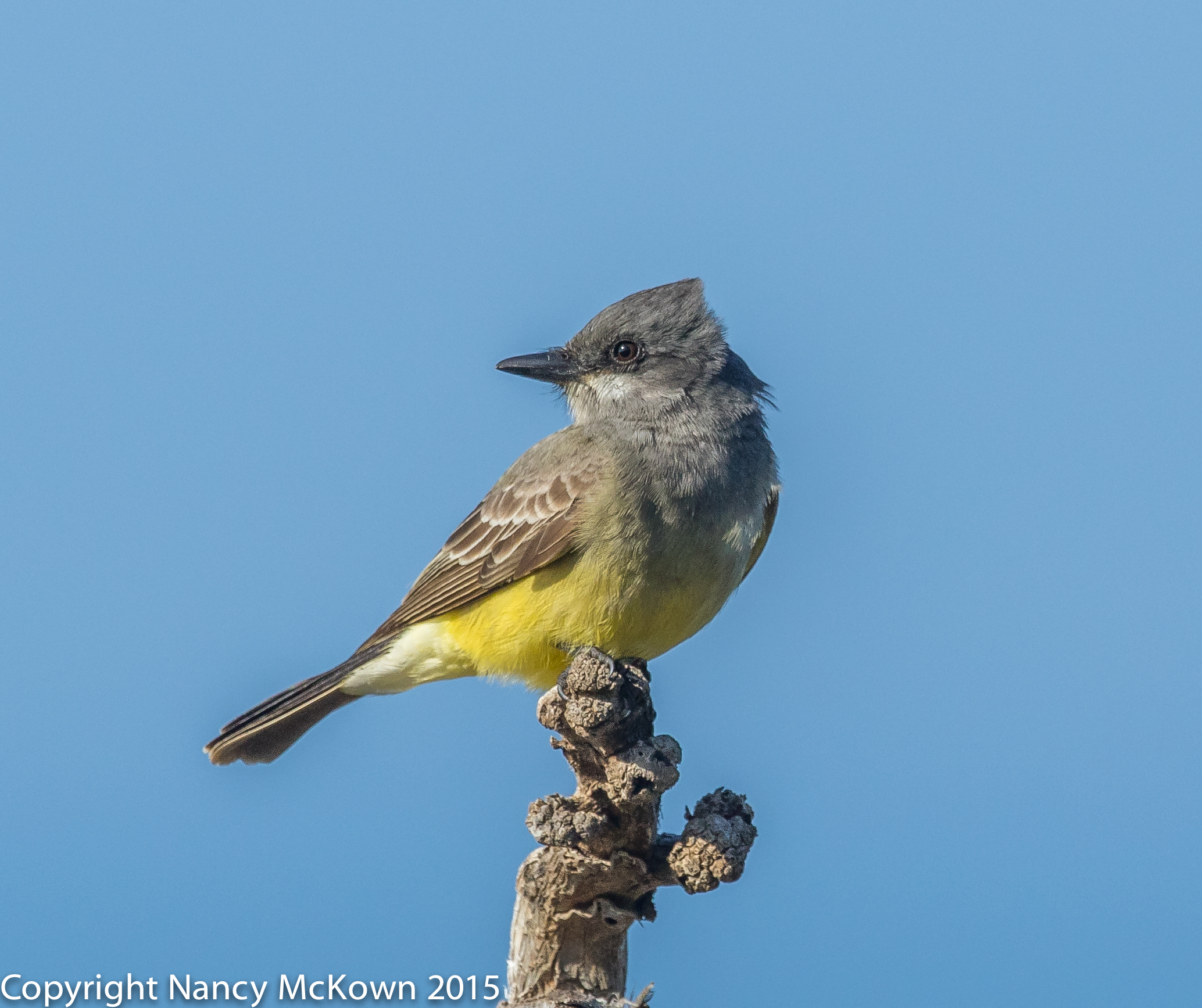
Photo of Cassin's Kingbird
The Cassin’s Kingbird wintering in Southern California.
Not so different from the Eastern Kingbird commonly Found in Southwest Michigan.
ISO250; f/6; 1/2000 Second

To see photos of the Eastern Kingbird, see this post.


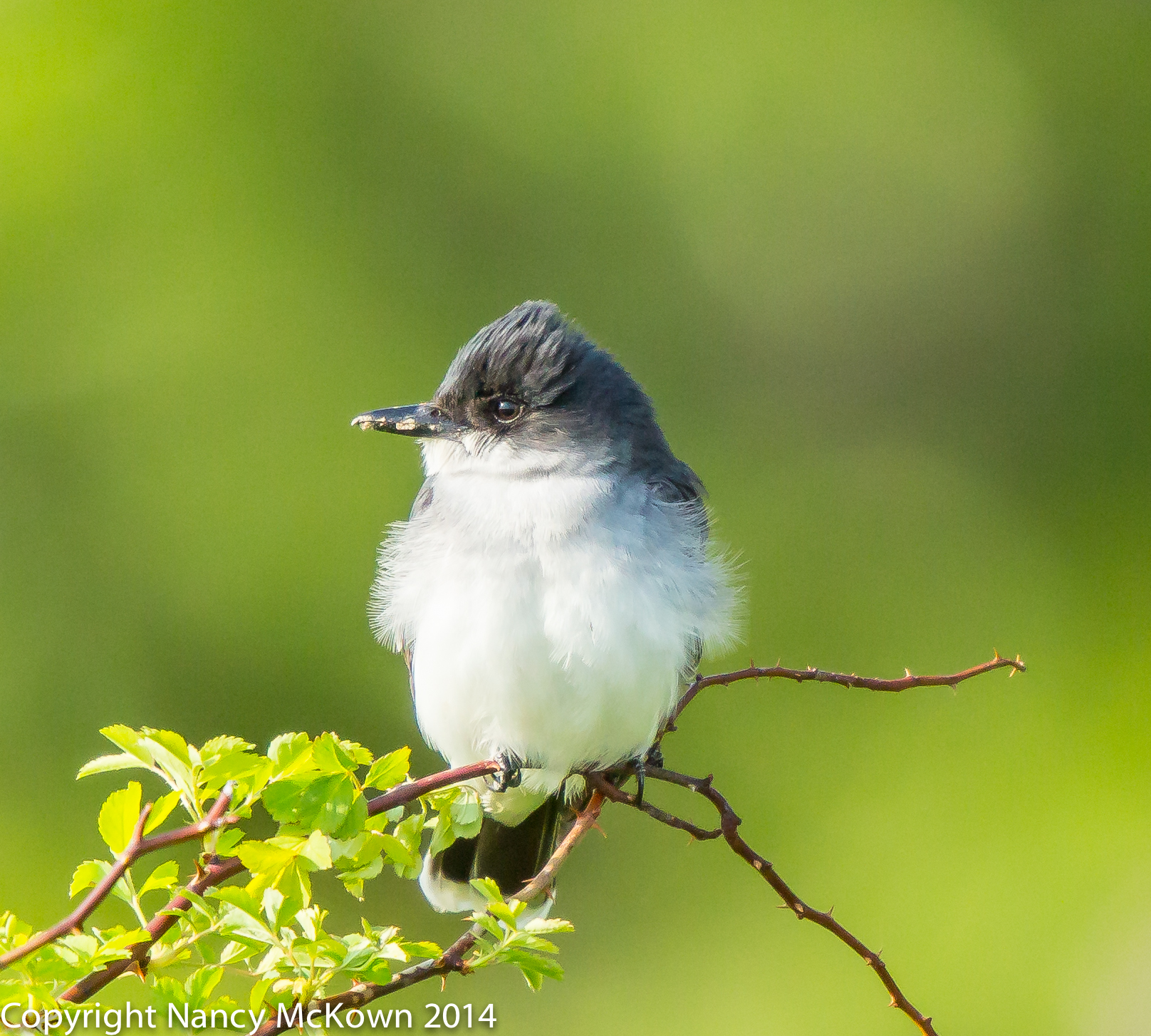
Photo of Eastern Kingbird

Photographing the Eastern Kingbird and Playing with Focusing Range

The Magic of Autofocus

Imagine bird photography using only manual focus. How is it even possible to nail the focus of a bird zig-zagging in flight without the magic of autofocus?  My rate of achieving sharp photos would be minuscule if I had to manually focus a heavy lens while tracking a bird and then pressing the shutter just right.

Photo of Eastern Kingbird
Eastern Kingbird Moving About From Branch to Branch.
ISO 1250; f/8; 1/1600 Second

Continuous Autofocus

When the birds are relatively still, I use one-shot auto focus. (I usually keep my camera set on one-shot auto focus.)  However, in windy conditions, it’s fun to experiment with the speed and precision of continuous autofocus – especially when photographing erratic bird movement.

With continuous focus, as long as I can keep at least one of the AF points on my target bird, I know that the photos will be in-focus. The camera’s processor works overtime to constantly predict and calculate what might happen next, not once, but hundreds of times. All I have to do is make sure the shutter is set fast enough to capture the action.

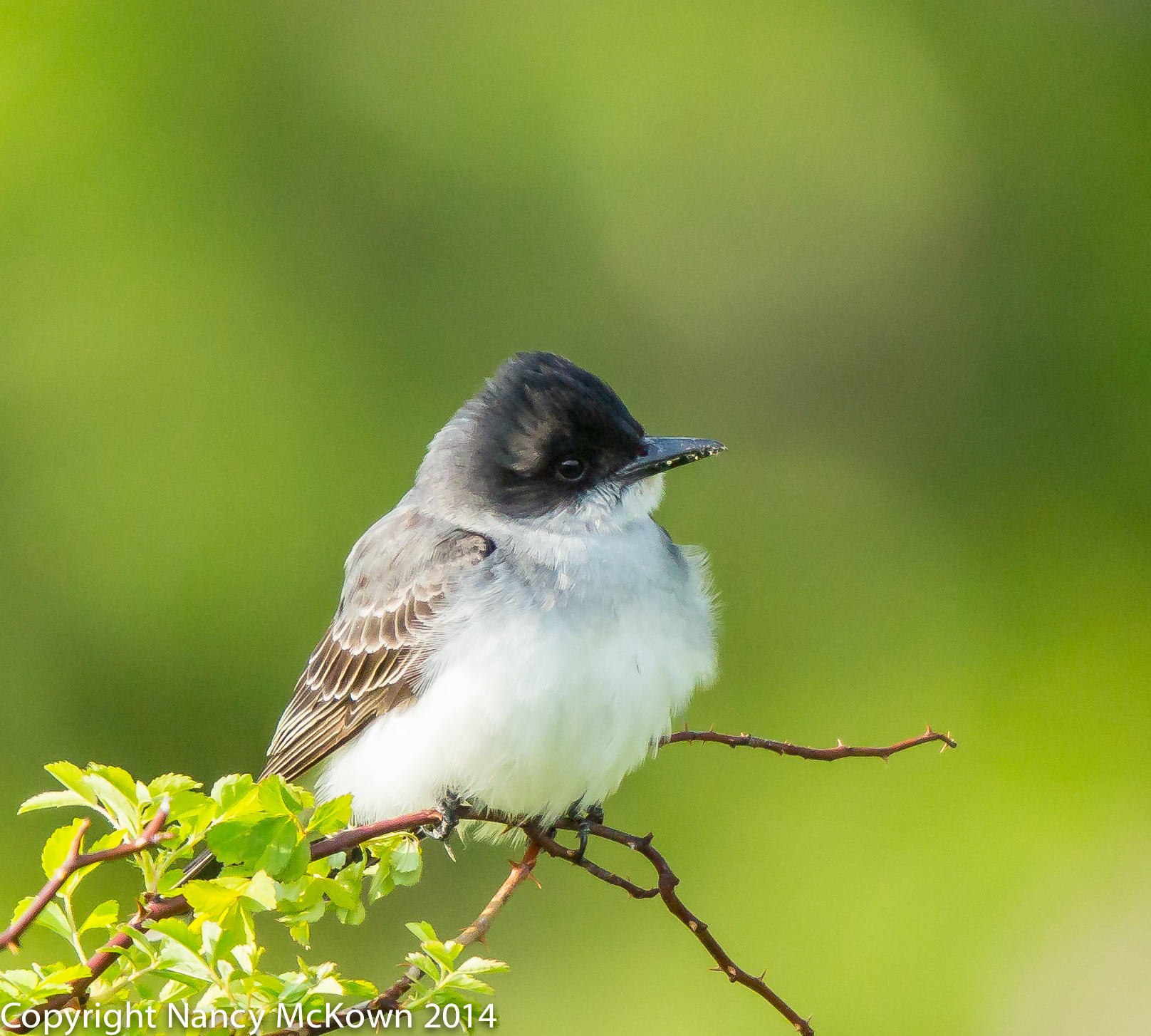
Photograph of Eastern Kingbird
Eastern Kingbird
ISO1250; f/8; 1/1600 Second

Hunting for a Focus Lock in Windy Conditions

It’s easier to use continuous autofocus on a large bird, but I decided to try it on a windy day when I came across the relatively small and active Eastern Kingbird. This individual was on the move in and out of the thorny branches while a 10-15 mph wind blew branches, grass, and my long lens about. The focusing mechanism was noisily hunting in and out, trying to achieve focus.

Focusing Range

The Canon 500 mm 4.0L II IS USM telephoto lens has 3 specific options from which to choose a working distance or focusing range. A focus limiter switch on the lens barrel allows you to choose from 3 distance ranges: 4.5m to 10m, 10m to infinity, or 4.5m to infinity. If the bird is within range and you set the lens to the shorter focusing distance, you cut back on the distance (and thus the time) that the lens has to search to achieve a focus lock on the target.

I must admit that I always keep both my 300mm and my 500mm lenses set to the largest available focusing distance: distance to infinity. This is because most of the time, bird sightings are unpredictable – I want to be ready for any distance eventuality. If there is time to adjust the distance settings on the lens, all the better.

This time I took my chances and set the 500 mm lens to  4.5m to 10m. The shorter hunt distance would allow a faster fix on focus and hopefully a clear shot of the Eastern Kingbird as he bobbed about.

It worked. Looking at the photos, you might assume it was a calm bird on a calm day. The Kingbird’s feathers look a little blown back, but the continuous focus, shorter distance range and relatively high shutter speed came together to achieve these 2 sharp images.

I’m going to use the shorter focusing range option more often.

For more information on the trials and tribulations of focusing…..

See this post on manual focusing.

See this post on Fast Focusing Technology.


Photo of Mourning Dove

Photographing Mourning Doves – Always Around

Photographing Mourning Doves

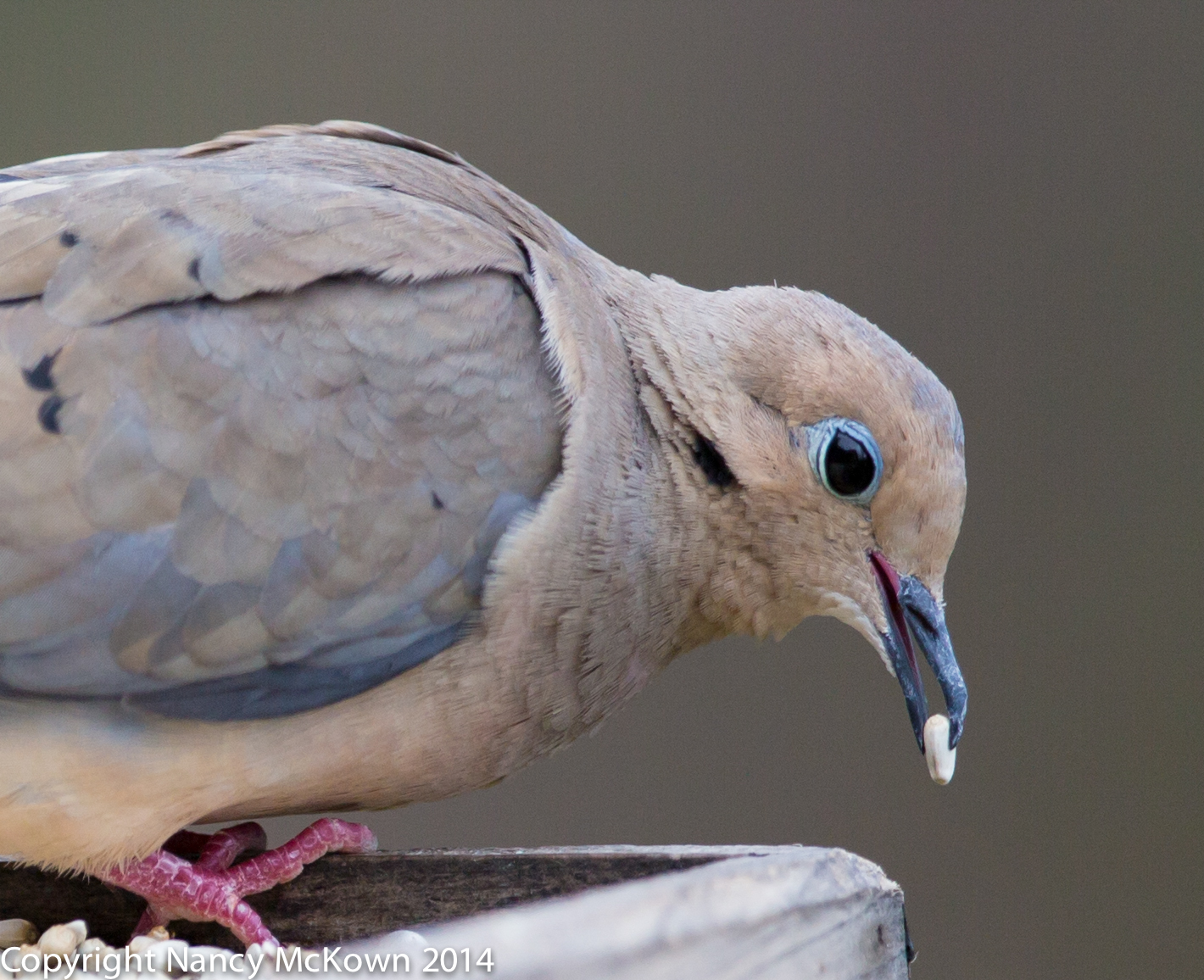
Photo of Mourning Dove
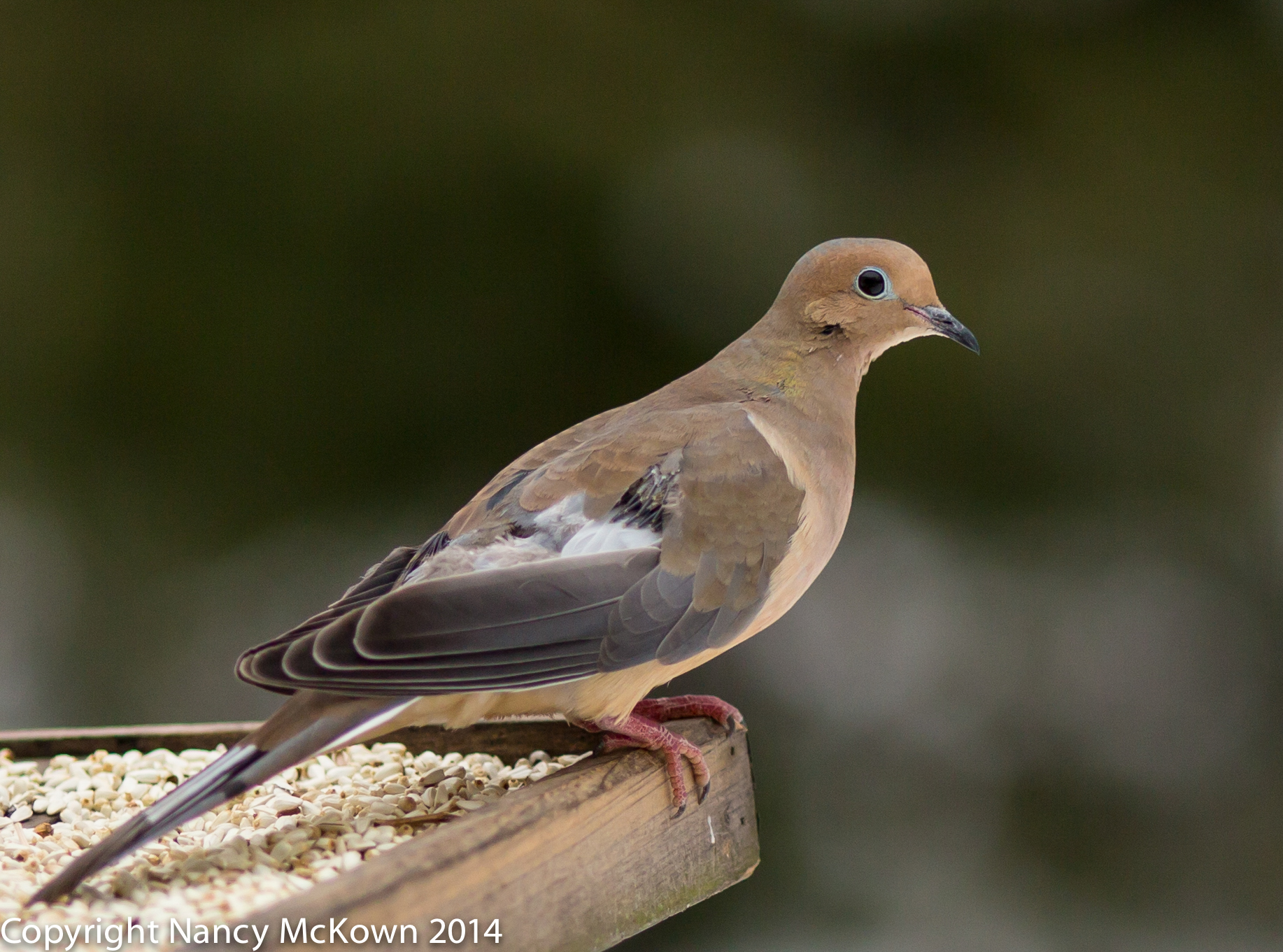
Mourning Dove Eating Seeds.
ISO 500; f/2.8; 1/800 Second

I just got back from the dentist – and imbibing a dose of Nitrous oxide that had me relaxed and somewhat free to roam from reality.

For the brief time that I was in this mild dreamy state, I could hear the instructions directed to me by the dentist, and obey her, but that interchange came to the forefront of my consciousness reluctantly. A melancholy but alluring song was calling, and I wanted to follow. It was the low, mournful song of Mourning Doves.

Listening to the laments of Mourning Doves in my mind while on the edge of perceived reality seems to me a euphoric experience, and I know why. I associate their songs with the long and lazy summer days of my youth. Hearing Mourning Doves coo is very comforting.

Photo of Mourning Dove
Mourning Dove at the feeder, ISO 640; f/2.0; 1/2000 Second

Voracious Eaters at the Feeder

It’s easy to overlook the subtle beauty of Mourning Doves because they are so common. Named for the males’ forlorn sounding courtship calls, these large, plump birds can be found almost anywhere –at feeders, in fields, on the power lines, city sidewalks and parking lots. Mourning Doves are one of the most voracious eaters at the feeder, stock piling one seed after another, without removing the seed casings, until they are full. Digestion comes later when they are resting.

Stray Light May Impact Exposure

On a very sunny and frigid day, with the sun low in the western sky, I set up my camera, tripod and remote on the porch. I wanted to test the impact of stray light coming in through the viewfinder on exposure.

Most cameras come with a rubber mask to place over the viewfinder. I find that the little rubber mask eyecup gets in the way of fine tuning the viewfinder diopter adjustment knob- which I use often to compensate for my very poor vision when not wearing glasses. So I remove the eyecup – and try to be more cautious of the light entering through the back of the camera.

Do Not Remove the Rubber Mask Eyecup

Well, it’s a bad idea to remove the rubber eyecup. When the camera is set to the creative modes (for Canon cameras, Aperture Preferred or Shutter preferred) or any of the automatic modes, and the photographer’s eye is not covering the viewfinder, stray light from behind the camera most certainly will find its way in. This scattered light may influence the light meter into calculating more light than is actually there for exposure. This happens especially during slow shutter exposures. (Manual exposure is not affected by stray light because the photographer sets all 3 exposure indicators.)

I put the little rubber view finder mask back on my camera. I will just have to fuss a bit more when adjusting the viewfinder diopter.  (NOTE:  Thinking of upgrading to a more comfortable, effective, not in the way eyecup- something that would extend the viewfinder and thus sit more comfortable against my eye and do a better overall job of eliminating stray light.)

To read about overriding your (Canon) camera’s sensor readings, press this link.

To read about the impact of lens flare on your photographs, press this link.


Photo of Killdeer

Photographing Killdeer in Performance Mode

Photographing Killdeer

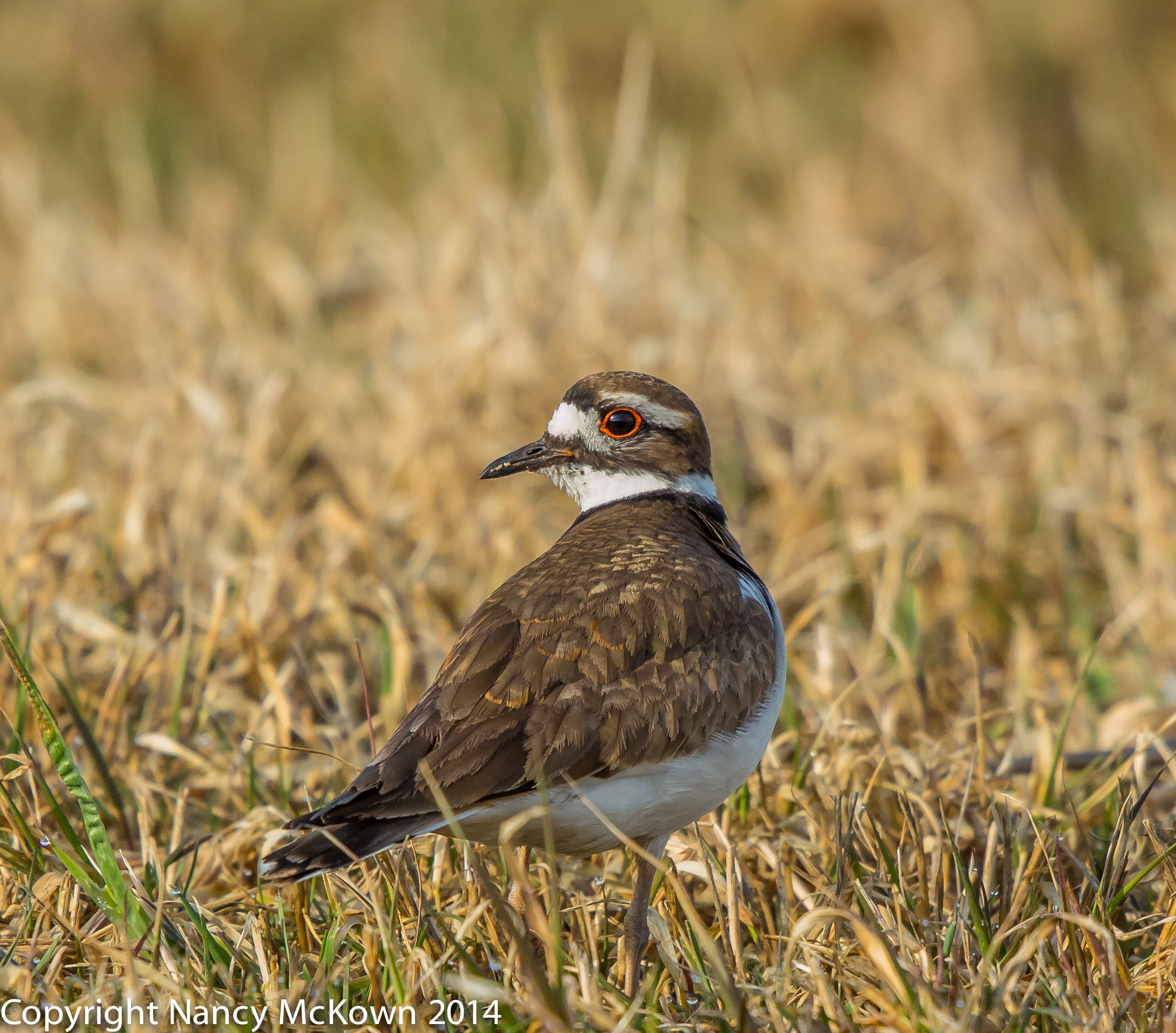
When I was growing up, the first thing I learned about Killdeer was that they were one of the most flamboyant actors in the bird world.

Photo of Killdeer
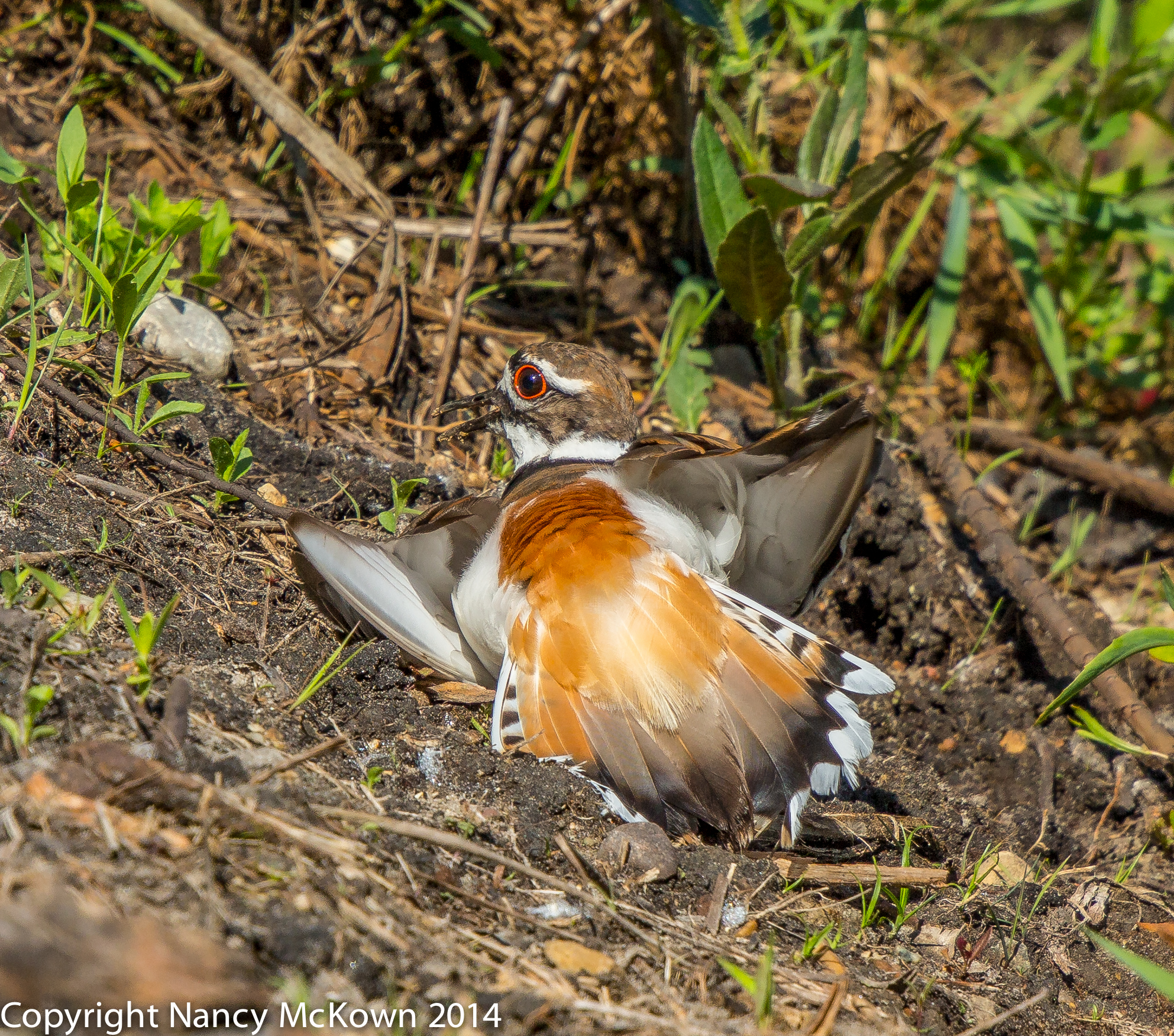
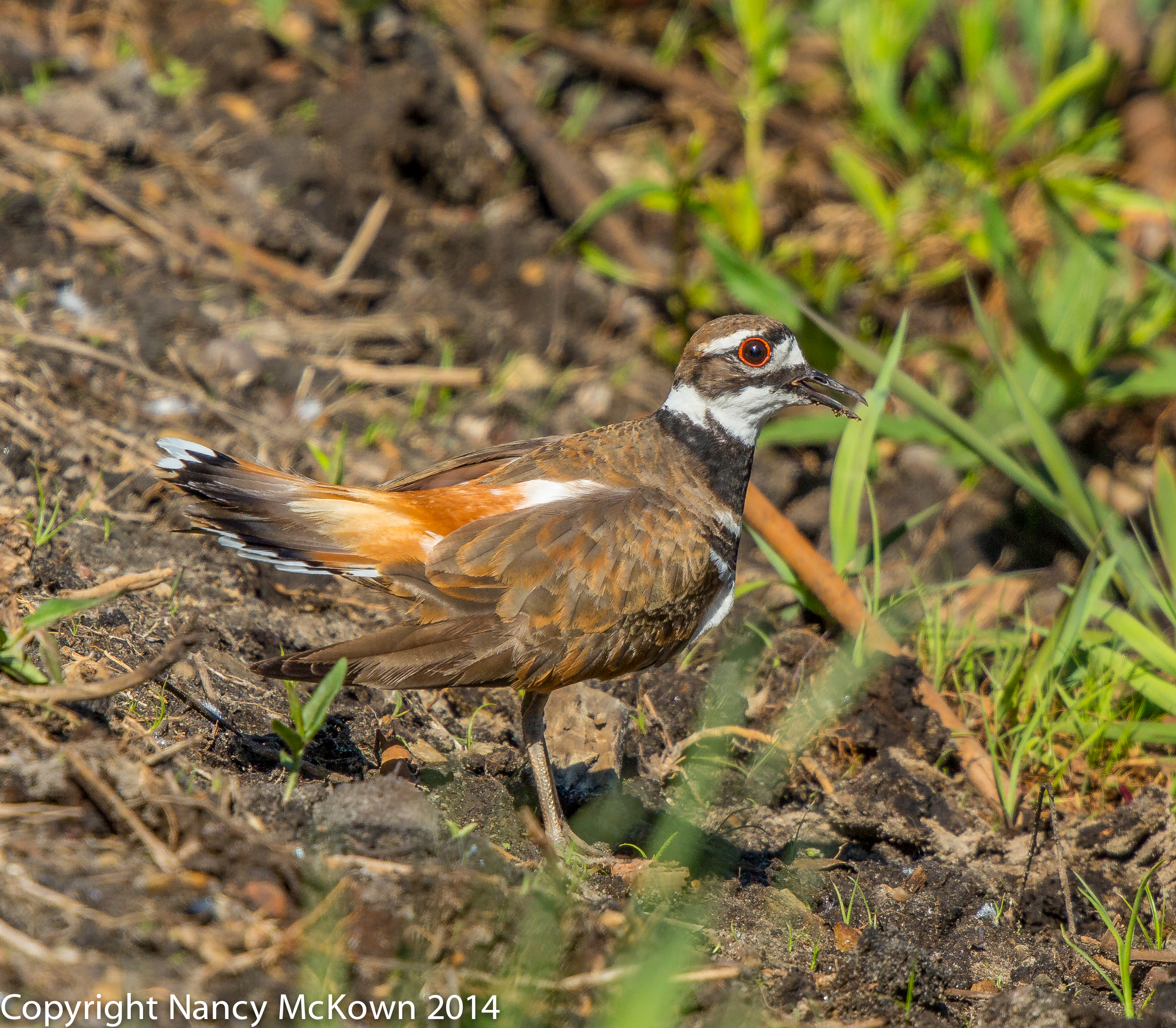
Killdeer Acting Display where he Plops Down, Calls Loudly and Hopes to
Draw the Intruder Away From the Nest.
ISO 500; f/9; 1/1000 Second

Distraction Display of Killdeer

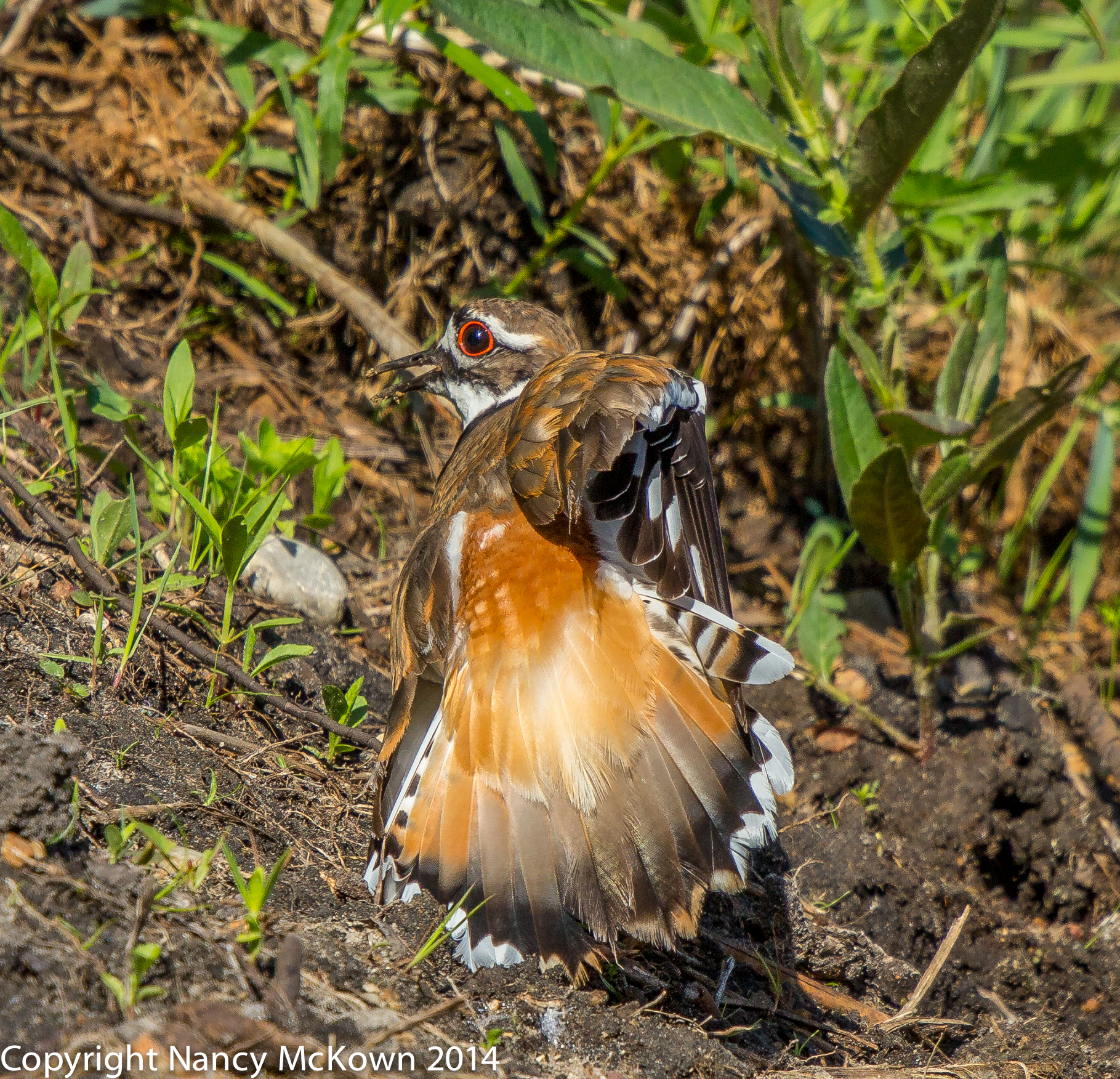
Killdeer fake injury to protect their ground nests, with actions so elaborate and persistent as to be extreme. I would often see them up close, struggling with a wing dragging pitifully low, calling loudly with a distress call as they attempt to lead you away. They stop, flop on the dirt, and splay conspicuous tawny orange rump feathers as if they were broken, all the while keeping a red circled eye on you. These distraction displays are so common that predators learn to ignore them. When I see this activity, I get out my camera and start looking in the brush for Killdeer babies.

Killdeer are part of the Plover family, but unlike most of their kin, they live and nest away from the shoreline. They can be found on the back roads, parking lots, golf courses, and fields running on the ground foraging for insects. Like most plovers, Killdeer have 3 toes with webbing in between…good for running on land, but not perching on branches.

Photo of Killdeer
Just in Case You Didn’t See How Severely That Wing Is Bent,
The Killdeer Prominently Displays. ISO 500; f/9.0; 1/1000 Second

Plenty of Time for Camera Setup

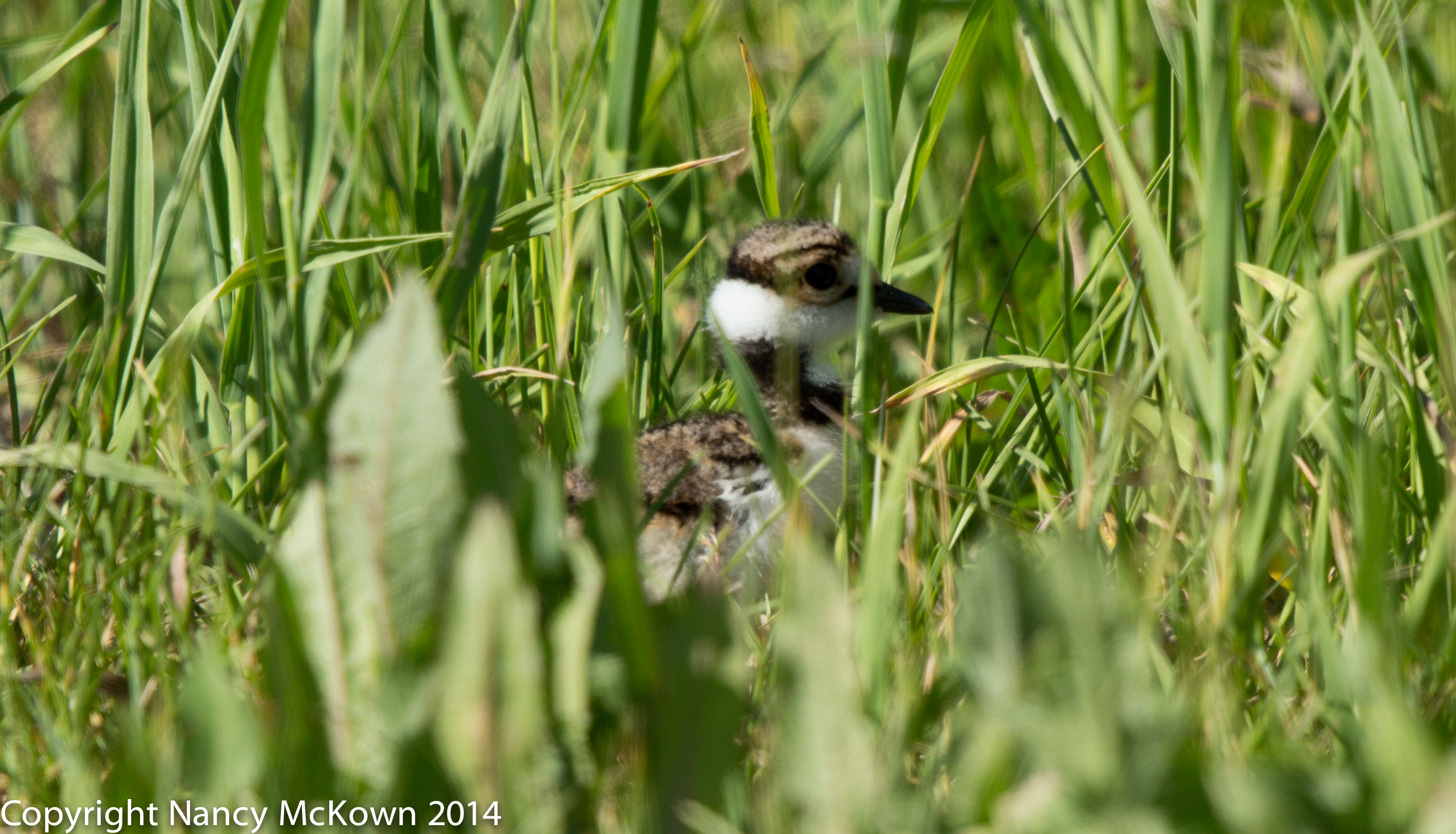
I found this family of Killdeer on a quiet backroad in the Allegan Forest. Before they started with their ostentatious behavior, they weren’t noticeable, blending in well with the gravel on the roadside. Apparently I wandered too close with my camera, and the antics began in earnest. Easy pickins’ for a bird photographer. The adults flew in close and began their displays, giving me plenty of time to set up the tripod and camera.

Photo of Killdeer Baby Chick
Protecting Baby By Drawing the Danger Away. Killdeer Chicks Are More
Developed After they Hatch,(precocial) allowing them to Run Around Almost Immediately.
Killdeer parents do not bring food to the babies in the nest.
ISO 500; f/9; 1/1000 Second
Photo of Killdeer
After Elaborately Faking a Broken Wing, this Killdeer is Up and Running.
ISO 500; f/9; 1/1000 Second

Baby Killdeer are “precocial”, meaning they are ready to run after hatching (like chickens and ducks). They are not your typical blind, helpless baby bird.

Apparently I wandered too close to their young chick because these Killdeer parents became frantic and initiated Plan B: dive-bombing my head. Having no wish to be pecked on the head, I retreated to the safety of my car.


Photo of Snowy Owl

Photographing Snowy Owls – Sleepy, Heavily Insulated and Blending

Mid-Winter Photography Excursion

The sun had returned, if only for a day. At sunrise, I packed my camera gear, bundled up and headed for the Allegan State Game Area. 14 degrees. I passed by the corn fields twinkling with hoarfrost and spotted dozens of geese decoys positioned by hopeful hunters.

I parked off the main road near a corn field with a few Horned Larks foraging in the low lying vegetation. In previous years, I had seen Lapland Longspurs flocking with the Larks in this location. It wouldn’t be long before the Longspurs began their migration back to their nesting grounds in the arctic tundra, so I hoped I would be lucky enough to photograph them today.

I opened the car window to acclimate my camera lens to the cold. The windchill made me shiver.

Despite the frigid air and numb fingers, it felt good to be out with my camera watching and waiting for birds. Not much happening, but I had high hopes and propped the camera and lens on the car door window. After 15 minutes or so, I moved the car to a new spot nearer to protective brush, repositioned the camera, and let my mind wander while I waited. No luck.

DNR Tip

Later that morning, a bearded DNR officer accompanied by his brown labrador pulled his heavy duty pickup next to the passenger side window of my car. Allegan County DNR employees have always been helpful, friendly and willing to share their insights about the comings and goings of the migrating and local wildlife. After the usual introductory preliminaries, he gave me the directions to a close-by dirt track road where he had just seen a Snowy Owl roosting in the corn fields. I couldn’t believe my luck. A Snowy Owl nearby, and I was prepared. I was trembling as I drove to the back woods location.

Despite the fact that my vehicle is not adept on slippery, rough and tumble back roads, I followed his instructions and scanned the landscape for the Snowy. Nothing. Just clumps of snow with grass peaking through. Then one of the clumps moved.

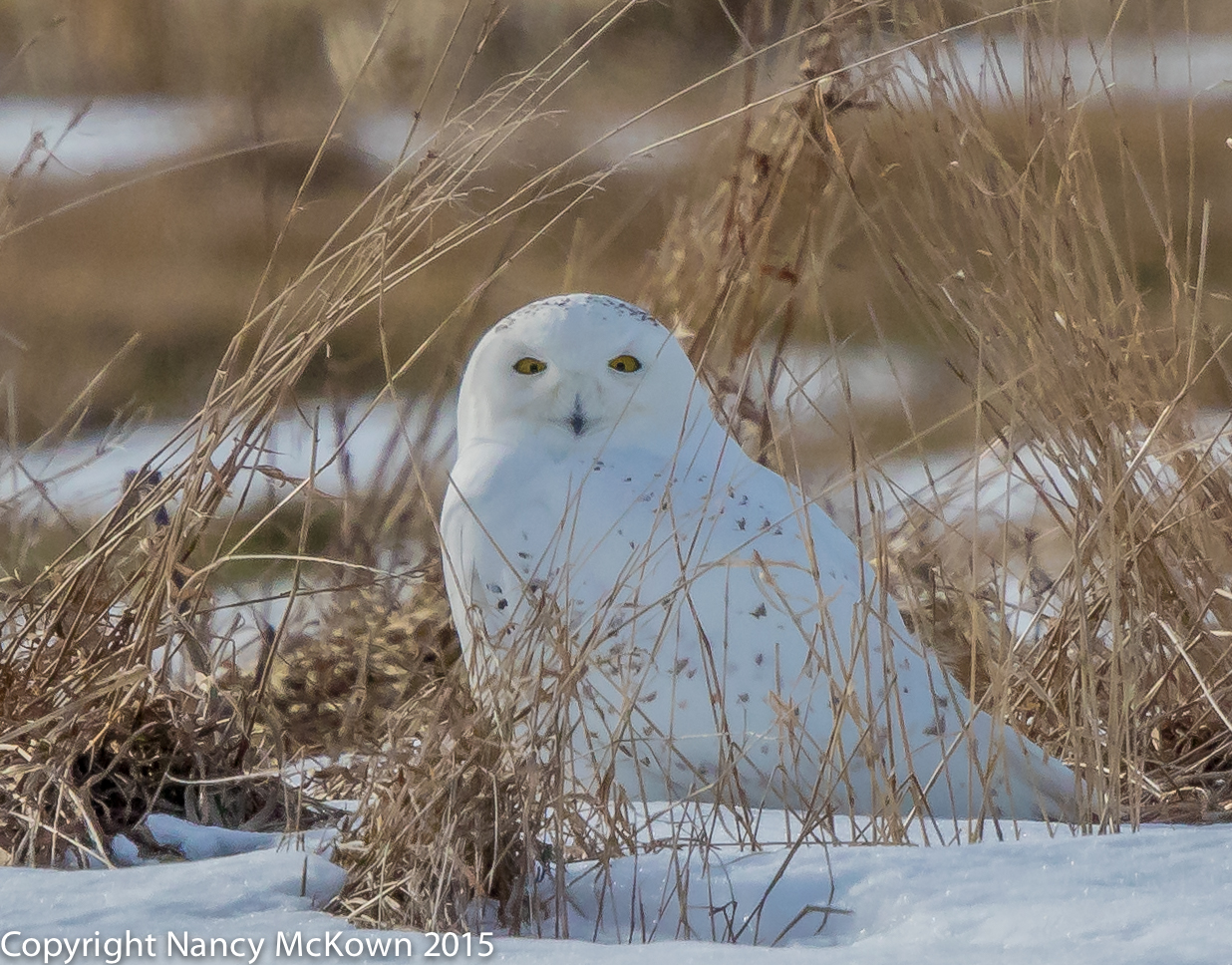
Photograph of Snowy Owl
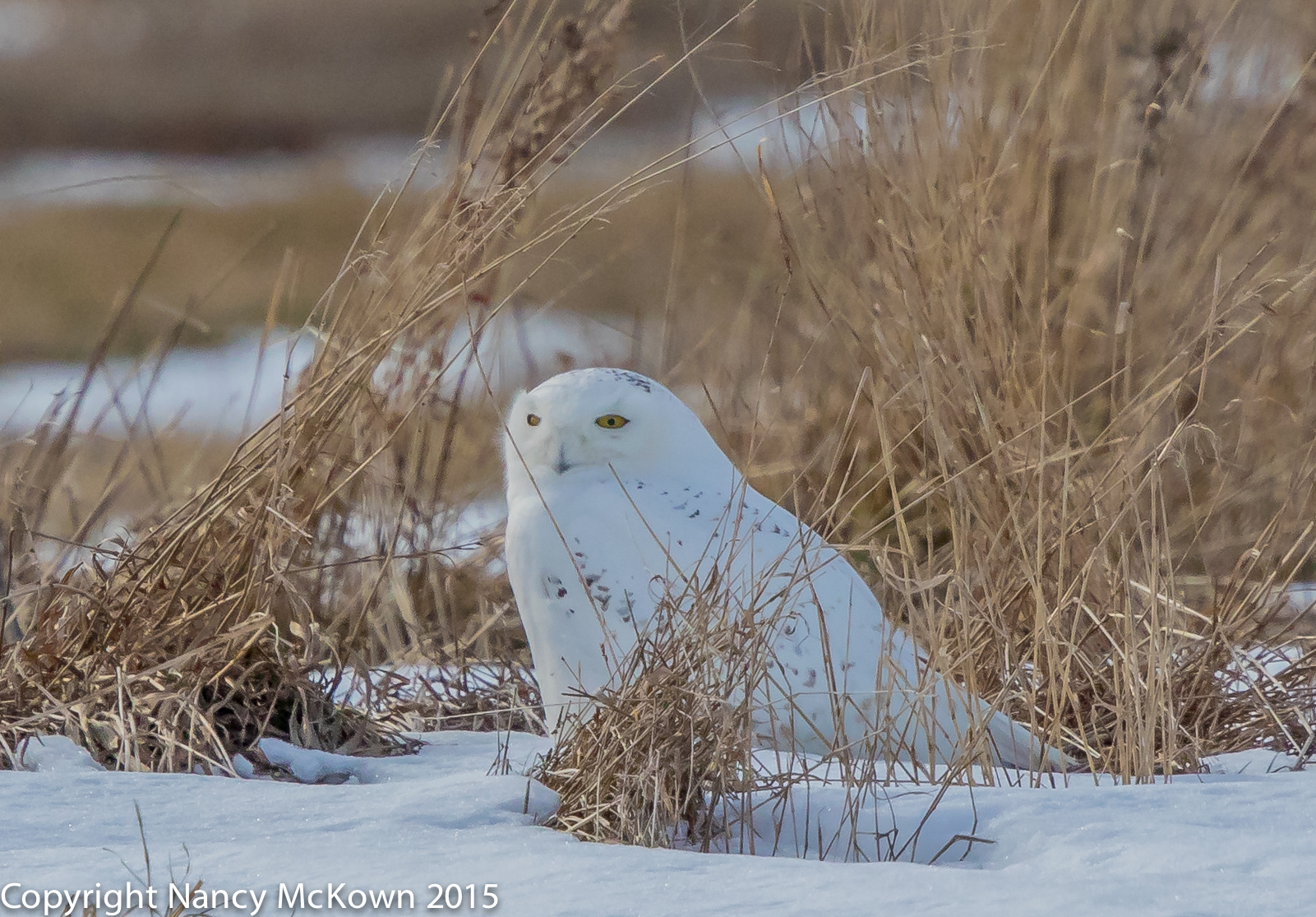
Snowy Owl Blending into the Landscape.
ISO250; f/10 1/800 Second
Photo of Snowy Owl
Adult Male Snowy Owl, Mostly Sleeping, But Occasionally Watching Me.
ISO640; f/10; 1/2000 Second

 Photographing Sleeping Snowy Owls

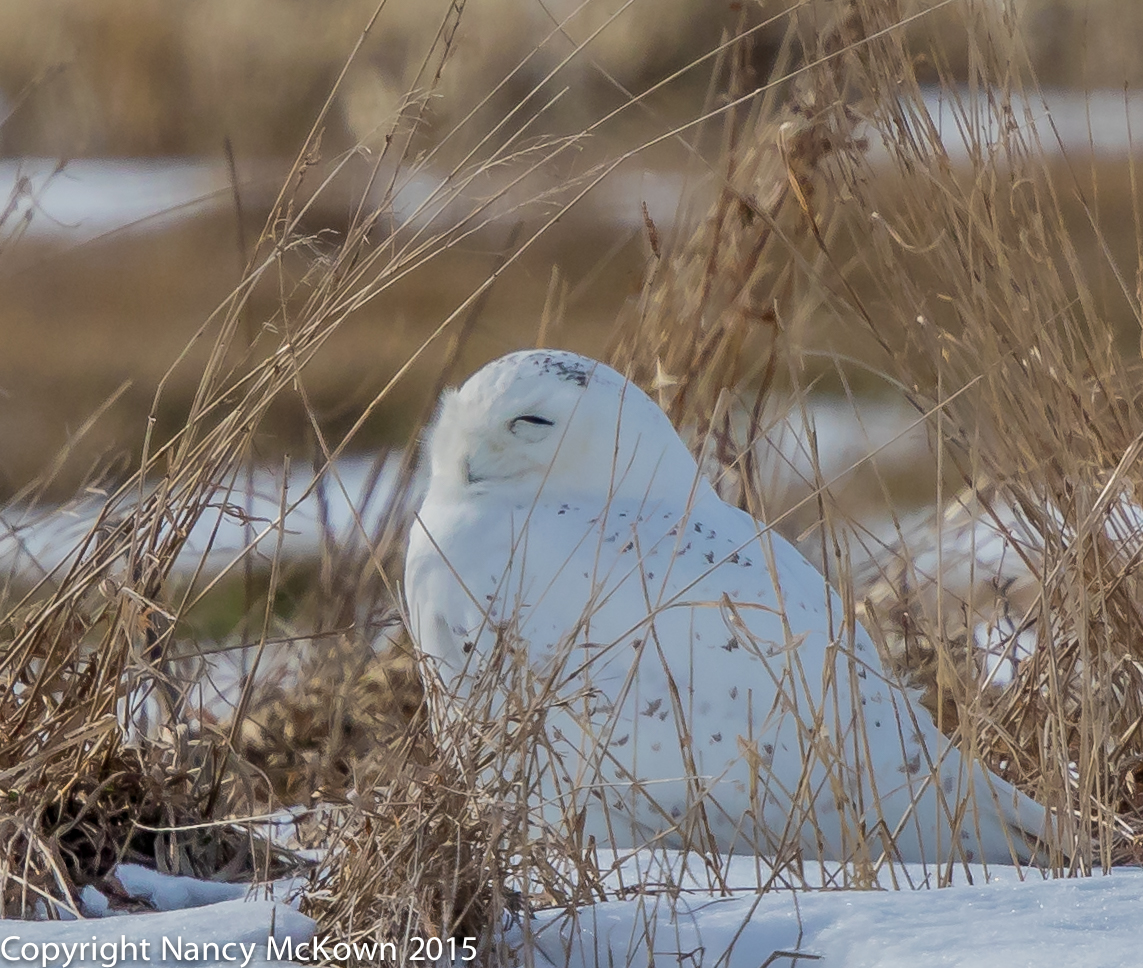
This stoic individual wanted nothing more than to close his eyes and sleep beneath his heavily insulated plumage. Despite the bumping and grinding racket my car was making, he did not flinch. Only a few times did he open his yellow eyes to look at me. Since owl eyes do not move within their sockets, they have to swivel their heads (up to 270 degrees) to look around.

Photo of Sleepy Snowy Owl
Sleepy Snowy Owl.
ISO 320; f/9; 1/1250 Second

Rest in Peace

Snowy Owls are highly nomadic raptors that nest in the arctic tundra and travel very long distances in search of food. It was clear this individual needed to rest and reserve his strength. After taking 50+ photographs showing very little activity, I turned my car around and left him in peace.


For more information about my last encounter with Lapland Longspurs, please press this link.


Photo of American Gold Finch

Photographing the American Gold Finch

Weary of Winter

As I watch the forbidding gelatinous swells push up to the shores of Lake Michigan, I wait with my camera for birds to brighten my day. Nothing. No doubt the few that remain on the beach are freezing and huddled in the lee of some fox free dune.

My heavy coat and equipment bundles weigh me down as I climb the steep flight of stairs and head for home. Winter’s dreariness excites within me yearnings for the new landscape that comes with Spring. Come back my feathered friends, and bring the light!

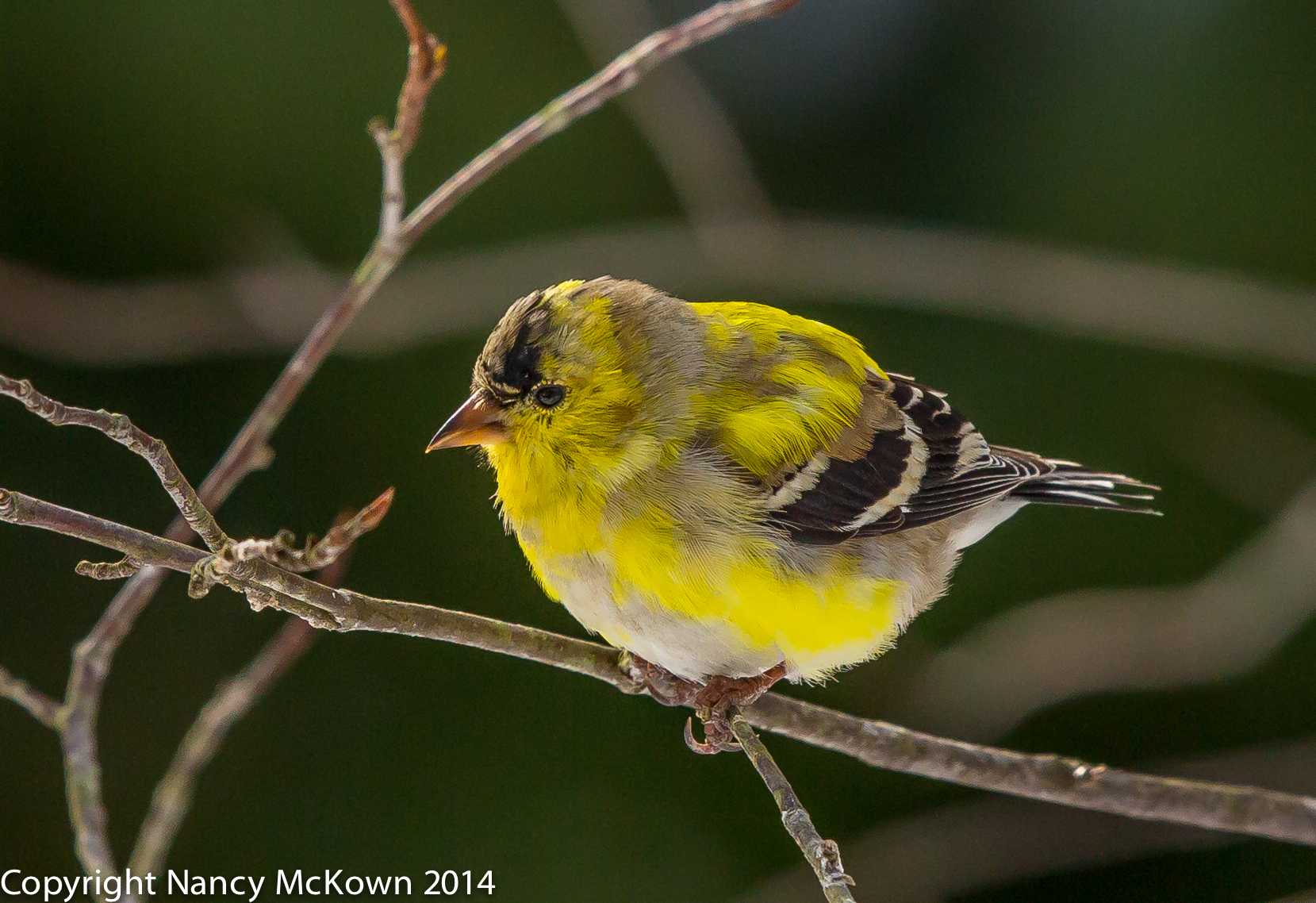
Photo of American Gold Finch
American Gold Finch caught by the photographer
displaying a rather jaunty pose.
ISO 1600; f/6.3; 1/1250 Second.

Photographing the American Gold Finch

American Gold Finches in drab winter plumage have visited our feeders in January, but so far, not this winter. These birds are unpredictably nomadic and generally forage in noisy flocks. Come Spring, these small sociable songbirds will be plentiful around the feeder, especially if fresh thistle seed is offered. The males are a perky lemon yellow with a pink/orange beak, black cap, white rump, orange legs and dark eyes. They flash their vibrant colors as they float to and from the feeder in wavelike flight.

Here are a few bright photos from last Spring that help me remember that winter will pass and a new beginning is not far off.

My camera was set up on the porch one early April morning and aimed at a thick, broken branch that I positioned and secured on top of the platform feeder. Michigan Aprils are usually very cold, but in the excitement of photographing these lovelies, I don’t remember noticing.

0U6A0328
Gold Finch, waiting for his turn at the feeder
and rather patchy from molting.
0U6A2378
American Gold Finch Staring Back at the Photographer
ISO 1600;; f/6.3; 1/1250 Second

Spring Colors Bring Photo Opportunities

Many different shades can be seen on the male American Gold Finch as the year progresses. To view slideshow (produced by Sibley Guides) showing their plumage cycle, press this link.

Press this link if you are interested in reading more about Photography Outdoor Studio Setups.