Monthly Archives: October 2014

Red Tailed Hawk

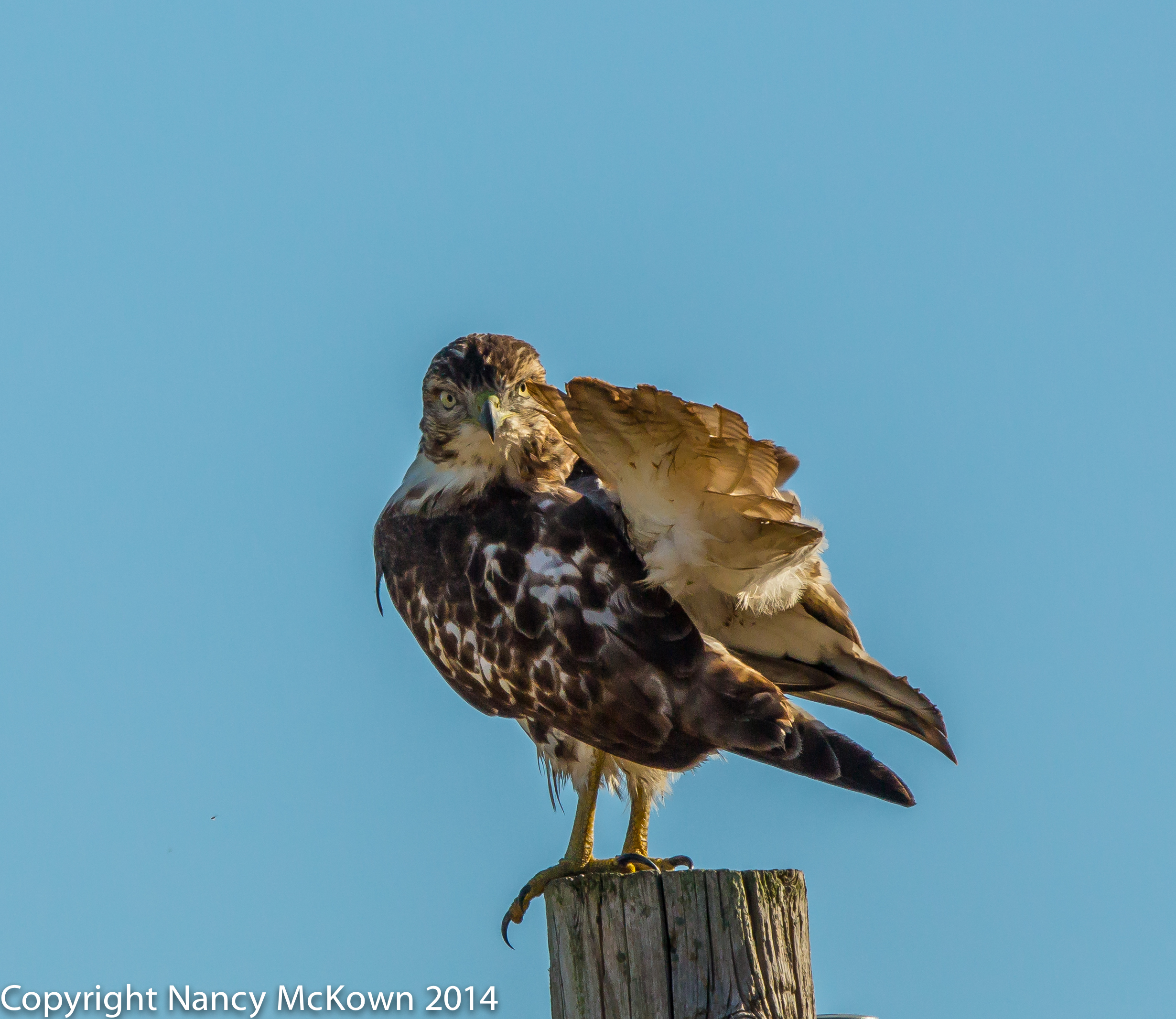
Red Tailed Hawk Posing for the Camera – Contemplating Exposure Compensation

Red Tailed Hawk Posing for the Camera

This Red Tailed Hawk is all curves as he poses for the camera. Anthropomorphically, I interpret this pose as being coy… you know….artfully modest to the point of being alluring. Lots of curves can make for an elegant composition. They add energy, movement, and balance to the photo.

Of course, in both of the striking poses below, this Red-Tailed Hawk was just caught in the act of preening his feathers. Still, the poses lend themselves to interesting and human centric interpretations.

For now though, I’m going to focus on exposure issues.
Photo of Red Tailed Hawk
Red Tailed Hawk- Keeping an Eye On the Photographer while
He Preens His Feathers.
ISO 1000; f/10; 1/2500 second

Photos Bathed in Harsh, Unbalanced Light

The late morning sun was at the hawk’s back and to my right. When I looked through the viewfinder, I could see a few details, but for the most part, the bird was a dark silhouette against a bright background. He was busy preening, so as long as I didn’t make any sudden movements, I thought the hawk would tolerate my presence.

I had some time to think about how to adjust exposure to ameliorate the harsh light; and that got me thinking about taking the time to fiddle with the camera’s Automatic Exposure Compensation (AEC) Function.

I learned something new about the quirkiness of my Canon’s Automatic Exposure Compensation function.
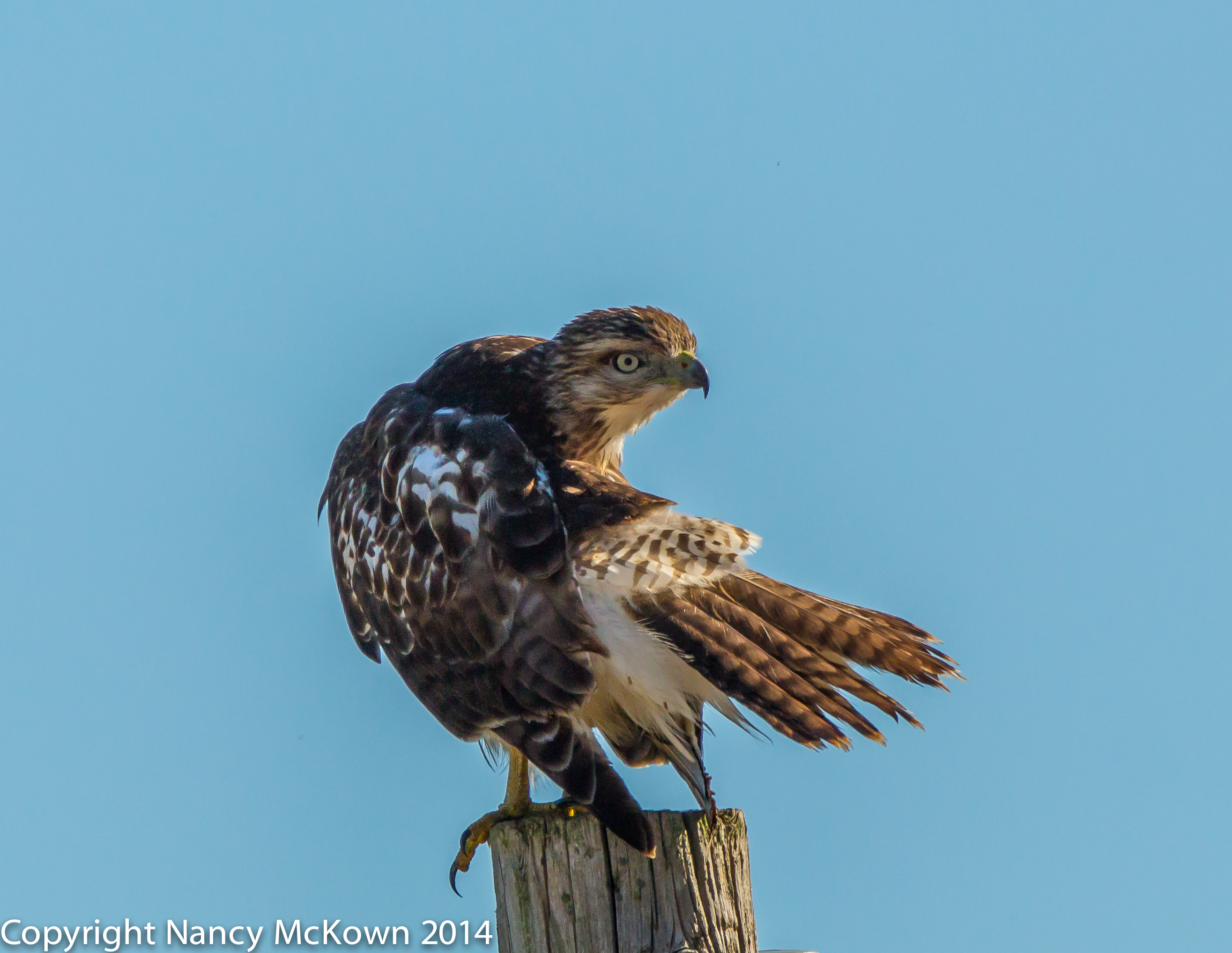
Photo of Red Tailed Hawk
Red Tailed Hawk Reaching Every Which Way to Preen His Feathers.
ISO 800; f/10; 1/2500 Second

Understanding Exposure Compensation

3 parameters control exposure:  ISO, Aperture, and Shutter Speed

If you believe your camera’s sensor is misreading the light, you have options that will force your camera to override its sensor readings and interpret the light more accurately. (Assuming you don’t want to make the exposure corrections in post processing).

Overriding Your Camera’s Sensor Readings

There are two common ways to over ride sensor readings:

  1. YOU manually re-adjust all exposure settings (aperture, shutter and/or ISO). This is done when your camera is set to Manual “M”.
  2. Set the Automatic Exposure Compensation (AEC) function to temporarily over ride sensor readings. With a little help from you, the camera will calculate and then shift exposure settings. To do this, you must set your camera to one of the creative modes (“P” Program, “AV” Aperture Priority, “TV” Shutter Priority, “A+” Intelligent Auto) and then apply the Automatic Exposure Compensation function. (See specifics about how to set Automatic Exposure Compensation at this post.)

Canon Makes It Confusing

The Automatic Exposure Compensation functionality in Canon Cameras seems to me very peculiar.

I had mistakenly assumed the AEC function on my DSLR worked in Manual “M” Mode as long as I set the camera to Auto ISO. After all, the camera could adjust exposure compensation by changing the ISO. However, on most Canon Cameras, setting the AEC function does nothing at all when the camera is set to “M” Manual mode. The AEC function on the camera will not work because it will not over ride the M manual settings (aperture, shutter, ISO) the photographer has set, even if the photographer set the camera to determine the ISO (Auto ISO).

NOTE: One exception: The top of the line, professional DSLR (EOS-1D X) is the first Canon DSLR that will allow AEC in Manual mode with ISO Auto.

Auto ISO Should Not Be a “M” Manual Setting

Manual “M” mode is technically only really “manual” when the photographer is in control of all 3 exposure parameters (ISO, Aperture, Shutter). With Canon DSLR cameras, the photographer can set the ISO to “Auto ISO” even when the camera is in Manual “M” Mode.

But, if the camera is automatically making exposure decisions by adjusting the ISO, how is that Manual “M” Mode?

The problem is one of labeling. A less confusing way for Canon to manage this would be to assign the manual setting FULL control of exposure (ISO, shutter and aperture) and include another setting …perhaps an “ISO preferred” mode.

Control is an Illusion

I never did get the exposure right in this photo shoot. The Redtailed Hawk was less patient then I thought he would be and flew off after 5 minutes or so.

I have to keep reminding myself that in the art of bird photography, and in most other things in life, control is an illusion.
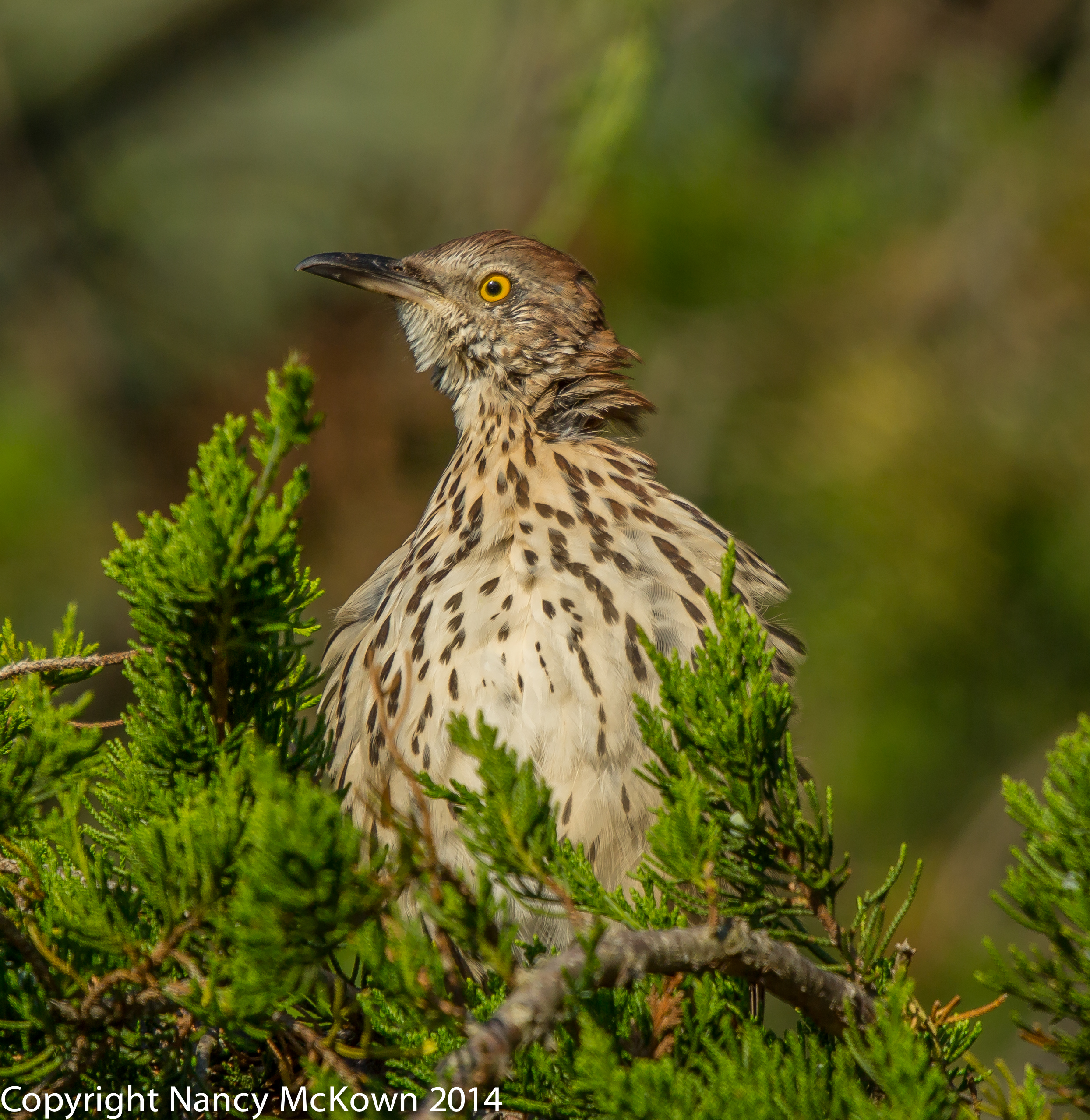
 

Brown Thrasher

Photographing Brown Thrashers- Masters of Avian Acoustics

Photographing Brown Thrashers

I came upon two Brown Thrashers skulking in a rather dense and tangled bush in the Allegan State Game Area. By the sound of the songs and calls coming out of the bush, I thought I had discovered the nests of many bird species. As I watched and listened, it soon became apparent that one bold Brown Thrasher, nestled at the top of the bush, was doing all the singing.

Photo of Brown Thrasher
Brown Thrasher.
A Bird of With a Repertoire of Many Songs, Calls and Whistles.
ISO 320; f/9; 1/1000 Second

Camera Angle

I looked up at the crooning Brown Thrasher from the driver’s seat of my car, while my lens rested on the open door window. I knew the bird would vanish if I opened my car door and got out to reposition the camera on a tripod. My camera and monster lens are too heavy to reliably hold still, so I needed to rest the weight on the window. In order to be able to point the lens up high enough to focus on the bird and still be able to look through the viewfinder, I moved the car seat to its lowest setting and scrunched my body down into the seat.

Low Angle Perspective

Perspective changes the feel of a photograph. A “low angle” shot is where the camera is positioned anywhere below the eye line. If the distance is right between the lens and subject, I am always ready contort my head and body into position, if that what it takes to get the shot. (NOTE: My experience has been that opportunities to take eye level photographs of birds do not come around that often.)

Despite the problem with the high perch, the other conditions were good. Mid morning light was behind me, the bird’s pose was engaging and the background colors exceptional.

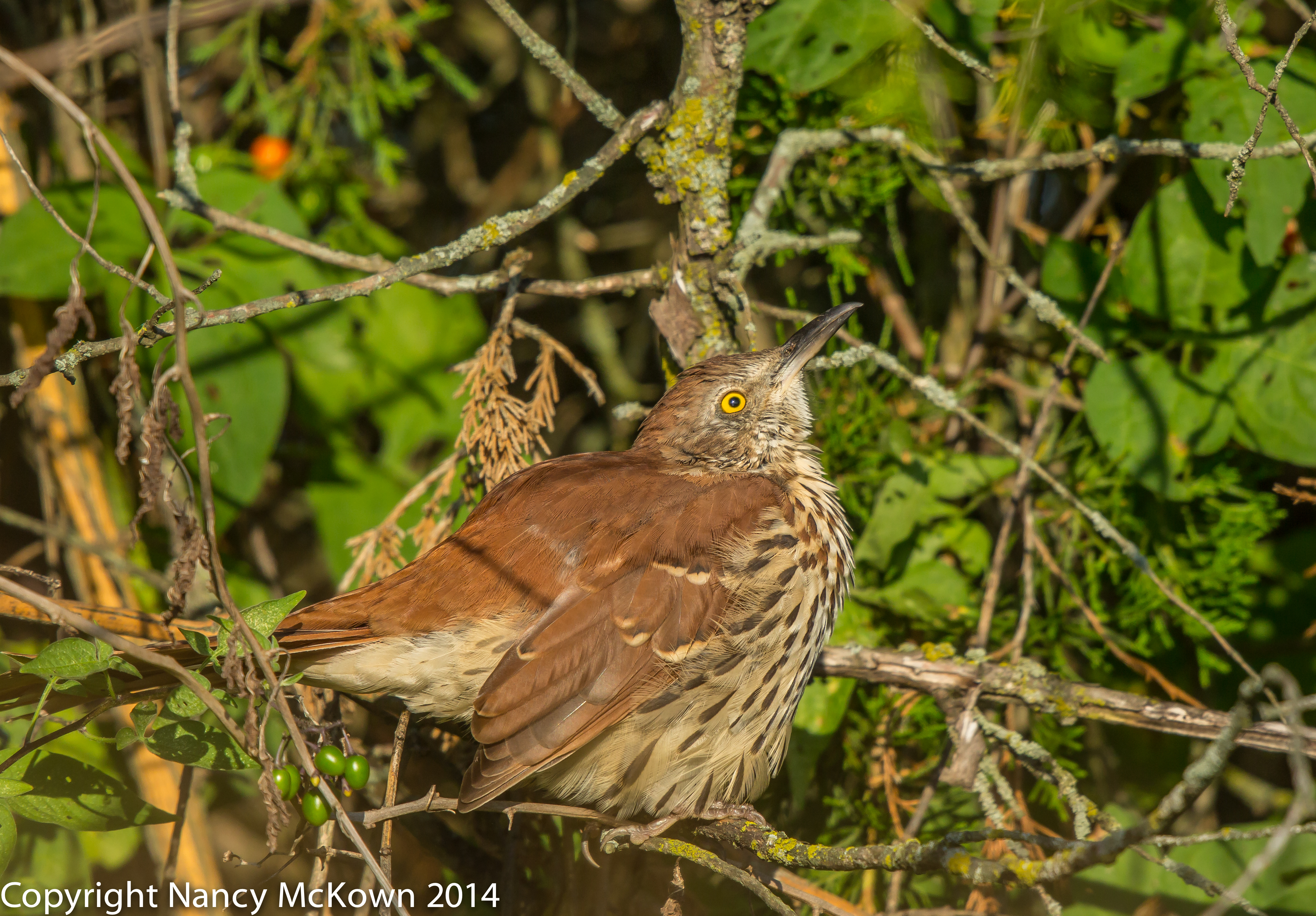
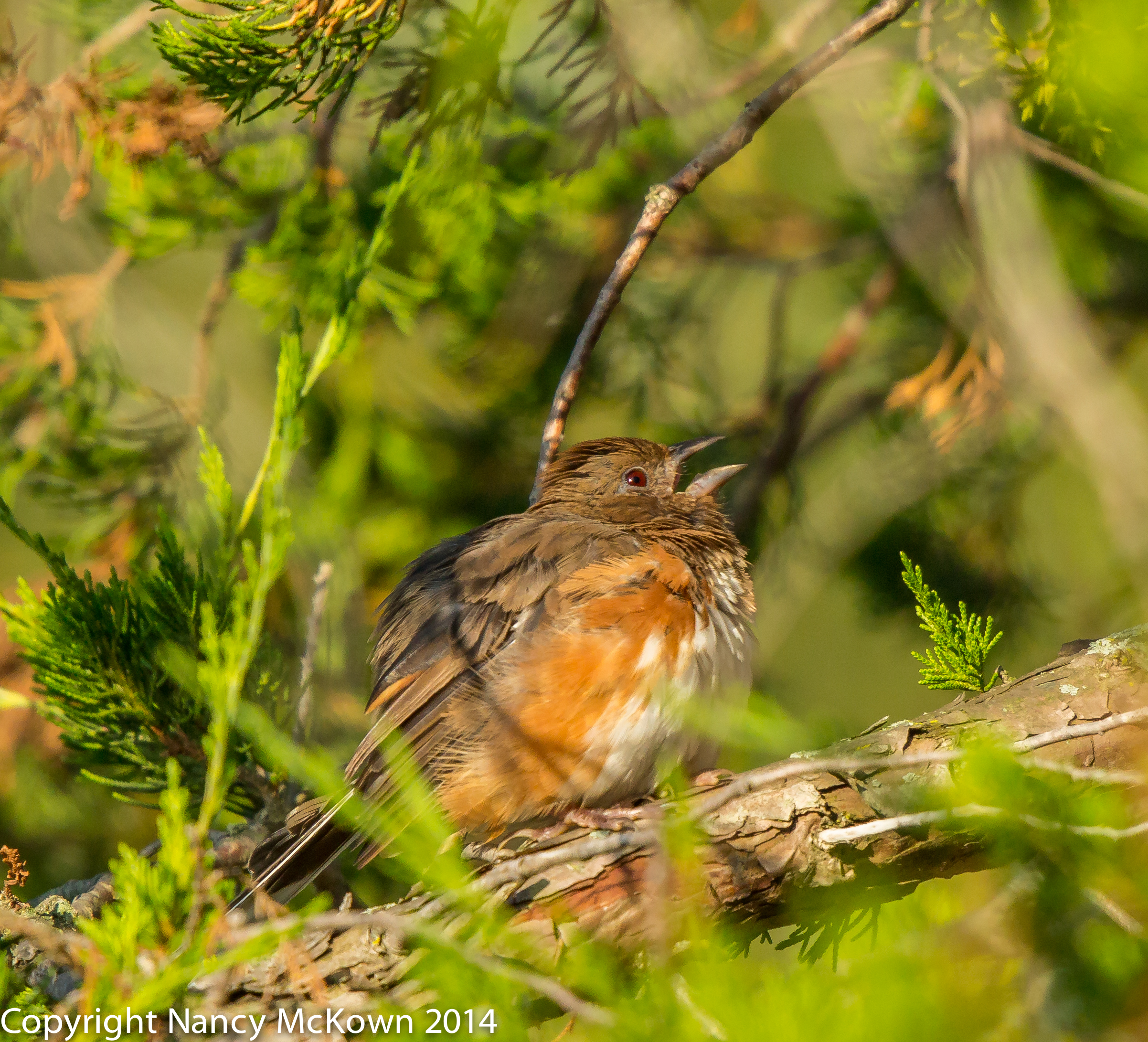
The second photo (below) shows a juvenile Brown Thrasher snuggling in the brush, appearing rather vulnerable as he looks up in search of his parent. This was an easier shot because the bird was positioned close to eye level. The cluttered brushy background is not ideal, but I like the colors of the Thrasher displayed in this side pose and the way the bird fluffs his feathers and bundles himself in a ball.

Photo of Brown Thrasher
Juvenile Brown Thrasher, at Eye Level with My Lens.
ISO 640; f/9; 1/1000 Second.

Bird Mimicry

Brown Thrashers are rather gangly secretive birds that do a good job of staying hidden, even though the bold copper wings and heavy dark streaking on their white breasts don’t exactly blend. Once you spot movement in a bush, their glaring bright yellow eyes and slightly downturned beak are easy to pick out. Brown Thrashers are most noticeable when they sing because they don’t just sing one or two songs. Generally they repeat a phrase twice, pause and then start again with a different tune. This bird in the top photo was showing off by singing complex songs with radical changes in volume, tempo, tone, pitch.

Avian Acoustics

When you hear birdsong that radically and continually switches from one song to another, it’s a pretty good indication that you’re listening to a mimic. Brown Thrashers are a species of bird (along with catbirds, blue jays, crows, starlings, and mocking birds) that imitate the songs and sounds other birds make. The males can have a repertoire of over 1000 sounds.

Brown Thrashers not only mimic other birds, they also imitate sounds that are not from nature, like construction noise and doorbells.

To learn more about bird mimicry, visit this link.


Photo of RingNecked Pheasant

Photographing Male Ring-Necked Pheasants – The Advantages of Fast Focusing Technology

Photographing the Male Ring Necked Pheasant

Male Ring Necked Pheasants are ground dwelling game birds – one of the most adorned and colorful birds around. Imported to America from China in the mid 1800s, they have survived and thrived in Michigan year round.

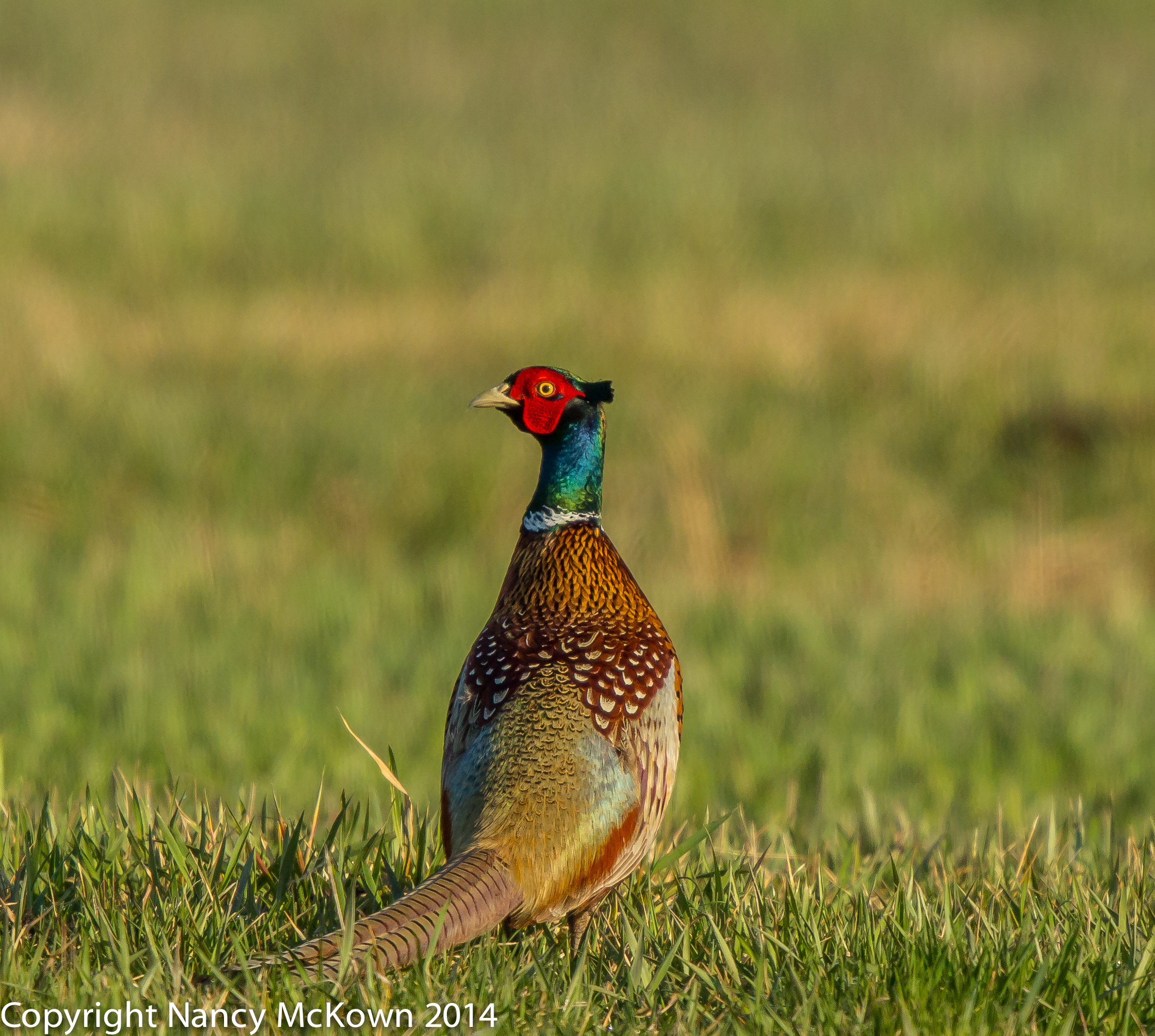
The male Ring Neck Pheasants’ plumage, with its red face wattles, green head and shiny copper breast, is spectacular. The males are so conspicuous in the spring that it is relatively easy to find and photograph them foraging for plant materials in agricultural fields, pastures and woodlands.

Photo of Male Ring Necked Pheasant
A Male Ring Necked Pheasant, before He Noticed Me.
ISO 1250; f/9.0; 1/2000 Second
Photo of Ring Necked Pheasant
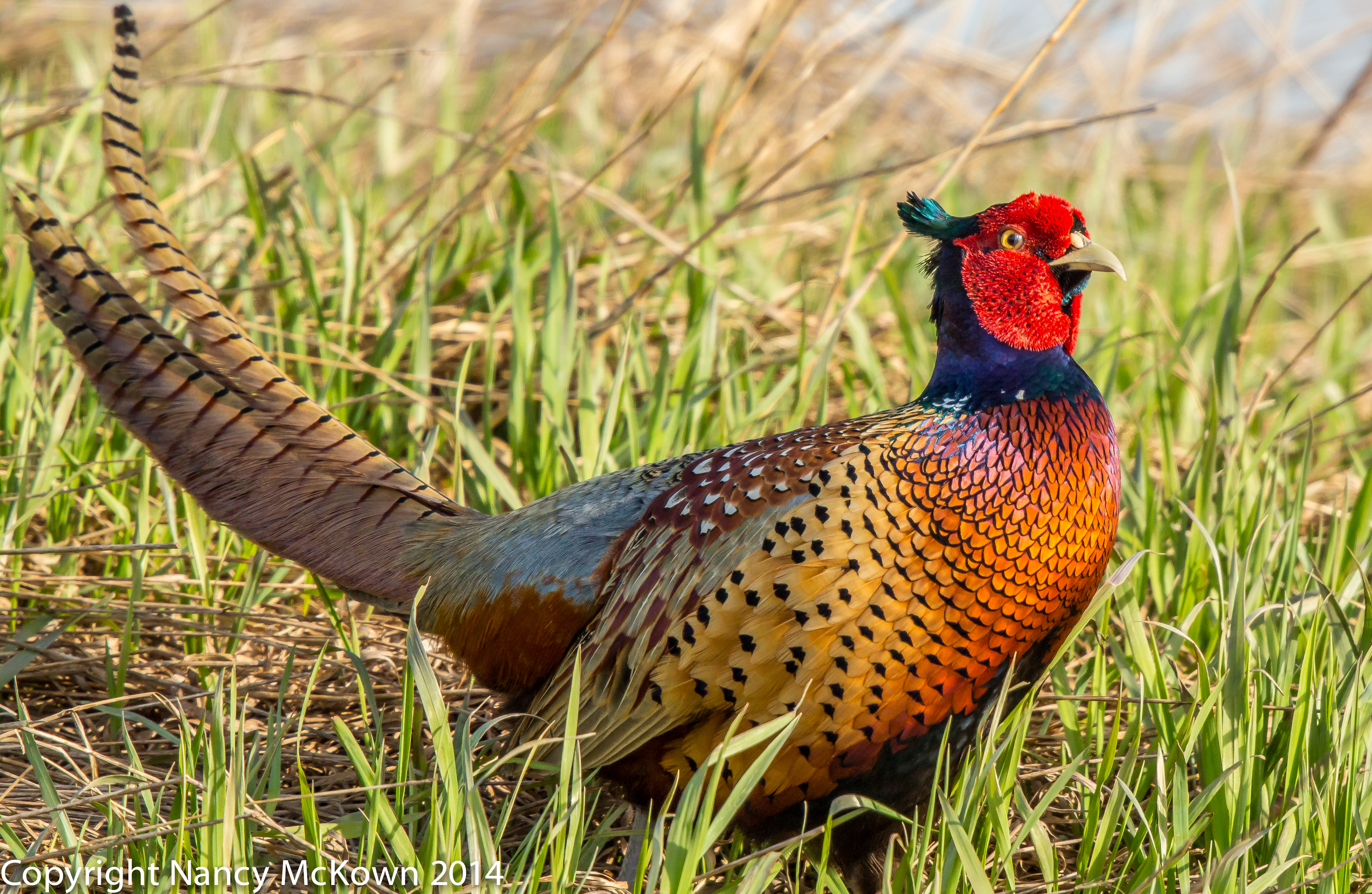
Two Rather Large “Horns” of Head Feathers at the Back of the Head. They Look Like Pigtails on This Bird.
Close up of a Male Ring Necked Pheasant Running Away from Photographer.
ISO 2000; f/9.0; 1/2500 Second

Know How Your Camera Locks Down Focus

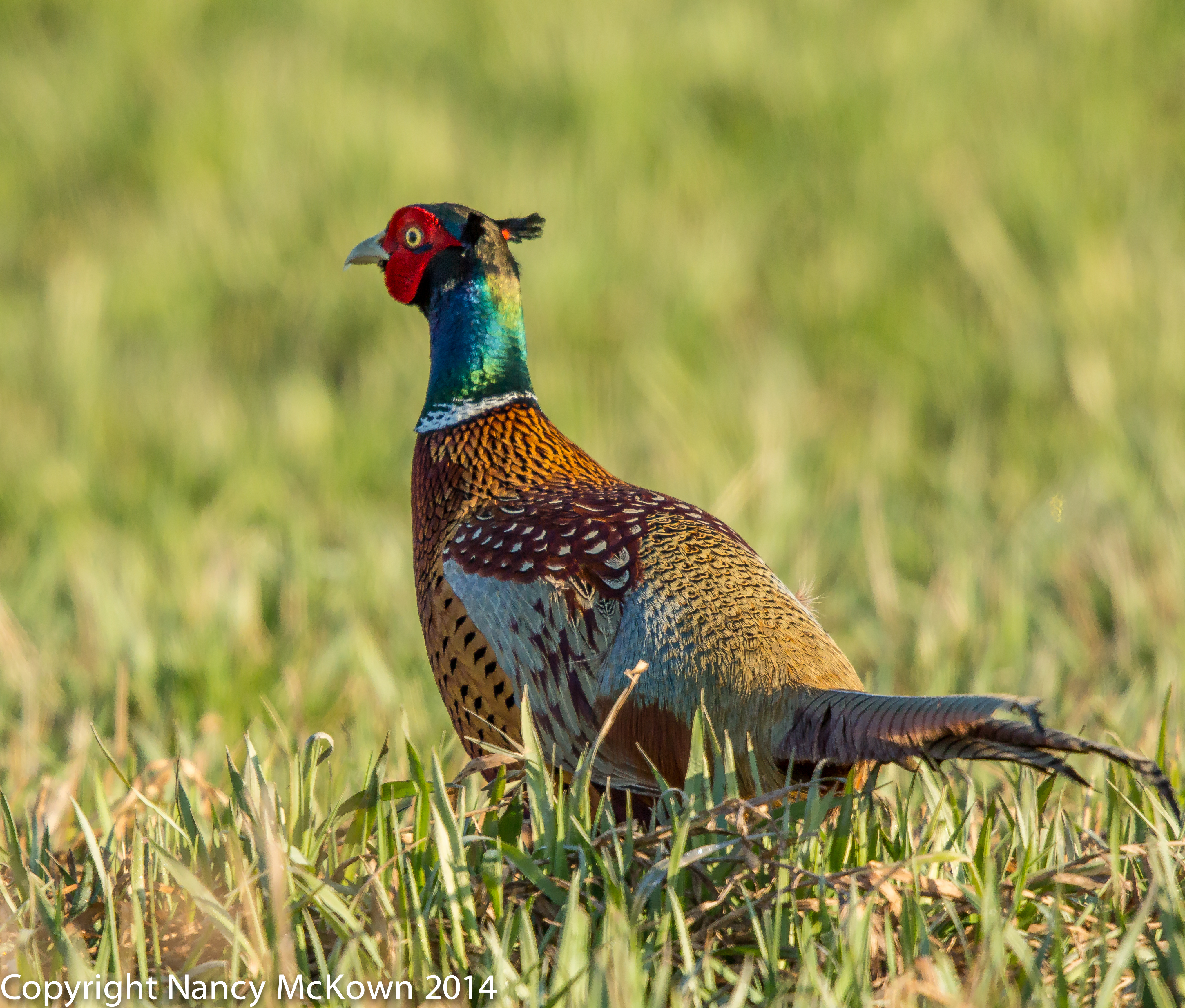
The male pheasant I encountered was quite close to my car when he finally noticed me. He quickly started his evasive maneuvers, weaving in and out of the tall grasses, moving fast and erratically away from me. My camera was set to focus on one single, center point. As I tracked his erratic movements through the grasses, the lens kept losing its focus lock. I quickly expanded the auto focus area mode so the lens would track 8 focus points clustered around the central point as well as the center point. This way, if the central focus point lost track of focus, the secondary surrounding focus points would quickly pick it up.

Photo of Male Ring Necked Pheasant
This Pheasant was Moving Fast as He Ran Away from the Photographer.
I was Glad to Have Set the Camera to Focus at More Than One Point.
ISO 2000; f/9.0; 1/2000 Second

Canon DSLR Focus Points

Sophisticated DSLR auto focus technology is designed to keep up with the action. There are 61 focus points on my Canon 5D Mark III DSLR camera. Each one can operate individually or in conjunction with secondary expanded auto focus points to quickly track and lock focus. The secondary focus points are programmed to be on “stand by”.  If focus can not be locked with the primary focus point (because the foreground or background lacks detail, texture, or contrast) the secondary focus points are automatically activated to get a lock on focus.

Let the Camera Do the Focusing

An advanced auto focusing system offers significant advantages for bird photographers. I can set my camera to focus with one or more focus points anywhere within a range of available focus points or let the camera use all 61 focus points to determine the best focus. Out in the field, when the action is fast and furious, autofocus is the fastest and most reliable way to get a clear shot.

See this post about my experience photographing two immature Ring Necked Pheasants last Autumn.

For more information about automatic focus on DSLR cameras, see this post.

To read about the frustrations of manual focus on DSLR cameras, visit this post.

Photo of Merlin Falcon

Photographing Merlin Falcons – Birds Feasting on Birds

Merlin Falcon Encounter

I was driving north on Lakeshore Drive on a late September early morning when I saw this Merlin Falcon perched on my raptor tree. I parked my car as close to the edge of the dune as I dared….illegally as I was facing the lane designated for southbound traffic. To avoid a flurry of activity that might scare the bird, I had set my big lens on the open window ledge when I first saw him, 200 feet back. The second I turned off the car, I was ready to shoot.

Photo of Merlin Falcon
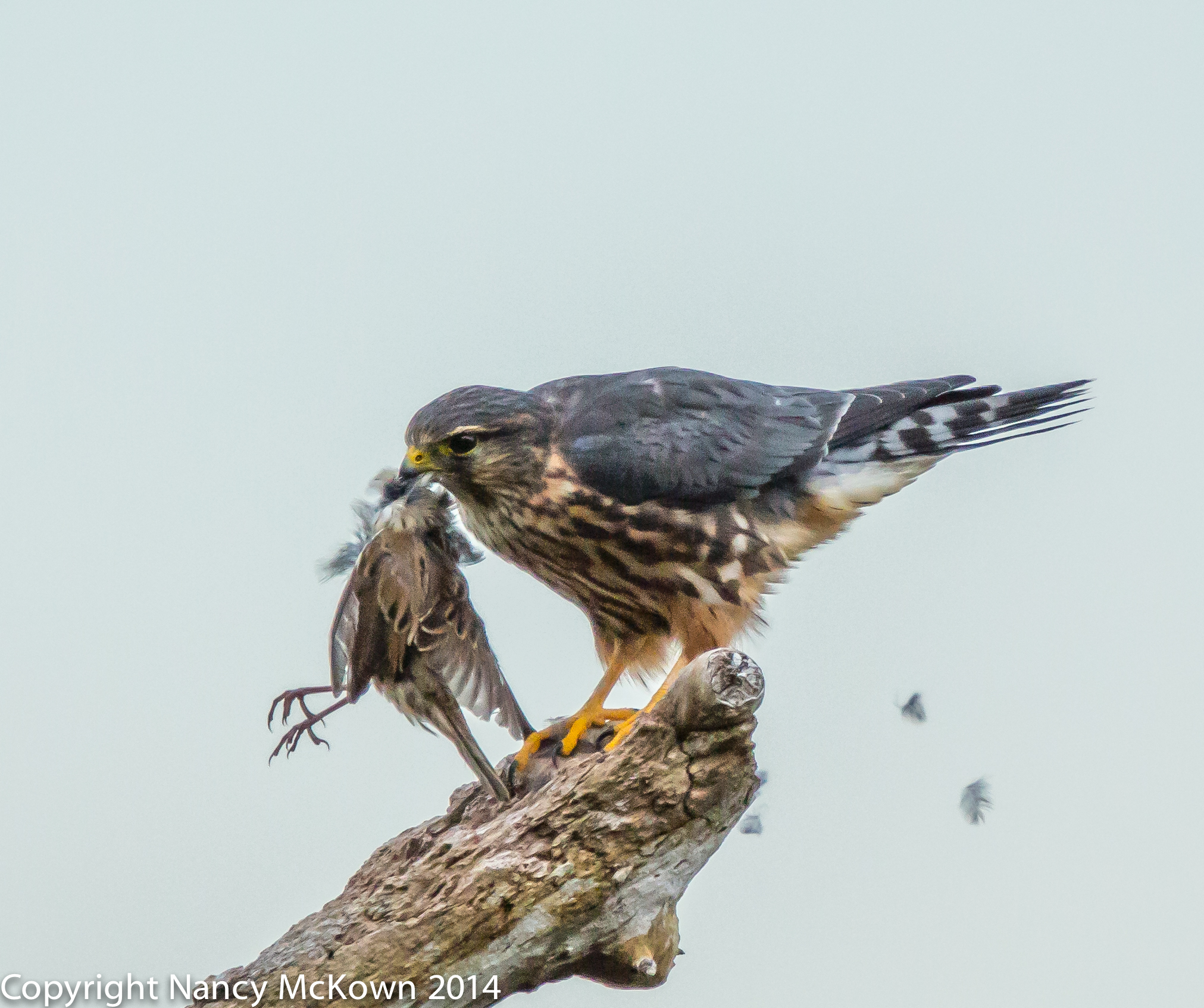
Merlin Falcon with Prey- Looking Powerful and Aggressive
ISO2500; f/8; 1/1000 Second

Powerful and Aggressive Birds

The Merlin had just started to dine on a Song Sparrow, pulling out feathers with his claws and beak and scattering them to the wind. As I watched him over the next 10 minutes, he methodically but indelicately consumed his prey. His raptor talons ripped gruesomely into the body, disconnecting the head. For better access to the soft underbelly, the Merlin lifted the sparrow with his beak and swung it around to reposition it on the perch. With that sharp, hooked upper beak, he pierced deep into the juicy organ morsels. It was a bloody scene but I did not turn away, even for a moment.

Specialized Hunters of Birds

Merlins are fierce, powerful little raptors that specialize in hunting and feeding on other birds. Not much bigger than a Blue Jay, they use their speed and agility (and open claws) to knock their prey out of the sky. They then finish the job with bites to the neck and spinal cord. This Merlin must have caught and killed the Sparrow and dragged it back to the perch just minutes before.

This bold little predator was not about to leave his meal, though he did keep a close watch on me. I had time to take 150+ shots with my 500mm lens with 2x extender attached. The Merlin’s perch on the dead tree was at eye level with the camera and lens. However, details suffered because of the distance between lens and relatively small bird. The morning sun was behind me, low in the east. The tall trees behind me blocked its intensity, forcing me to use a rather high ISO. By the time I took my last shot, the sun was just beginning to rise above the tree line, allowing me to take the ISO down to 1000.

Photo of Merlin Falcon
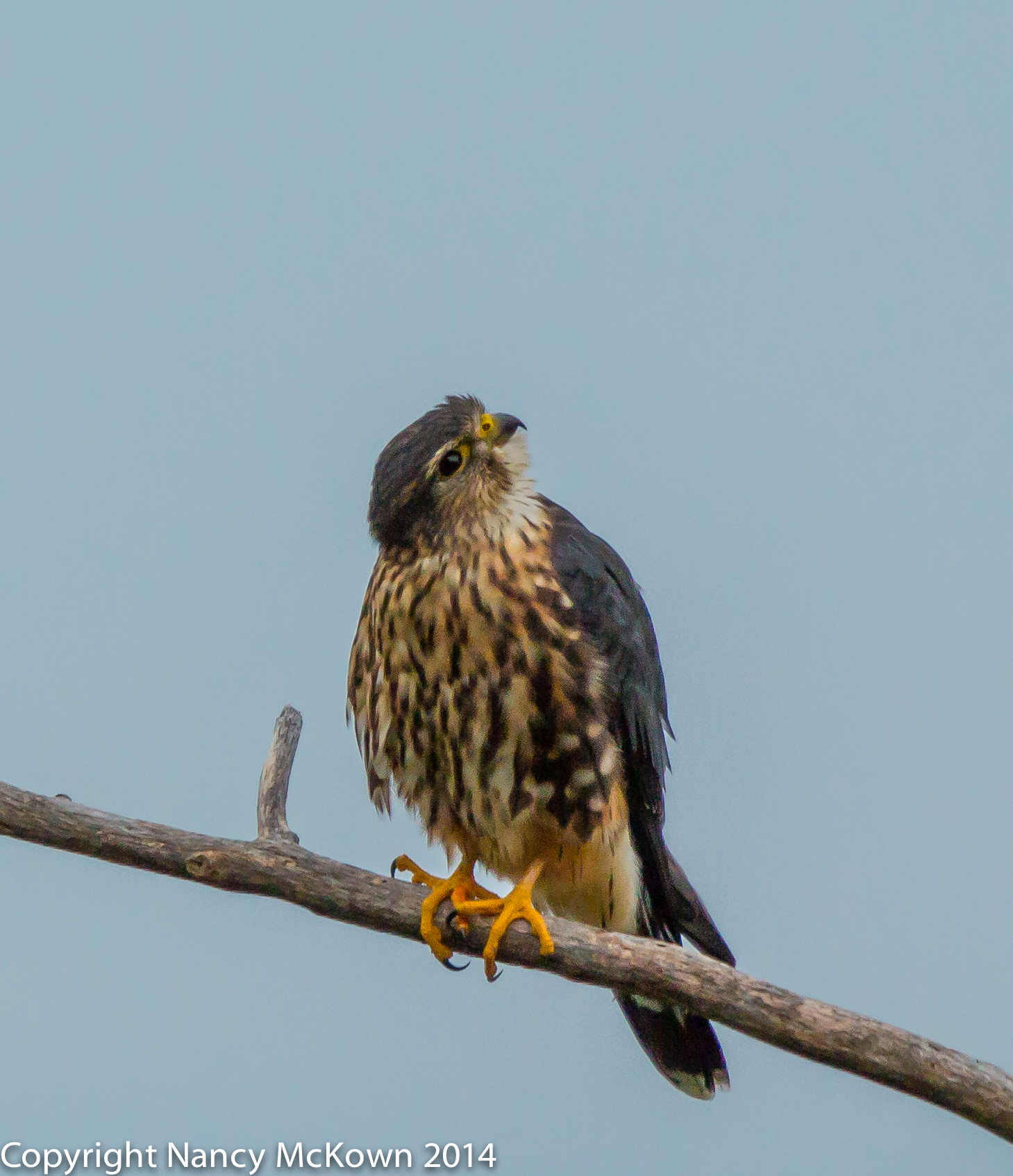
Merlin Falcon, with Bloody Talons, Looking About for Another Meal.
ISO 1000; f/9; 1/500 Second

Cleaning Up After the Feast

After the Merlin was finished, he left the remains (a clump of feathers and bones) on the perch and jumped to a lower, cleaner branch. With his talons, breast and beak still bloody from his meal, he began swiping his beak from side to side on the branch to clean away the remains of the feast. He then did a few minutes of feather cleanup and maintenance and he was off.

Migratory Photo Opportunities

Only during Spring and Fall migration are we lucky enough to see Merlin Falcons along the lakeshore. Not surprisingly, they follow other birds’ migratory coastal routes. I have high hopes to see and photograph at least one Peregrine Falcon as it passes through to its wintering grounds. My camera will be at the ready in my car through November.

Birds Feasting on Birds

It is always more fascinating to photograph birds engaged in some kind of activity (flying, feeding, mating, fighting, nesting, etc) rather than just majestically perching and posing. This is the first time I’ve had the opportunity to photograph a bird eating another bird. It was captivating! Merlins are fast and efficient killing machines, but they can also be prey for owls and the larger raptors. I bet Merlins are not an easy meal to take.

To learn more about my raptor tree on the shores of southern Lake Michigan, see this post.

To see my Merlin Falcon photos from last Fall, see this post.


Photo of Savannah Sparrow

Photographing Bobolinks in a Wildflower Meadow

Photographing Bobolinks in A Wildflower Meadow

I’ve discovered that I don’t have to wait for perfect sunrises or sunsets and a windless day to get a blaze of color in my bird photos.

Photo of Female Bobolink
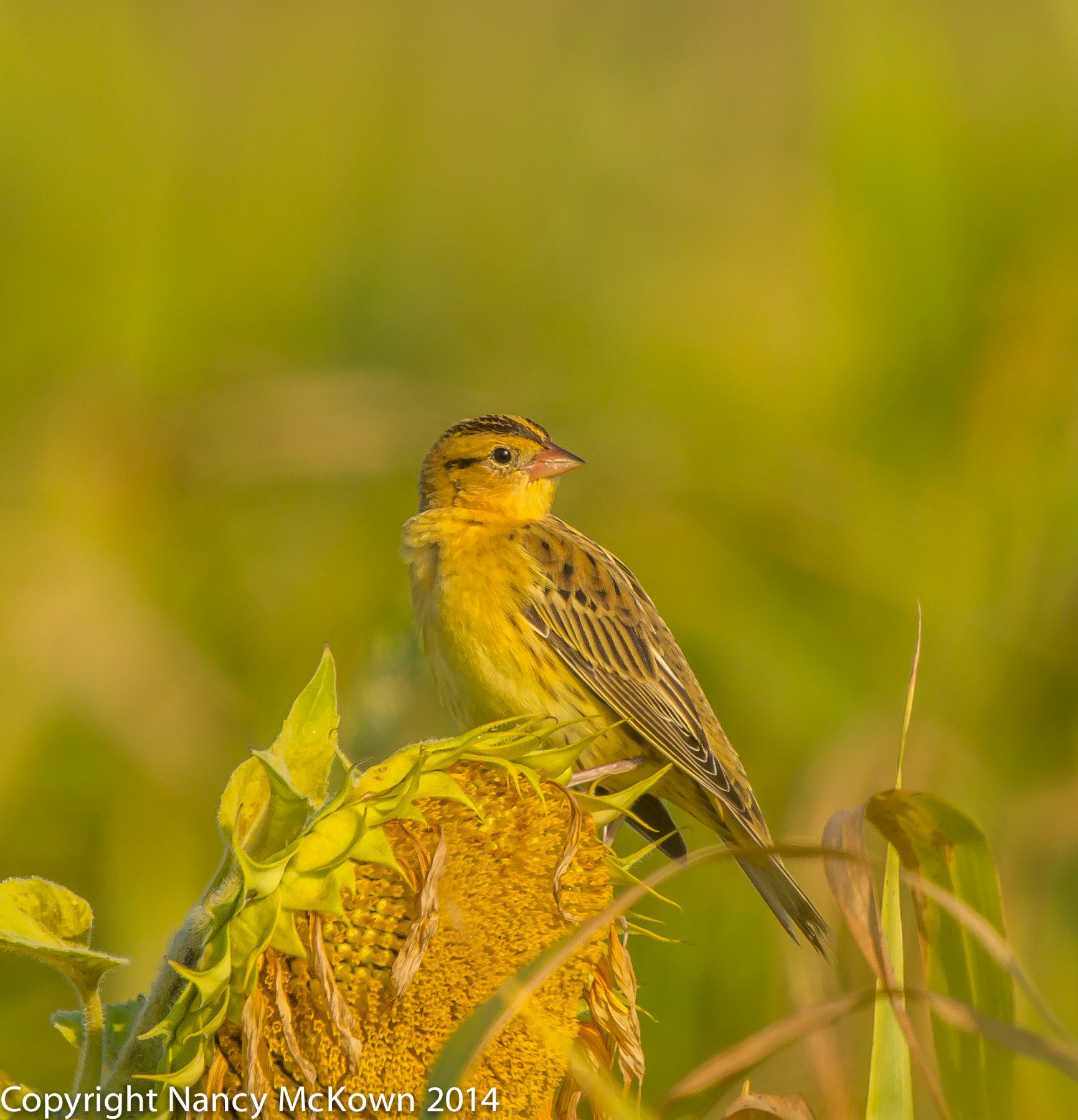
Female Bobolink, Perched on a Vervain Flower Stalk.
One of Dozens Flying in a Wildflower Field..
ISO 1000; f/10; 1/1600 Second

Capturing Soft Movement in Wildflower Meadows

For artistic inspiration, bird photographers should go in search of wildflower meadows, luminous with dew kissed green and golden grasses, sunflowers and other wild flowers. Birds and butterflies abundantly feed in these fields.

I was sitting quietly in the front passenger seat of my car watching the birds flit about in the grasses and wildflowers. It was a relaxing and meditative scene. Dozens of bobolinks were flying in this field, struggling to perch and then lifting off from the flowing grasses and drooping flowers. I was able to stay clear of too much foliage clutter in the shots because there were three or four tall stalks near the car on which the birds could perch. My camera and lens rested on the door window. It did not take long for one or two of the bobolinks to fly in for a closer look at me.

Photo of Female Bobolink
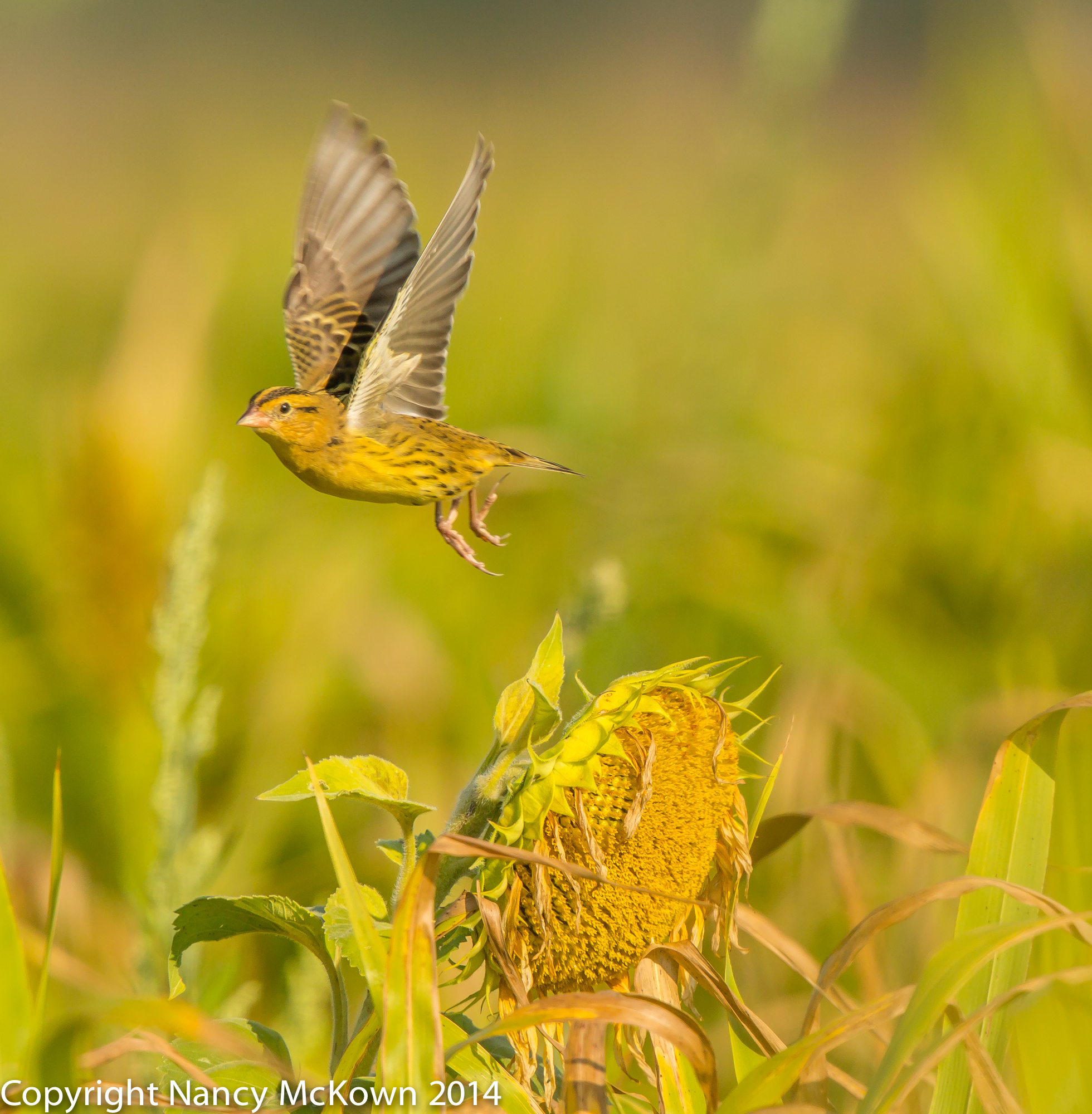
Female Bobolink Lifting Off from Sunflower Stalk.
ISO 1000; f/10; 1/1600 Second

Compensating for Movement

There is not much exposure flexibility when it’s windy. For these photos, I had to compensate for the effects of the wind (10-15 mph) with a fairly high shutter speed. I also tipped the 500mm (with 2x extender) lens downward just a touch to make sure the entire background was filled with the soft movements and rich colors of the meadow.

Cultivating Beauty

To attract birds, the land preservationists in charge of the Allegan State Game Area cultivate an assortment of seed and grain bearing flowers and grasses. Many years of hard work and preparation went into these low maintenance wildflower meadows. When the sunflowers turn brown and droop their heads, the tiny florets on the head become seeds. They are then ready for the birds to harvest.

Photographing Patterns in the Midst of Disorder

Beauty is there to behold at all stages of a flower’s life, not just at the bloom’s peak. The wind added drama to this wildflower scene and challenged me to try to capture that vibrancy in my bird photos. In the midst of all this background light, movement, energy and disorder, my camera’s sensor captured enticing patterns and vibrant colors.

I loved the caress of the wind in and around me as it reshaped the meadow’s landscape. It’s a glorious feeling and reminded me that I’m not just there to take photos.


See this blog post to read more about photography during the golden hour.

See this blog post to read more about photographing Bobolinks.