Monthly Archives: September 2014

Photo of Blue Grey Gnatcatcher

Photographing the Blue Gray Gnatcatcher and Thoughts About Taking a Grand Birding Adventure

Photographing the Blue Gray Gnatcatcher

The Blue Gray Gnatcatcher is a very good find for me. This tiny little songbird was hiding in the low branches of a densely wooded patch in the Allegan State Game Area. I was sitting in my car, lens resting on the car door, when I first spotted him. I was able to follow his movements despite the dense foliage because he was flicking his tail feathers back and forth, uncovering insects and then chasing after them. He came out of the branch and leaf clutter for only a minute, but it was long enough for me to shoot two full body shots (500 mm w 2x extender). And then he was gone.
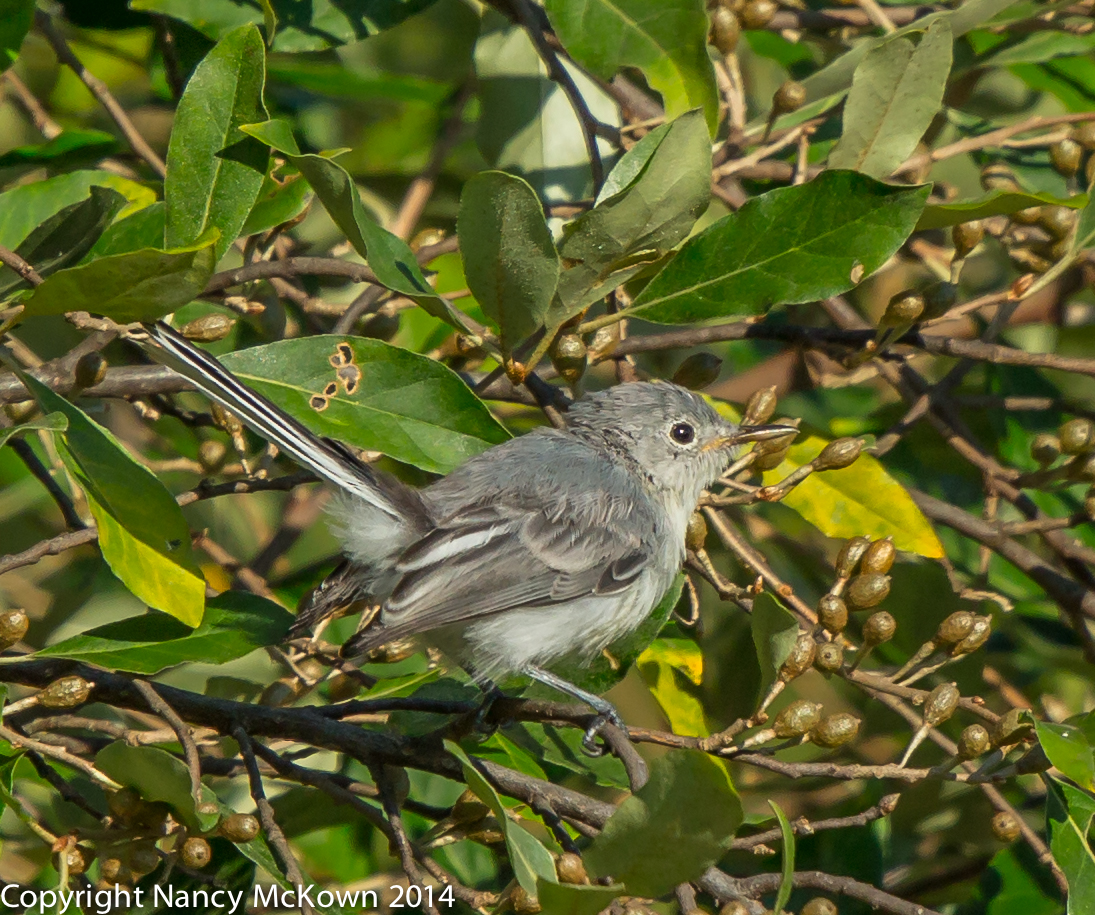
Photo of BlueGray Gnatcatcher
Blue Gray Gnatcatcher, his Perky Tail Feathers Cocked Skyward
ISO 800; f/10; 1/1000 Second

The Easy Road

I’m lucky to live near the Allegan State Game Area (Allegan County, Michigan) and the Kellogg Bird Sanctuary  (Augusta, Michigan) where there are plenty of birding adventures to be had.  In late summer, I often sit near my library window and hope that new warblers and vireos will take a break from their long migratory journeys and rest in my yard. (Amazingly, our yard has become somewhat of a hotspot this Fall. For more info about that, see this post.)  With these great resources nearby, I generally don’t have to travel more than 75 miles to photograph birds.

Traveling to Photograph Birds

Going on a long distance American birding expedition does appeal to me however. I read about the exhausting and exciting adventures of birders who travel far and wide with their cameras to find and photograph birds and I imagine myself on that sort of long journey. Traveling efficiently and effectively no doubt means that you have to leave behind your best long lenses, and maybe your best camera. There was a time I would have thought that intolerable, but since I’ve started photographing new migrating birds through my library window, I’ve come to accept the noisy, leaf cluttered photos in exchange for the close, eye level view and the thrill of watching and photographing new birds.

Dorian Anderson’s Journey

One birder’s long distance trek is particularly impressive. Dorian Anderson is spending a year traveling thousands of miles by bicycle in search of as many birds as possible and writing a blog about his adventures. He embarked on this journey in Massachusetts, and headed south to Florida and then west toward California. See this link for his timeline, trip strategy, and winding route. Dorian said that he misses his primo equipment (500mm/1.4x/1D) but he still manages to include quite a few fabulous photos in his daily blog.

Photo of Blue Grey Gnatcatcher
Blue Grey Gnatcatcher Showed Himself only for a Moment.
ISO 1250; f/10; 1/1000 Second

Biking for Birds

Dorian is using this biking/birding adventure to raise funds for The Conservation Fund and the American Birding Association. At the time of this writing, he has seen more than 557 species and raised thousands of dollars for bird conservation causes.

I envy Dorian’s running bird list, and admire his resolve, strength and fortitude. I checked his list, but did not see a Blue Gray Gnatcatcher. Such tiny little birds to find. He did however list the following gnatcatchers:
450 – Black-tailed gnatcatcher
451 – Black-capped gnatcatcher
Follow Dorian Anderson’s exciting adventure “Biking for Birds” at this link.
To read cool facts about the blue gray gnatcatcher, press this link.
Photo of Yellow Warbler

Photographing the Yellow Warbler and Thoughts on Bird Identification

Yellow Warbler Identification

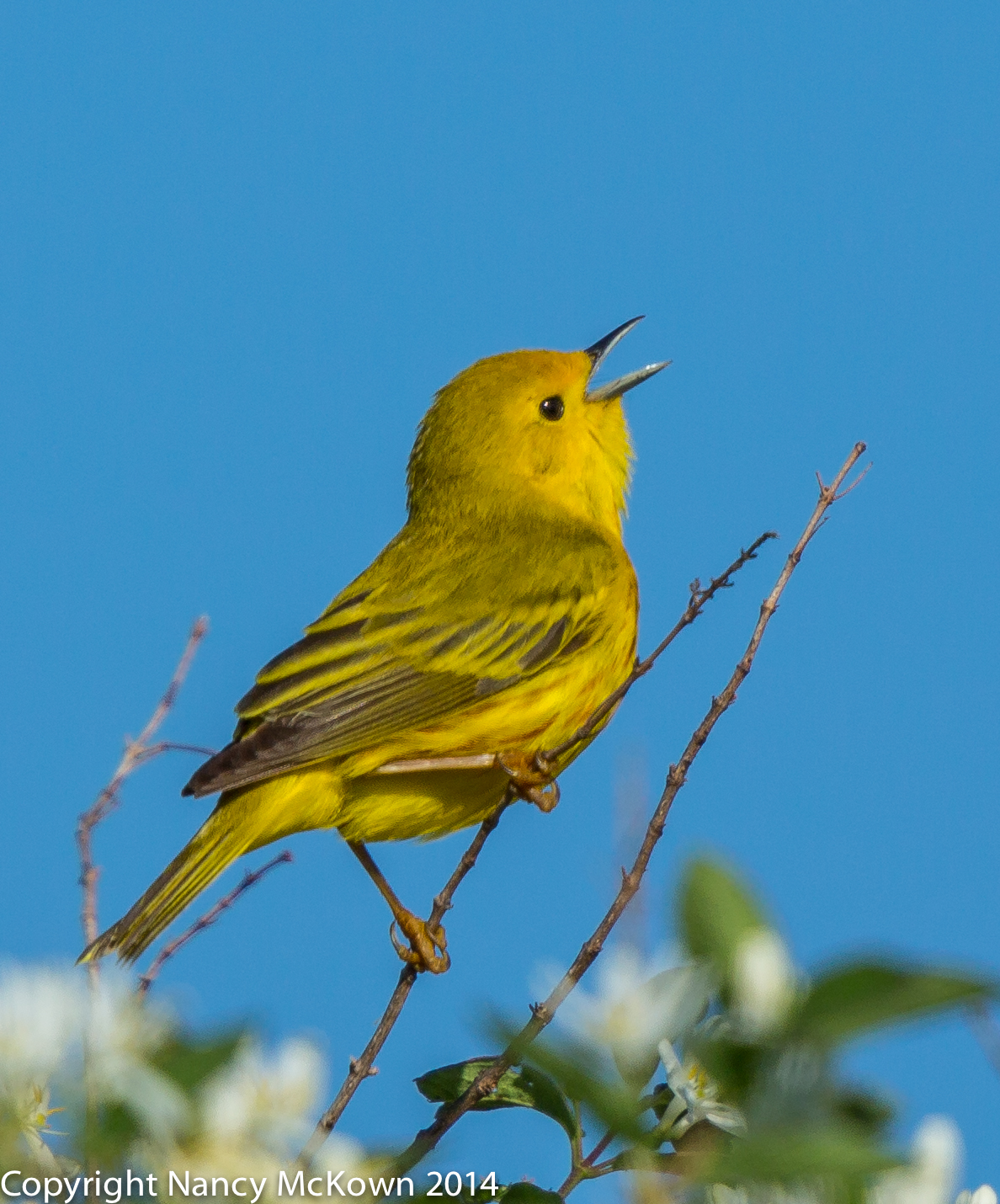
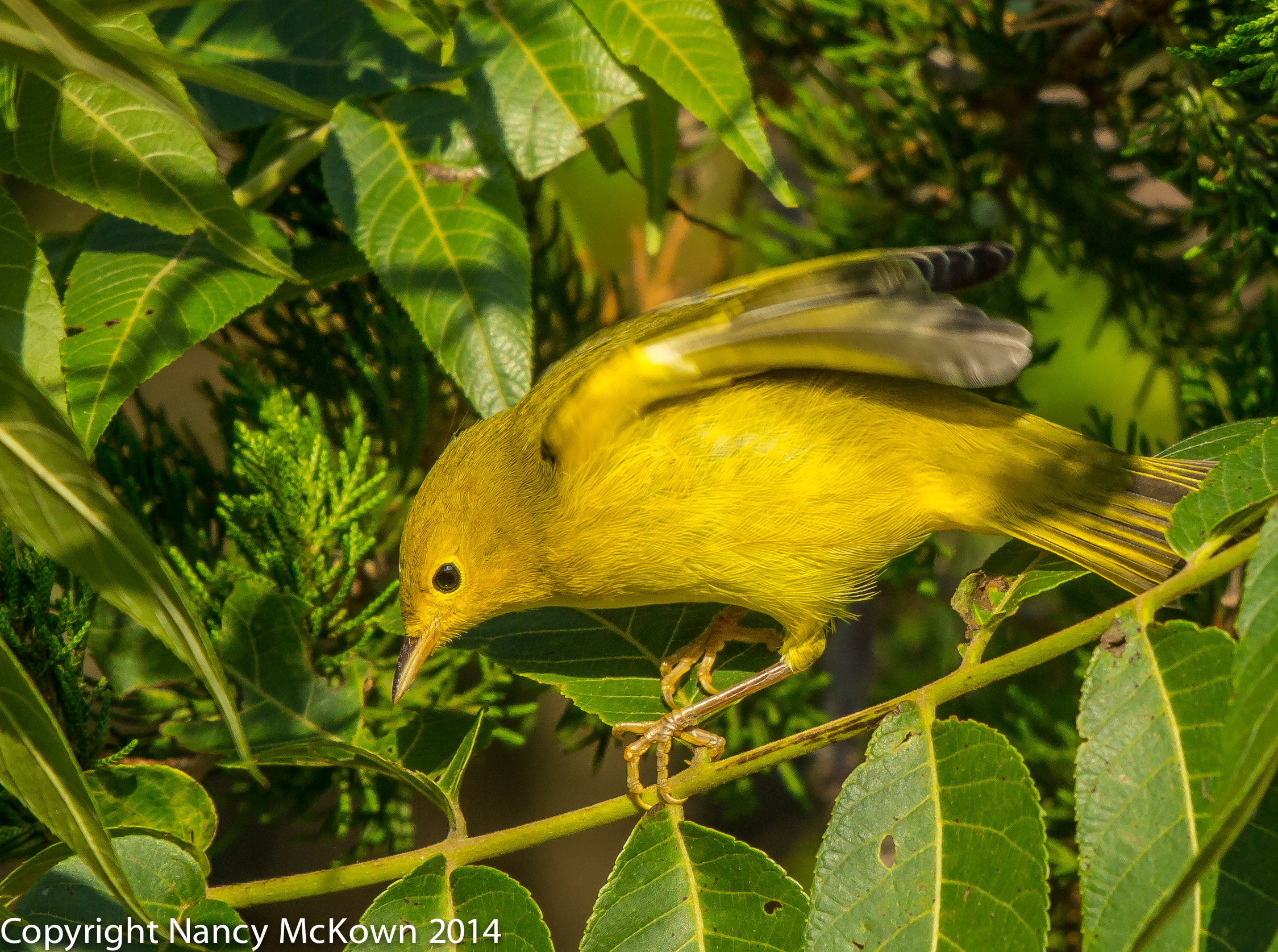
Yellow warblers are bright little birds that are not the easiest to ID or photograph. Often, I see a little yellow blur flying fast and furious, and when it lands in the dense foliage, it quickly weaves in and out of view. Unless I get a clear shot, (if I’m able to lock down focus at all), this warbler can easily be confused with other yellowish warblers.

Photo of Yellow Warbler
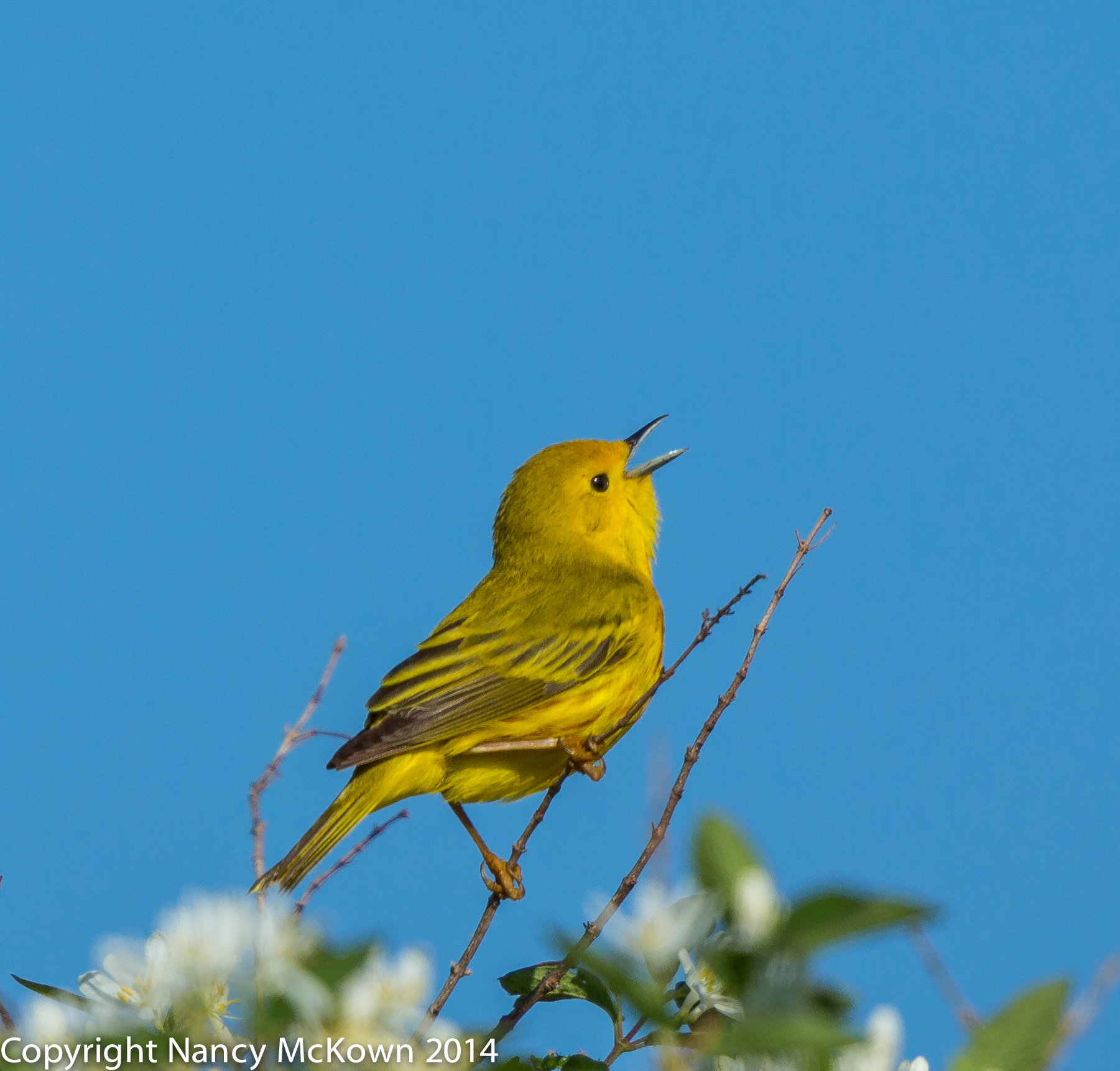
Yellow Warbler, Singing his Heart Out.
ISO 250; f/9; 1/1000 Second.

The Warbler Guide

For my birthday, I received The Warbler Guide by Tom Stephenson and Scott Whittle. It’s a wonderful, thick book with dozens of distinctive photos of all angles of male, female and juvenile warblers, in all seasonal plumages. Warblers are one the most challenging birds to ID. It’s important to be very precise when reviewing the color and shape of any discernable eye rings, the color and location of streaking on the breast, the length of tail feathers and edging on the wing feathers, the body shape, the bill length, eye color, feet color and on and on.   Oh My!

The Warbler Guide is a great book with which to sit down and relax, learn new things about warblers, and sort and compare my photos with the guide’s photos. After spending some time comparing back and forth, this with that, I may finally feel sort of comfortable that I have a good ID. However, if I get a feeling that my ID may not be quite right, I go ahead and upload my photo to Whatbird.com for the experts to give me final confirmation.

Facial Recognition of Birds

Wouldn’t it be cool to have sight and sound recognition DSLR cameras…. a digital camera with an artificial intelligence ID chip built into its computer that would be able to identify the bird on which the lens is focused?

This marvelous invention can not be that far into the future because scientists at Columbia School of Engineering have already developed an visual recognition bird ID app and are working on incorporating a bird recognition ID chip into binoculars.

Photo of Yellow Warbler
Lovely Yellow Warbler. I uploaded this photo to BirdSnap app on my Phone.
It came Back with Several Possible IDs.
Yellow Warbler was the Top Pick.
ISO 800; f/9; 1/1250 Second
Photo of Yellow Warbler
Yellow Warbler Hopping From Branch to Branch.
ISO 800; f/8; 1/1000 second

Birdsnap- An Advanced Digital Field Guide

Currently, birders and photographers can download a free app call “Birdsnap”. Once installed on your smart phone, all you need do is upload a clear, full bodied photo of a bird into the app and follow the prompts to point out the locations of the tail and eye of the bird. Birdsnap will then scan your photo, compare it to its database of 500 bird photos and come up with possible matches.

A future enhancement for this app is under development that will incorporate voice recognition…the various bird songs, whistles and calls that match the bird photos. To ID a bird by song, (hypothetically) users will only need to engage the recording component of their smart phones while the unknown (and possibly unseen) bird is vocalizing, and then upload that file to the app.

Right now I have two GPS enabled apps on my smart phone that allow me to view multiple photos of a bird species, hear their vocalizations, and map their summer, winter and migratory range. But these apps require that I see the bird (or a photo of the bird) or hear the bird, then make a judgement as to whether or not the bird ID info I’m viewing in the app matches the bird I am seeing and/or hearing.

Birdsnap is programmed to do what computers do best: Sort through massive amounts of data, make computer based distinctions based on facial and birdsong recognition, and then select one or more matches. Human judgements will still be necessary to determine if the selections made by Birdsnap are correct.

Photo of Yellow Warbler
Yellow Warbler, Tucked Behind Foliage.
ISO1000; f/8.0; 1/2500 Second

Warbler ID Tools

I still love my Warbler Guide, It has fascinating information and endless details on the characteristics and lifestyles of 50+ warblers. The Birdsnap app is a good tool to turn to first for Warbler ID. That way, I have possible warbler names to take to the book index and start my search.

Some day, I will be quick and competent at bird ID, but that day is not today.

For more information on the Birdsnap app, click this link.

To read my post about auditory bird ID, click this link.

Photo of Magnolia Warbler

Photographing Migrating Birds, Part II

Wonder of Wonders

I am captivated by the bird migration phenomena. It’s still late summer and over the last couple weeks, a parade of migrating birds have stopped in our yard to rest and replenish. So many that I am getting fairly good at warbler ID.

The trees are still in full summer foliage. The Vireos and Warblers weave in and out of sight between the branches and leaves, flittering every which way in search of insects and grubs. Because they move so fast, it is difficult to track their movements with my lens. I have to keep both of my eyes on the area of the last sighting and then watch for the slightest movement in the leaves and branches. When a new bird comes into view (even a partial view) I quickly point the 300 mm lens with 1.4 extender, focus and hold down the shutter. The advantages of  shooting from the library windows are that I am fairly close to the bushes and trees in which the birds forage and the library window is higher than ground level, allowing me to shoot at eye level.

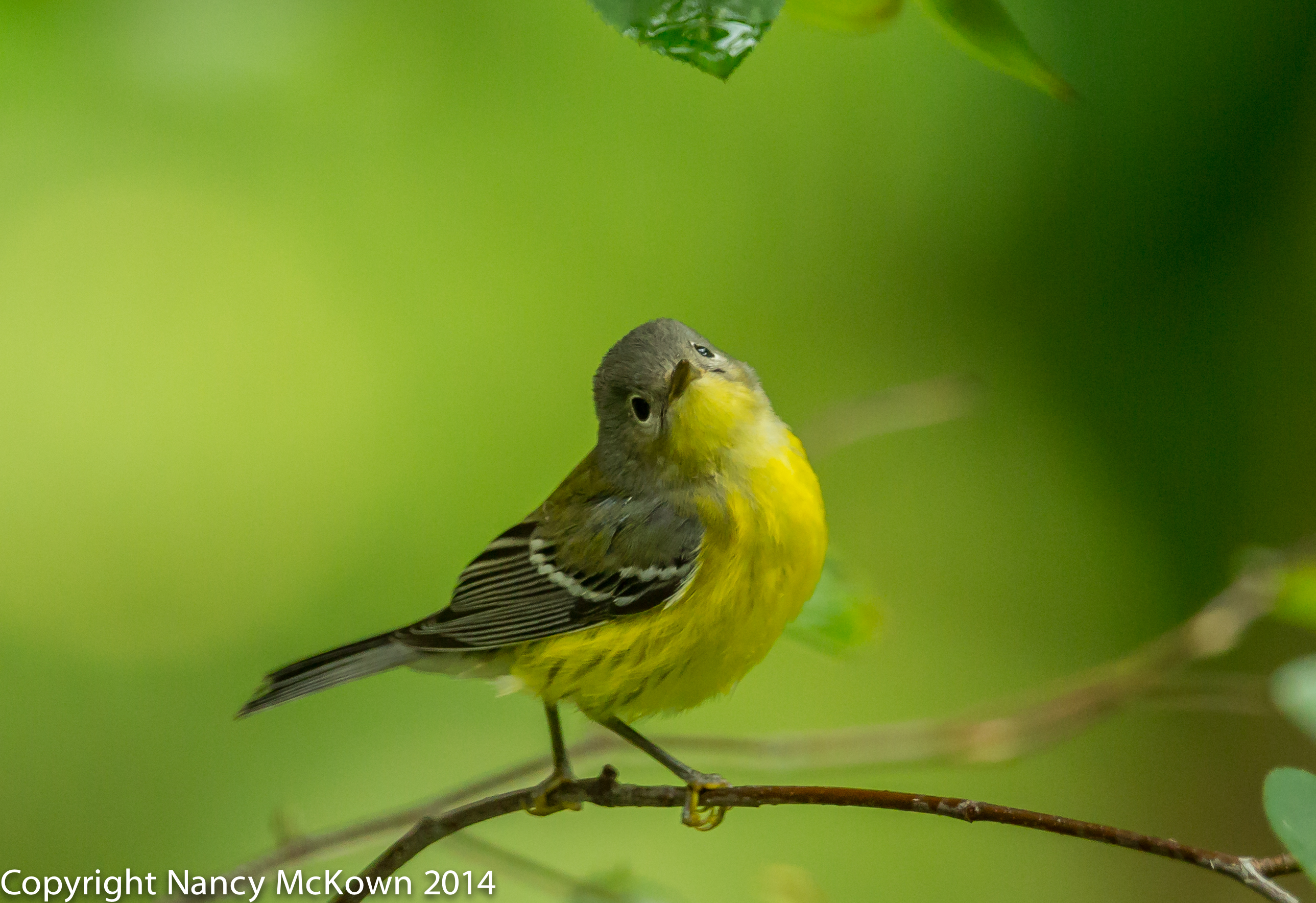
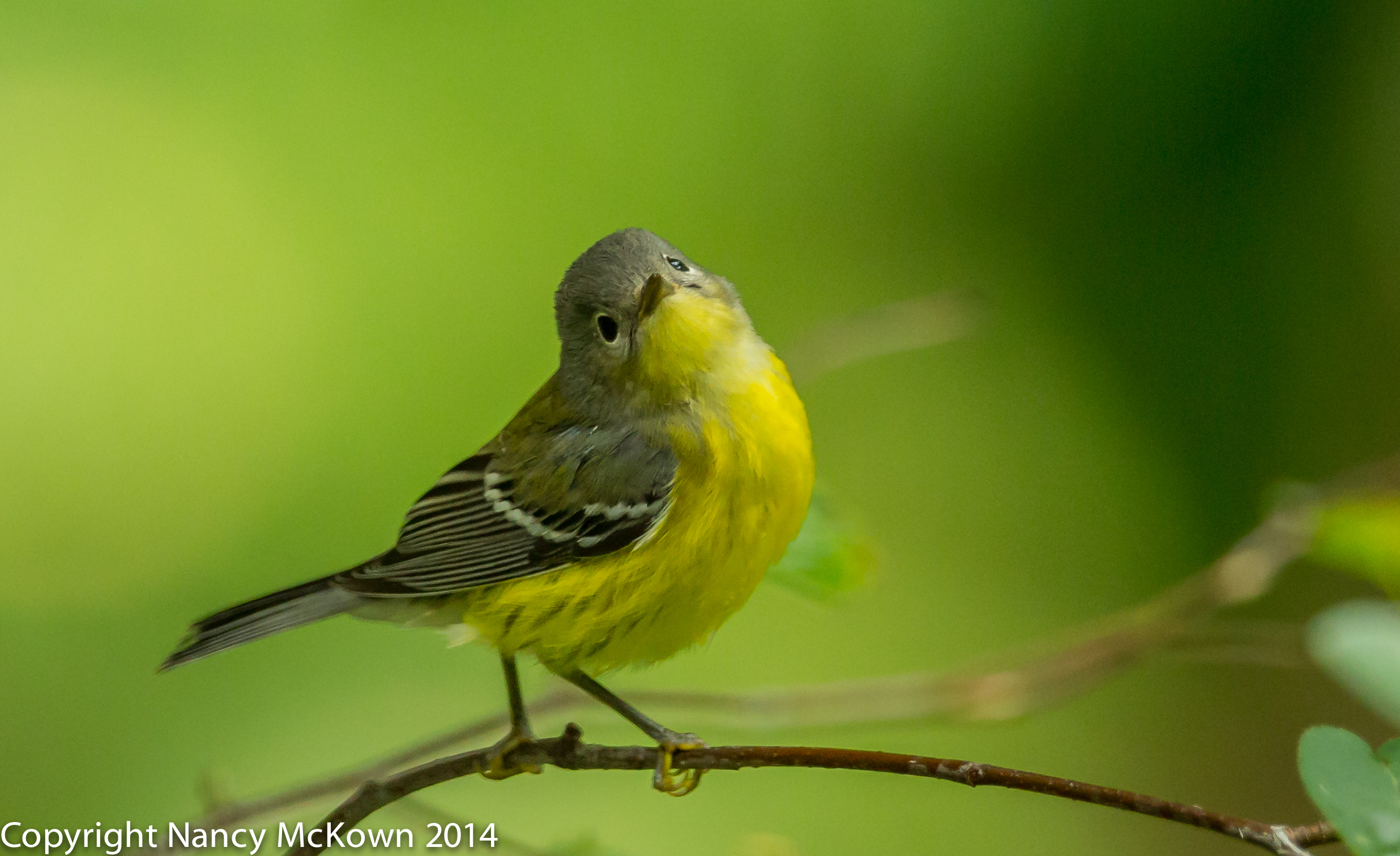
Photo of Magnolia Warbler
Magnolia Warbler Sitting Pretty and looking Quite Coquettish.
ISO 2500; f/4; 1/640 Second

The Great Lakes Migration Corridor

We live near the shores of Lake Michigan. Each spring and fall the shoreline becomes a nocturnal migration corridor for millions of birds on the move. There have been so many visitors in our yard this year that I have temporarily put on hold my usual routine of photographing birds in the Allegan State Game Area. Instead I watch and photograph warblers and vireos through my library window. This strategy is particularly productive during or after a storm and when the winds blow strong. Although exposure is always a challenge on low light, windy days, it’s worth the focusing hassle and less than tack sharp  images to see these unfamiliar and beautiful travelers through my lens.

Photo of Tennessee Warbler
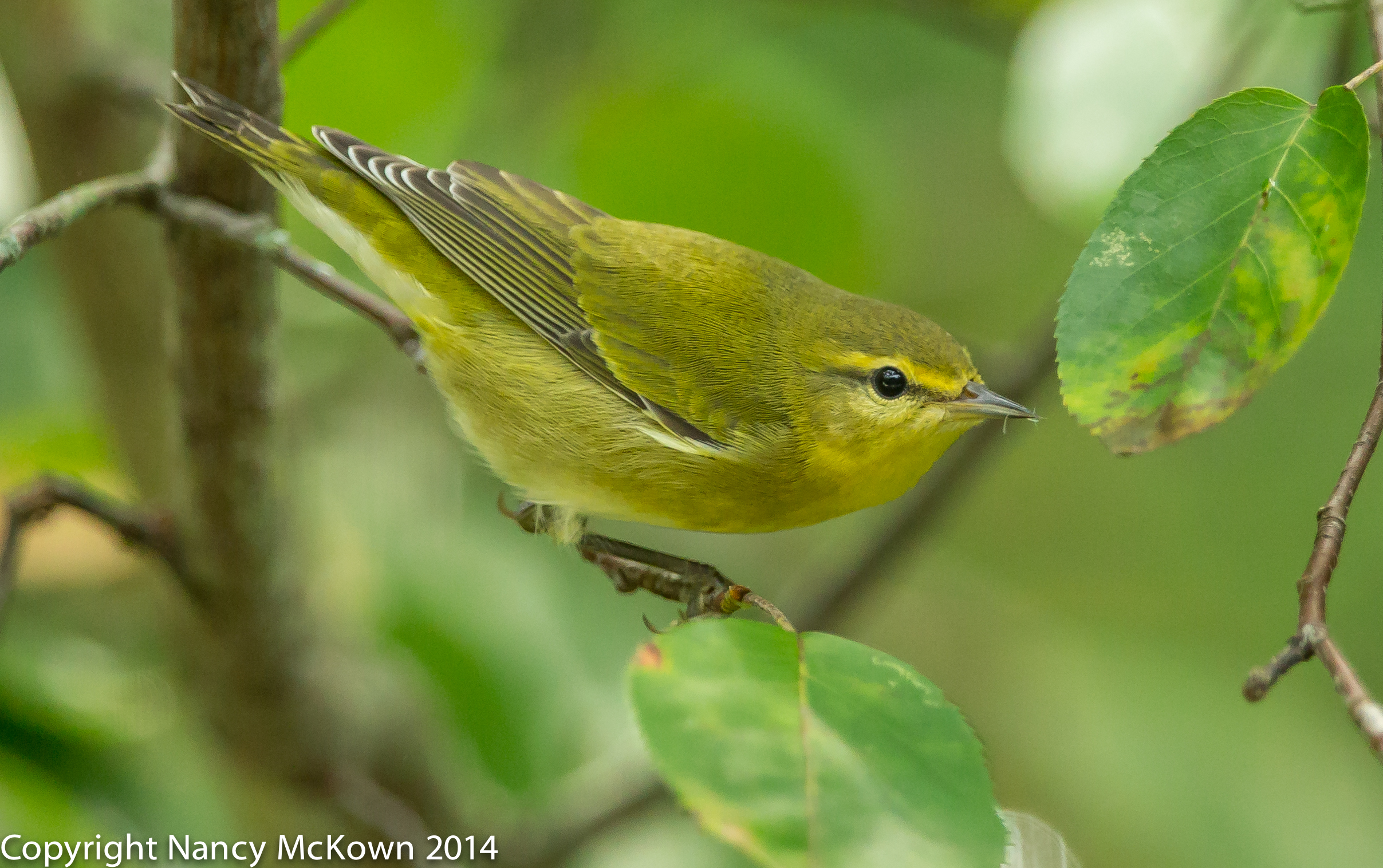
Tennessee Warbler
ISO 2500; f/4; 1/800 Second

Birdcast

Birders and photographers can find resources that help predict when migrating birds will be passing through their regions. The Birdcast weekly forecast is a project funded by the Cornell Lab of Ornithology.  Weather radar, satellite imagery, e-bird data, acoustical monitoring devices, and sophisticated computer models are combined to determine, by region, what species of migrating birds (out of 400+ species) will likely be passing through during a particular week. The goals of this project are to get a better understanding of the migration phenomenon (when, where and how far birds go) and to determine the impact of environmental change on bird behavior.

Photo of Wilson's Warbler
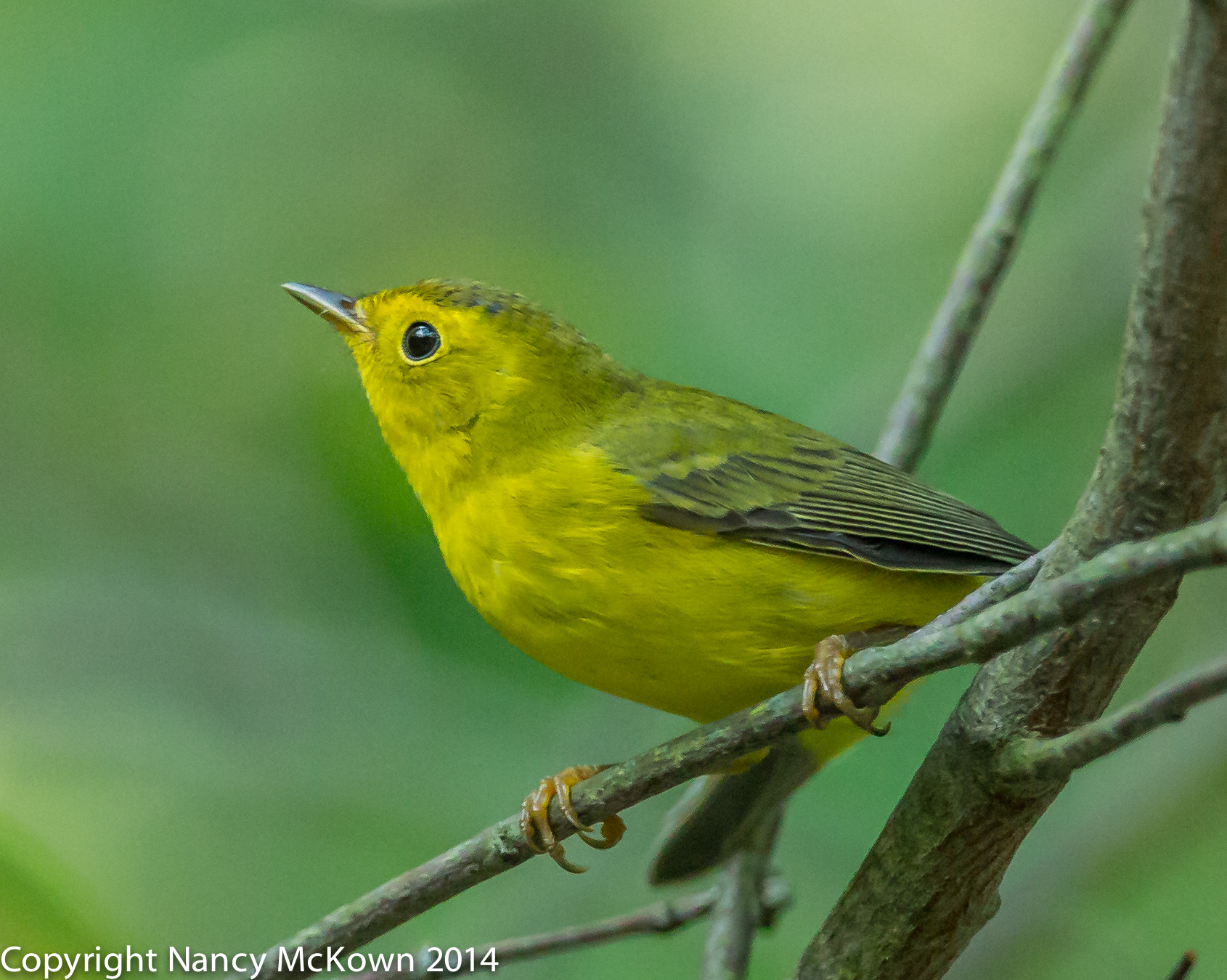
Wilsons Warbler
ISO 2500; f/4; 1/800 second

Birdcast Predictions for August 29-Sept 4

Here is a sample of the kind of information BirdCast provided for the my area during the week of Aug 29 through Sept 4.

“Upper Midwest and Northeast

Scattered light to moderate movements were in evidence for the weekend, as small scale disturbances moved across the region in several areas. By Monday night, however, changes were evident, as northerly flow and cooler air brought heavy movements to the western Great Lakes and Upper Mississippi River valley. As the frontal boundary responsible for these changes moved east, so did the moderate to locally heavy movements it facilitated. By Wednesday night these movements were apparent in coastal areas, and also as widely scattered movements farther inland. Species on the move this week included Swainson’s Thrush, Magnolia Warbler, Blackpoll Warbler, Hudsonian Godwit, Tennessee Warbler, American Golden-Plover, Warbling Vireo, Wilson’s Warbler, Northern Parula, Black-throated Green Warbler, Black Tern, Buff-breasted Sandpiper, Pectoral Sandpiper, American Redstart, and White-eyed Vireo.”

From this predictive list, for the week of Aug 29-Sept 4, I was able to photograph in my yard the Magnolia Warbler, Tennessee Warbler, Warbling Vireo, Wilson’s Warbler, Black Throated Green Warbler, and American Redstart. 

Photo of American Redstart
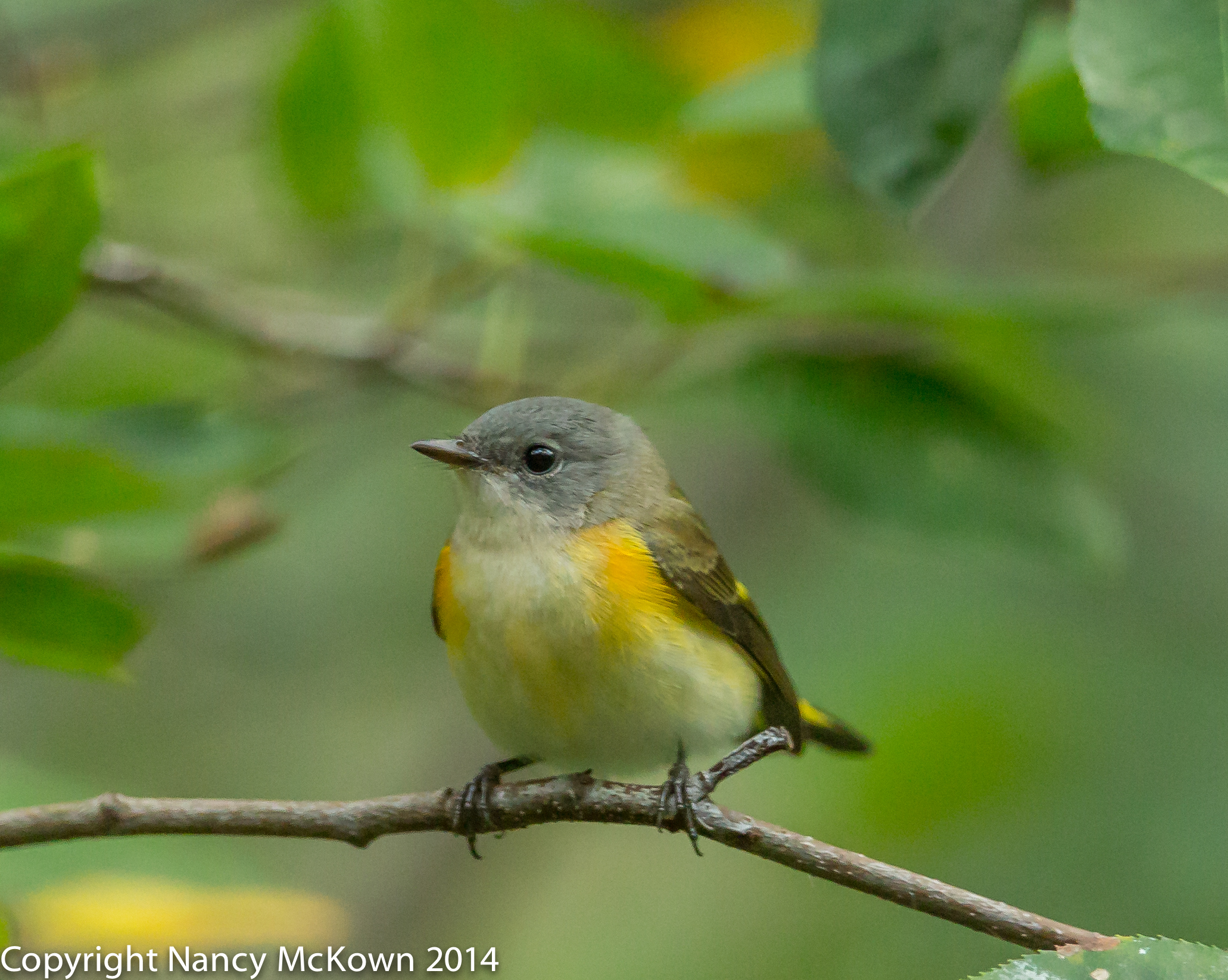
Female American Redstart Warbler.
ISO 4000; f/4; 1/640 Second

A Scientific Approach to Finding Migrating Birds

If you are interested in learning more about scientifically based predictions that gauge which migrating species will pass through your geographical area,visit this link.

If you are interested in seeing the other migratory birds that have visited our yard so far during this migration (2014), please visit my flickr album .

Photo of Male Bobolink

Photographing Bobolinks and Thoughts About Protecting Your Passion

Discovering Bobolinks

It seems to me very odd that this is the first Spring that I’ve noticed and photographed bobolinks, even though I’ve been in their territory many times looking for new birds. This year, bobolinks seemed to be posing for me everywhere. I had a wonderful time watching and photographing their rituals and antics and was very pleased with the results.

Photo of Male Bobolink
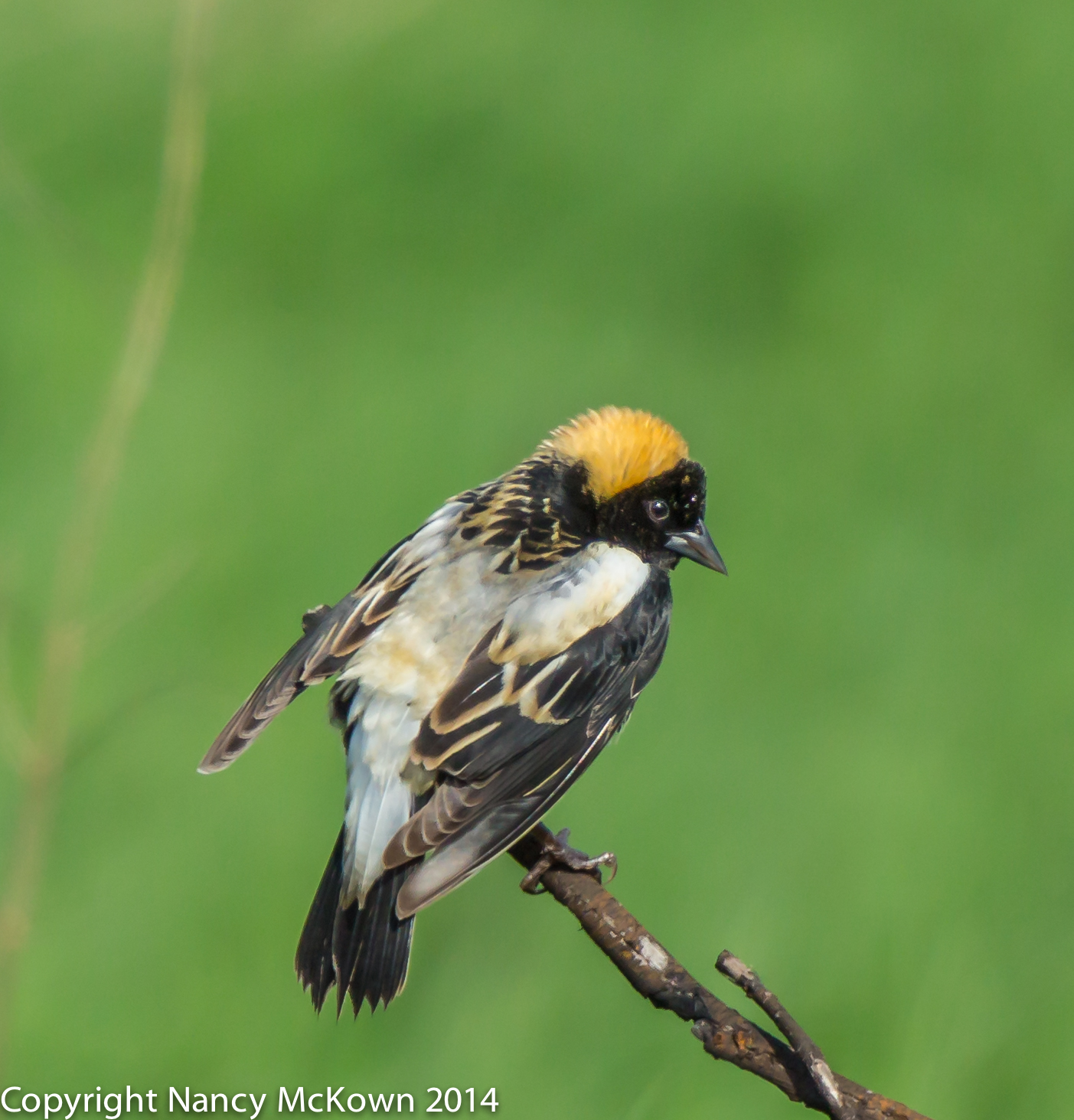
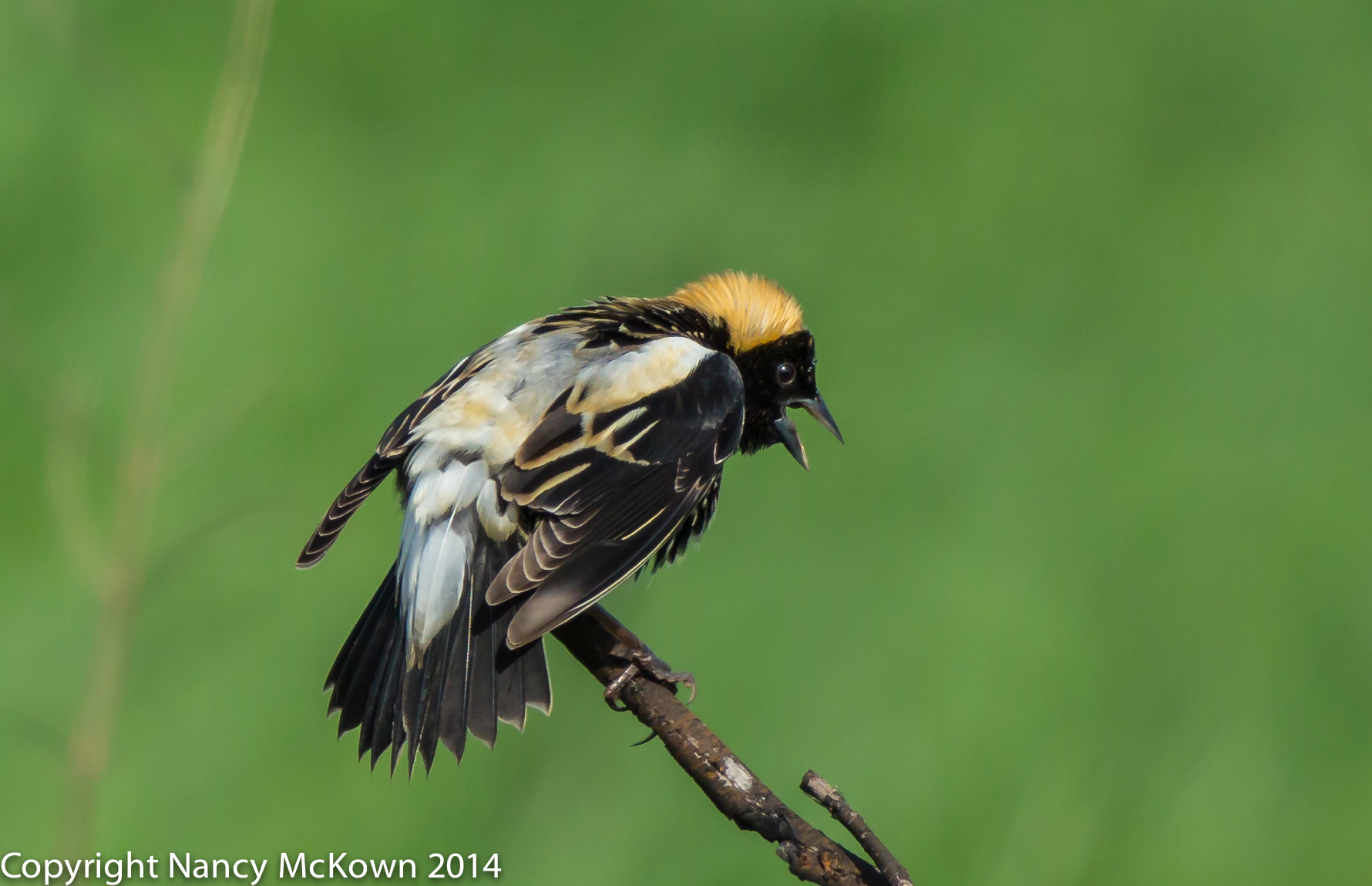
Male Bobolink Calling Out For Female.
ISO 800; f/8.0; 1/2000 Second

Photographing Bobolinks – Colorful Blackbirds

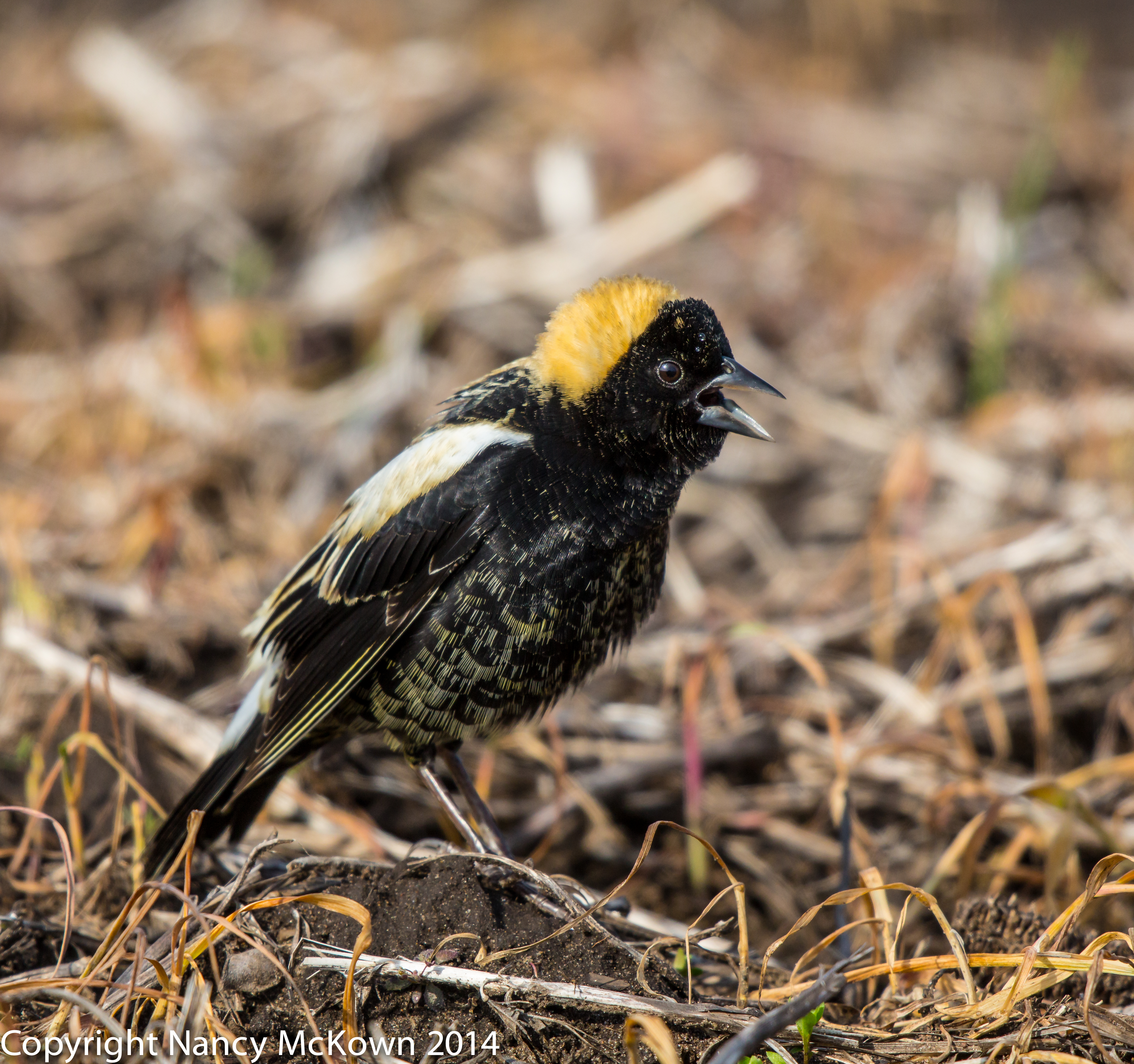
Bobolinks are beautiful songbirds, related to orioles and blackbirds. They forage for seeds and insects in farm fields and grasses. The male bobolink is particularly striking in the Spring. When he is not singing or furiously chasing other males, he is elaborately bobbing his tail feathers and displaying his white shoulder patches and black and gold plumage. It’s hard to miss that straw colored headdress atop his head.

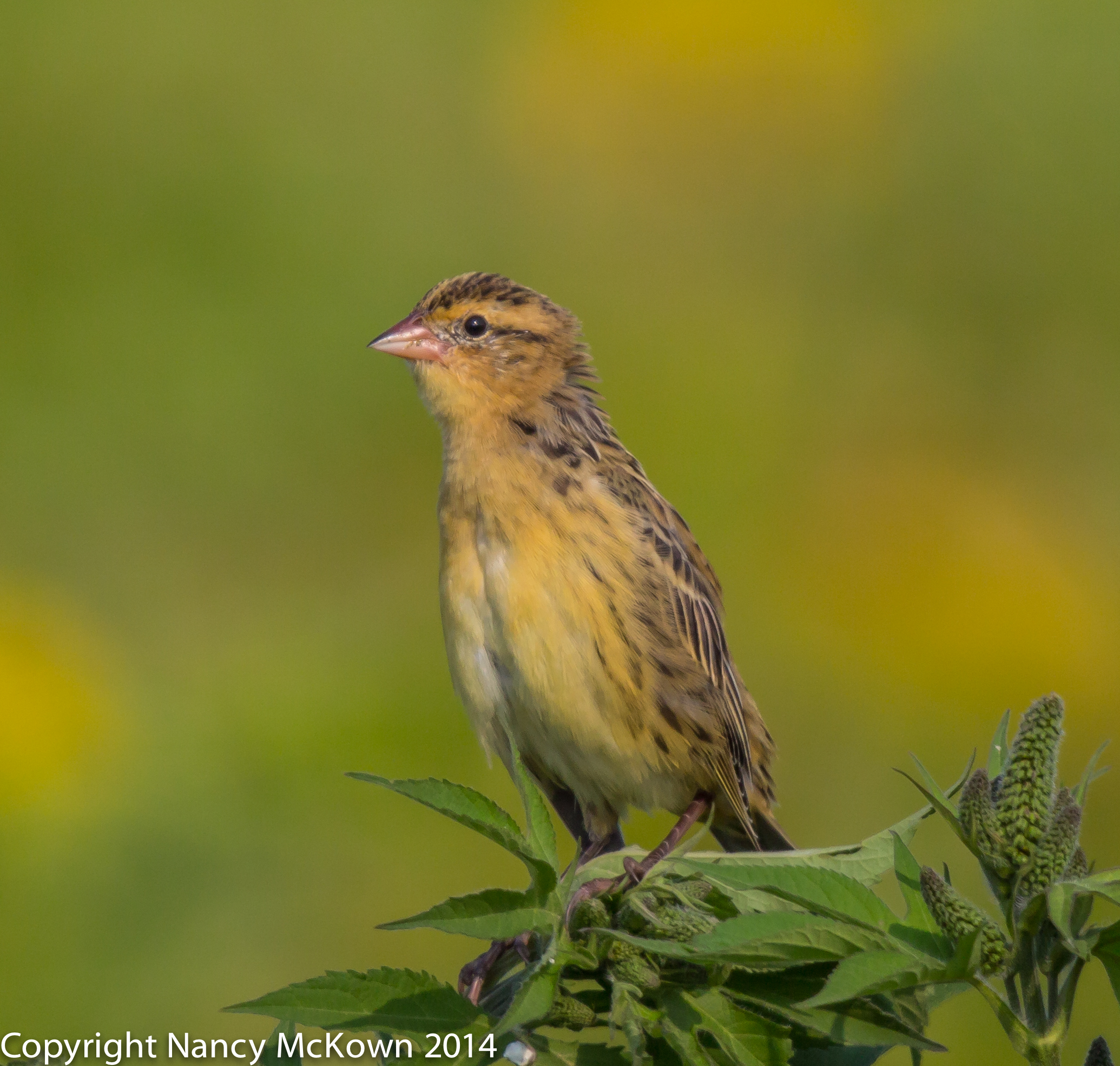
Like many other songbirds, female and immature bobolinks have very different coloring than the mature males.  (See last photo in this post.)

Bobolinks get their name from the lovely songs they sing. For a wonderful, short video of the bobolink singing and displaying, published by “The Music of Nature”, see this link.

Photo of Male Bobolink
Male Bobolink – A Good View of the Spring Plumage on His Back.
ISO 125; f/9.0; 1/500 Second
Photo of Male Bobolink
Male Bobolink Displaying in the Grasses.
ISO 800 f/8.0; 1/1600 Second
Photo of Female or Juvenile Male Bobolink
I Thought This was a Female Bobolink, But Because It Was Taken in
Early August, What Bird.com Says it Might Be a Female or a Juvenile Male Bobolink.
ISO 500; f/9.0; 1/1000 Second

Reflections on Protecting My Bird Photography Passion

In an effort to feed my growing passion for photographing birds, I have spent countless hours trying to improve my skills and way too many dollars to purchase new cameras, lenses, storage drives and computers. I also maintain this bird photography blog as an incentive to keep working, learning and sharing. Why do I do it?  Because these bobolink photos (and many, many other bird photographs) make up my digital portfolio and represent the joy I find in wild bird photography.

Protecting Your Investment in Photography

Maintaining specialized insurance and backing up your photo files are not trivial pursuits. Backup and recovery/replacement systems (in the cloud and at home) are uncommonly simple, but immensely important precautions, costing very little money, but affording photographers basic peace of mind.

The Inevitability of the Unexpected

Taking a few basic precautions to safeguard your digital portfolio and photo equipment are fundamental practices for photographers. Hard drives and memory disks that hold your favorite photos and wild life experiences will fail; it’s just a matter of when. Ridiculously expensive lenses and cameras can be stolen, lost, or damaged, shattering your investment.

Not having insurance plans in place that allow you to promptly return to that happy place where you left off before the devastation is just plain silly.